

"The Nha Be river flows and divides into two."
"Those who want to go to Gia Dinh or Dong Nai , go ahead."
This folk song has been passed down orally since the time when Nha Be was just a folk name for the place where merchants used to anchor their boats, build rafts, and hold markets on the river, until Nha Be became an administrative place name in the early 20th century and continues to this day.
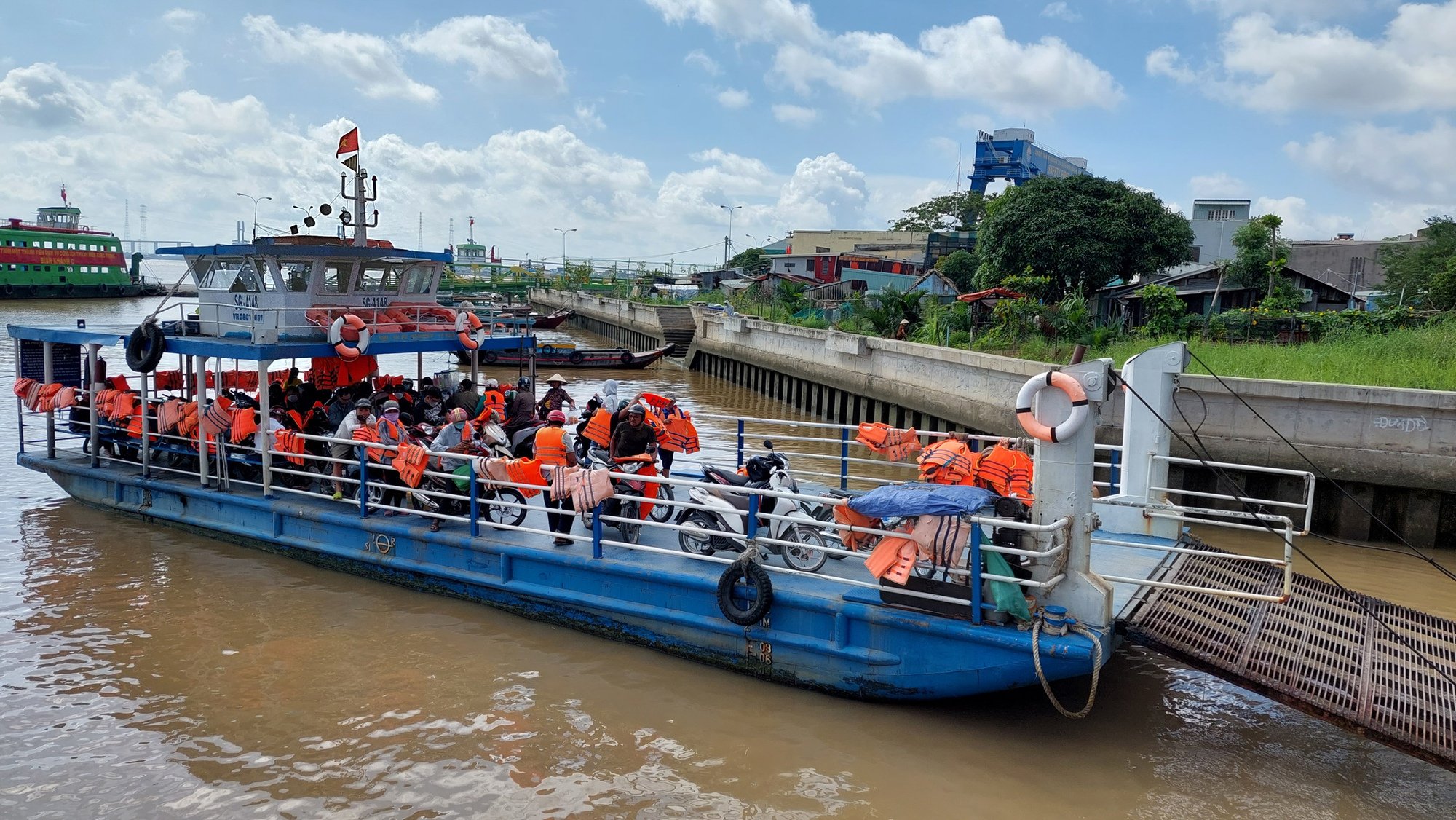
Phuoc Khanh ferry terminal is located at Nha Be cape.
Find traces of the past, and learn about the present.
Living in the country's largest city, a long-standing source of tourists , the people of Nha Be (Ho Chi Minh City) have only recently begun welcoming and serving tourists, about a year ago. They are still quite unfamiliar with the environment, but this unfamiliarity also reveals the genuine simplicity of people from the suburbs.
The road network from District 7 through Nha Be District is connected by three major roads: Huynh Tan Phat, Nguyen Huu Tho, and Le Van Luong. Huynh Tan Phat road extends all the way to the pointed promontory jutting out into the Soai Rap River, which locals call Nha Be Cape.
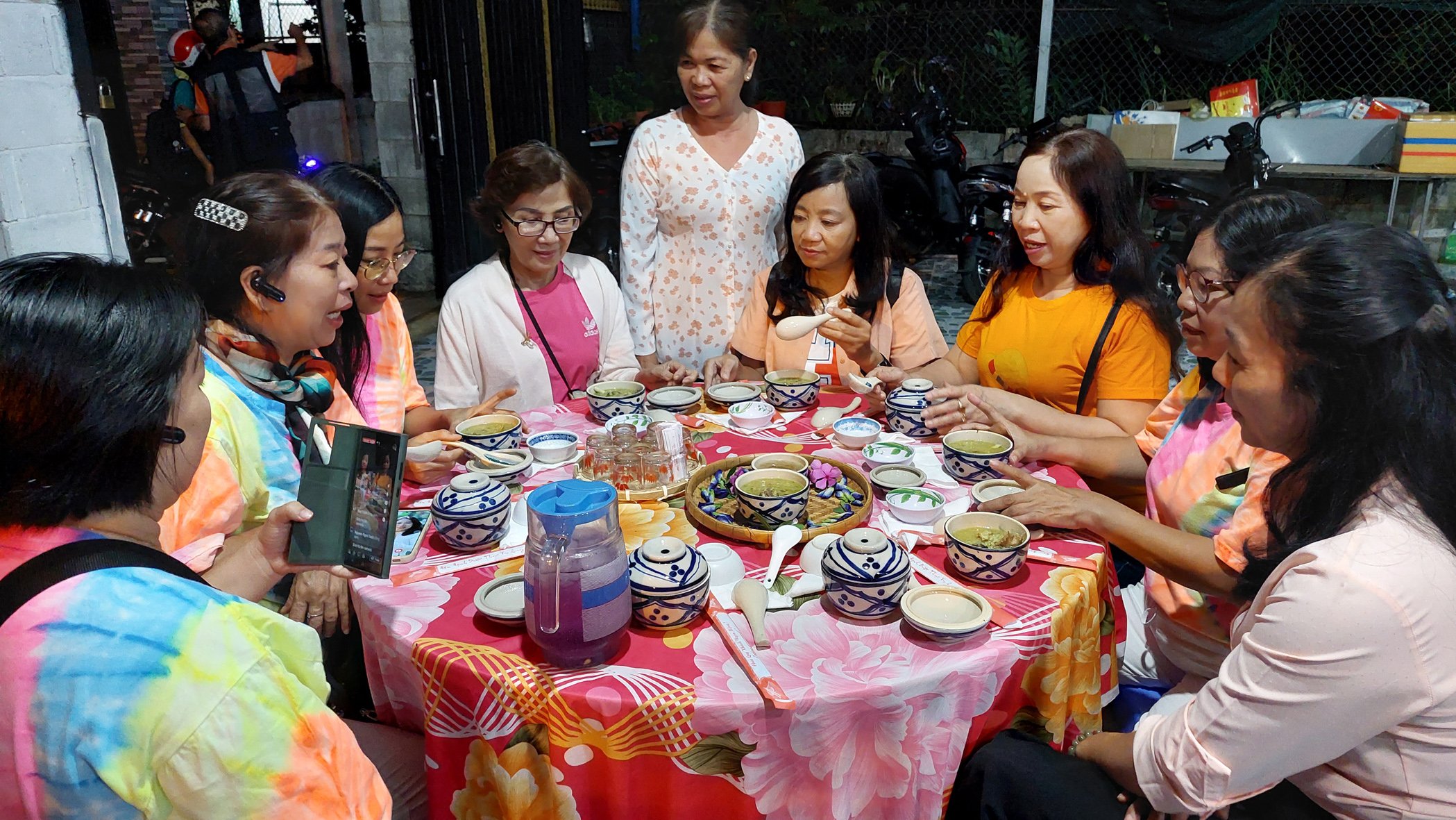
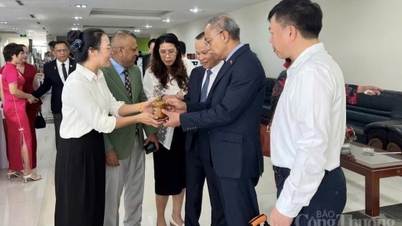
Ms. Kim Lan invited guests to try the rice porridge served in a mortar.
We stopped our car at the end of Huynh Tan Phat street, at Phuoc Khanh ferry terminal, only 200 meters from Binh Khanh ferry terminal (to Can Gio), and boarded a boat to see the place on the river that locals say "the water flows and divides in two".
We were given an explanation of the place name based on Trinh Hoai Duc's records in the book "Gia Dinh Thanh Thong Chi". Around the first half of the 18th century, many people from the North traveled by boat along the East Sea into the river, and near the confluence of the large rivers, they gathered on the river to rest. At that time, the area was sparsely populated, the boats were narrow, and it was difficult for merchants to cook their own meals. Vo Thu Hoang, a wealthy man from Tan Chanh district, built rafts out of bamboo, erected temporary houses, and provided all the necessary cooking utensils for customers to use free of charge. Later, many people also built rafts to trade goods, forming a floating market on the river, so the place was called Nha Be (Raft House) by the locals.
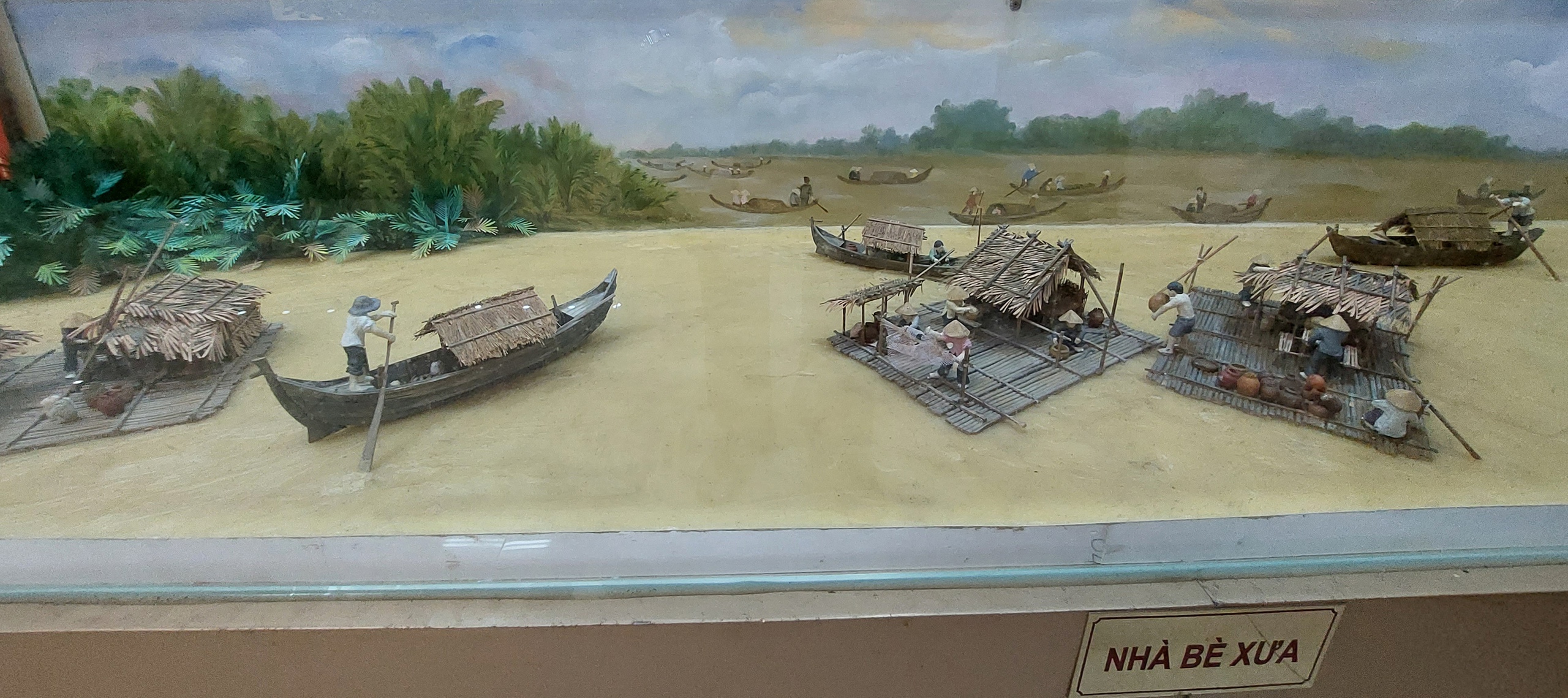
Floating rafts could be restored on the river to provide visitors with a unique experience.
That's how the place name came about. However, the location where the river "flows in two" still has two parallel directions that need explaining.
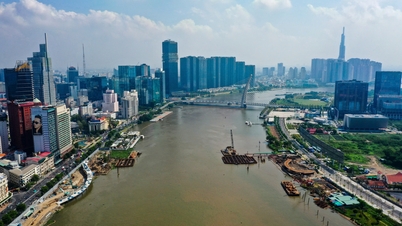
Some believe that Nhà Bè was formerly a large area encompassing present-day District 7 and Nhà Bè District, where merchants gathered to trade on rafts at what is now Mũi Đèn Đỏ (Red Lighthouse Cape), as it is where the Đồng Nai and Saigon rivers converge. If boats from the sea or merchant ships from the Mekong Delta came up and entered the Nhà Bè River, they would reach Mũi Đèn Đỏ, where the Saigon, Đồng Nai, and Nhà Bè rivers meet. From there, people could travel to Saigon and Gia Định via the Saigon River, or to Đồng Nai via the Đồng Nai River.
Others suggest that the place where the Nha Be River splits in two, as mentioned in the folk song, is at Phuoc Khanh ferry terminal, because it is there that the Nha Be River branches into two: the Long Tau River heading towards Nhon Trach district, Dong Nai province, and the Soai Rap River heading towards Nha Be district.
Regardless of the explanation, Nha Be district is located in a crucial waterway connecting the East Sea to Ho Chi Minh City, along with a system of canals and waterways connecting the waterway from the Mekong Delta.
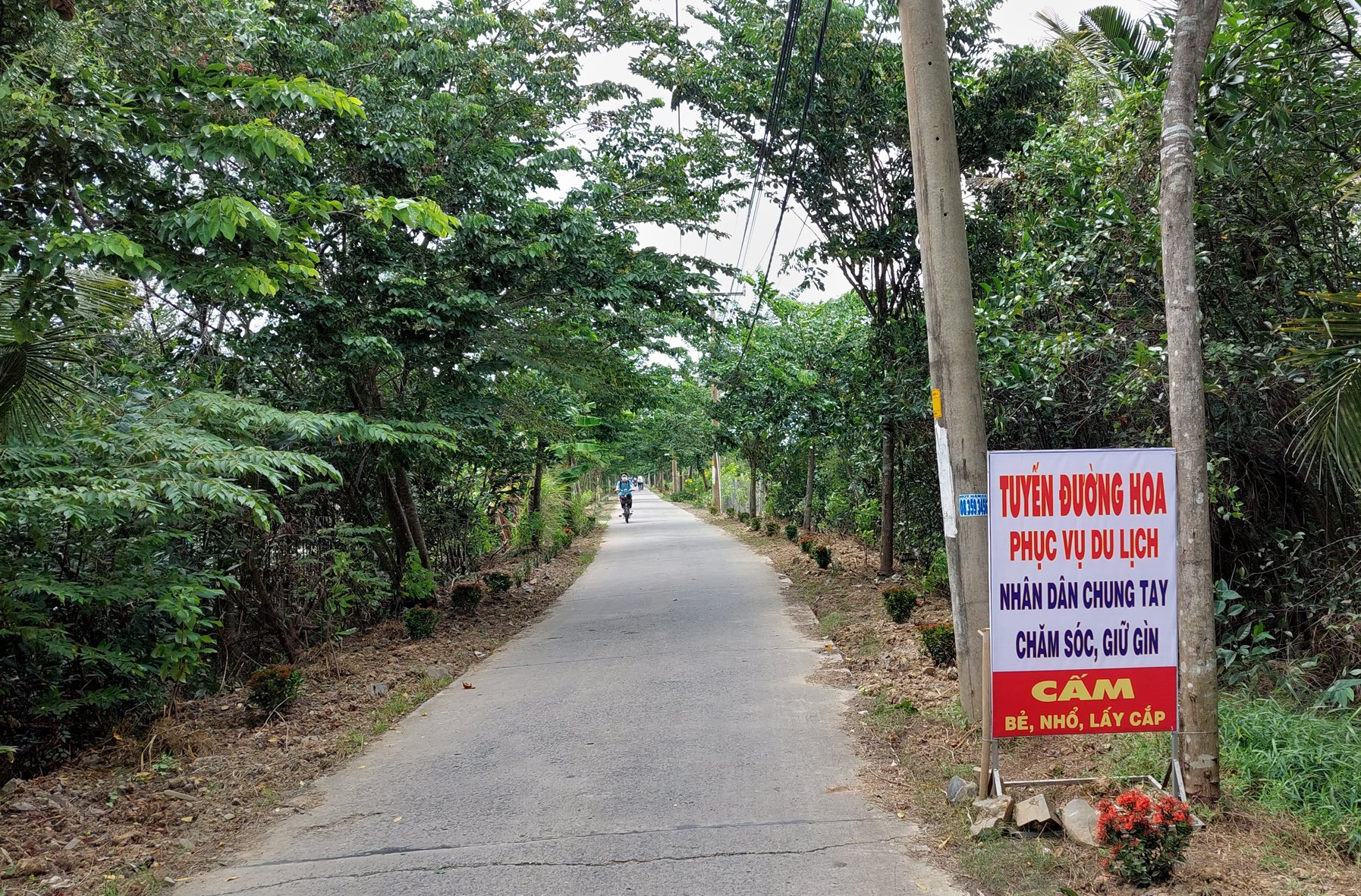
The flower-lined road was planted by the people working together.
I've been to Nha Be many times for work, but this is the first time I've visited Nha Be as a tourist, to see if it offers any different kind of "attraction."
Our boat followed the Soài Rạp River, which encircles the eastern part of Nhà Bè district. Near Nhà Bè cape is the Ngũ Hành Temple, with a side gate on the Soài Rạp river embankment, near ferry terminal number 9, while the main gate is accessed from Huỳnh Tấn Phát road in Phú Xuân commune. The Ngũ Hành Temple is also known as Bà Châu Đốc Temple 2, because within its grounds there is a shrine dedicated to Bà Châu Đốc, An Giang , where many people come to pray for business prosperity.
Approaching Long Thoi commune, from our boat, we could clearly see the Binh Khanh bridge, part of the Ben Luc - Long Thanh expressway project currently under construction. Once completed, the Ben Luc - Long Thanh expressway will significantly shorten travel time between the Mekong Delta (via Long An) and the Southeast region (via Dong Nai) without needing to pass through Ho Chi Minh City.
That being said, Nha Be also has advantages along this future road network, because the Ben Luc - Long Thanh expressway intersects at the Binh Khanh bridge over the Soai Rap river, connecting with Highway 1 - Hiep Phuoc Industrial Park.
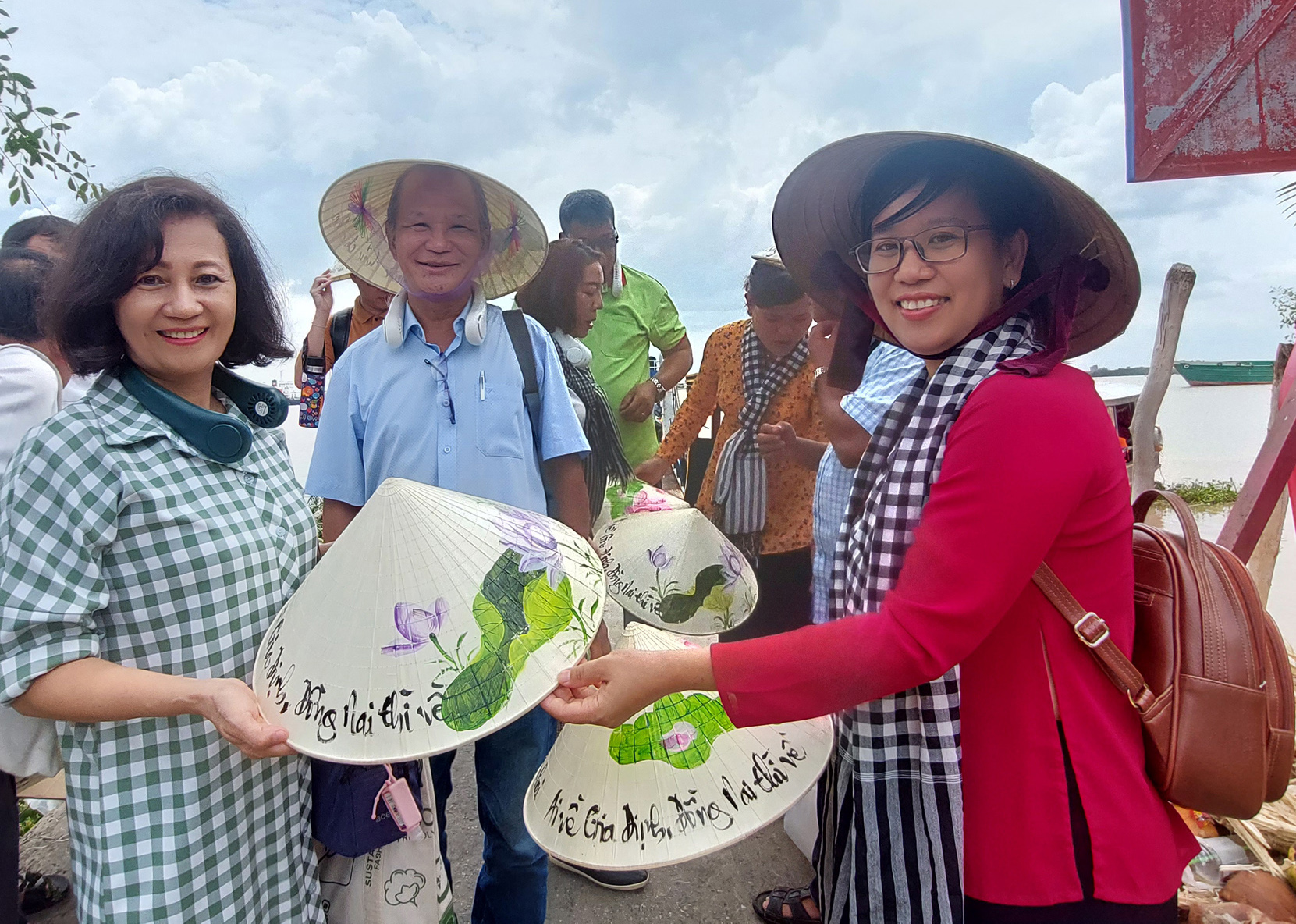
Picking up passengers at Hiep Phuoc ferry terminal.
The boats gradually made their way to Hiep Phuoc commune, a source of pride for Nha Be district, which transformed a swampy area into an industrial zone. On the river, boats traveled back and forth, transporting goods to the docks and factories, or carrying goods to and from Hiep Phuoc port.
Speaking to us as tourists, Mr. Vo Phan Le Nguyen - Vice Chairman of the People's Committee of Nha Be District - said that in addition to continuing to develop into an industrial and logistics center, the district is inviting investors to exploit and develop tourism based on the rivers and canals and peaceful rural roads that Nha Be wants to preserve as a characteristic suburban area to attract tourists.
To attract tourists, Nha Be must answer the question: What can visitors do, eat, and buy as souvenirs to leave a lasting impression of Nha Be?
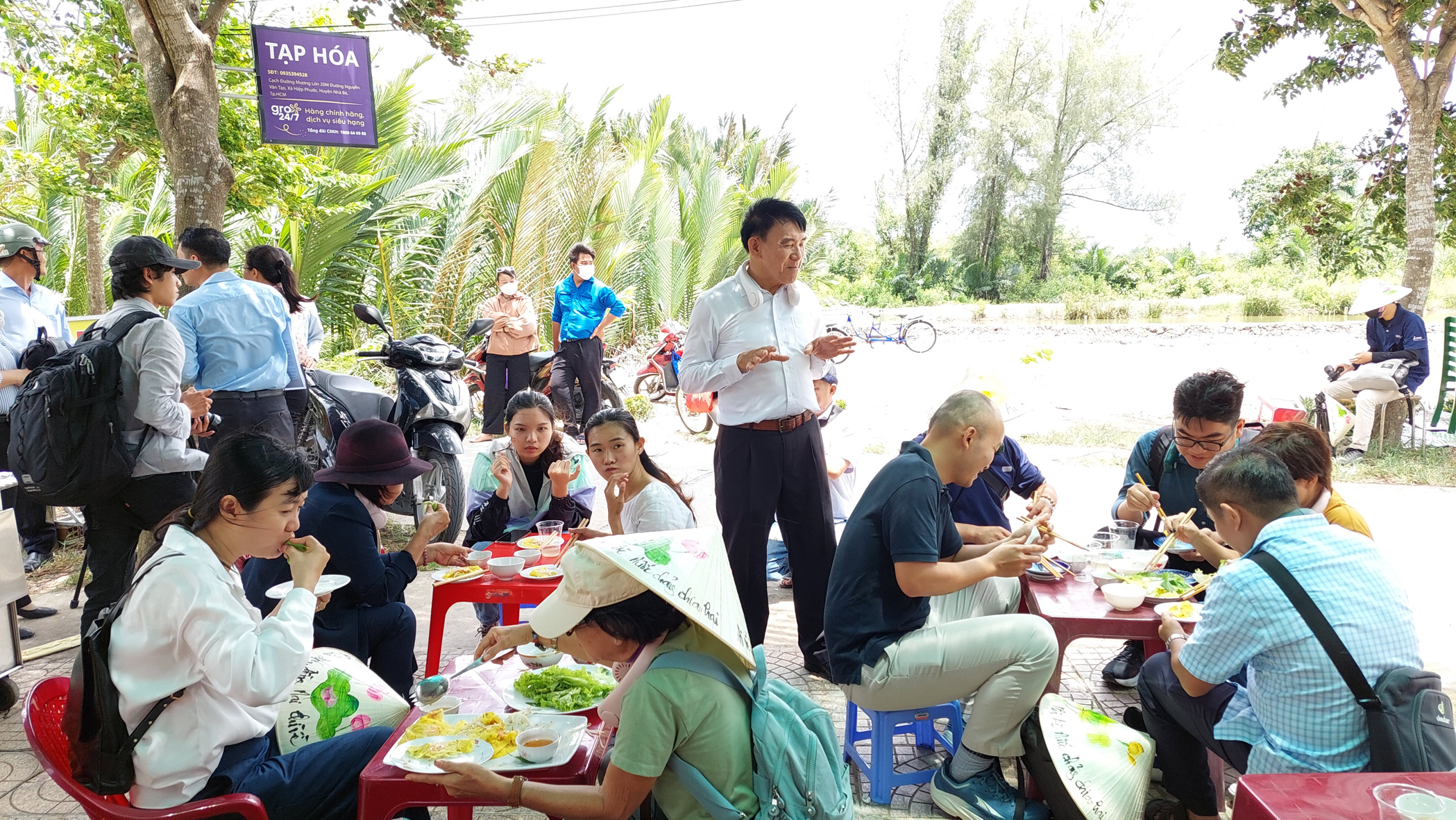
Stop along Giáng Hương street to enjoy shrimp pancake.
On country roads
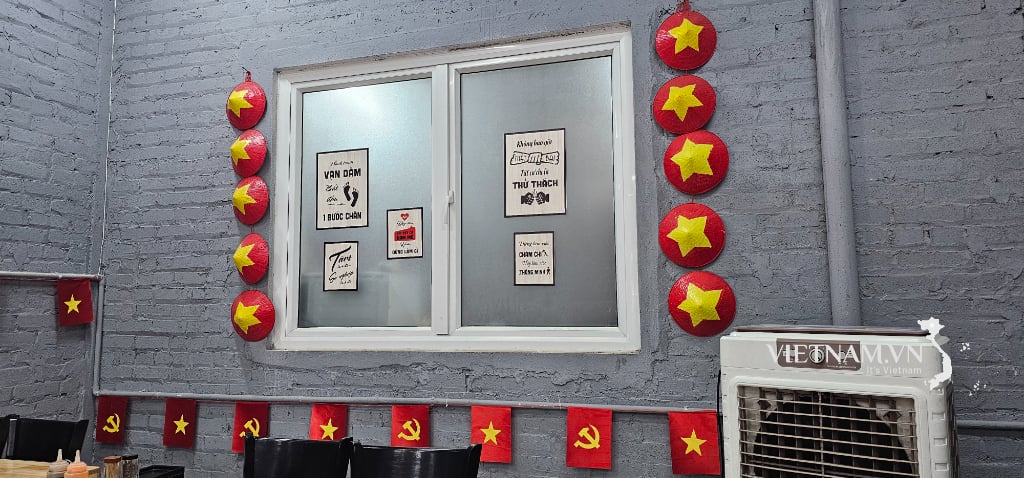
The boat docked at Hiep Phuoc ferry terminal, where young people from the district greeted the passengers, handing them conical hats inscribed with the folk song "Nha Be river flows and divides in two / Whoever goes to Gia Dinh or Dong Nai, let them go."
People cycle along the "flower road" used for tourism, planted and cared for by the locals. While the flowers are still short, the two rows of tall sandalwood trees provide ample shade, creating a cool and pleasant atmosphere reminiscent of the countryside. This village road, named "Sandalwood Road" by those involved in tourism, connects to the Lien Ap 2-3 road.
We stopped at Ms. Dang Thi Mai's grocery store to eat shrimp pancakes. Ms. Mai said she had recently been "lured" into the tourism business, so even though she had prepared plates, chopsticks, spoons, and napkins, she still felt a bit clumsy just frying the pancakes and serving them to customers. She said, "Just enjoy the delicious taste of the sweet Nha Be river shrimp, and I'll learn how to provide better service later." Such genuine kindness, how could anyone find fault with that!
To attract tourists, Nha Be must have its own identity and uniqueness. Nha Be is like a blank canvas for tourism, gradually being painted with distinctive images of its history, geography, culture, and cuisine.
Many of the local seafood products here are unique, perhaps due to the brackish water characteristics of the region, coupled with the way each type of shrimp, crab, fish, and frog is prepared and served with naturally growing vegetables and fruits, creating distinctive dishes unique to Nha Be. For example: red snapper stewed in a clay pot with fragrant, rich coconut rice; female crabs with round shells, full of roe, and firm meat in their claws; sour and astringent guava fruit harmonizing with locally made crab paste; crab salad enjoyed with cordyceps wine; young frog stir-fried with bui leaves; eel stewed with turmeric; octopus dipped in guava vinegar; and catfish caught in the Cay Kho canal cooked in a hot pot.
These unusual dishes are still found in families in Nha Be, passed down as local traditions. Guests in Nha Be have always been family members or close friends visiting. For generations, the term "tourist" has never been mentioned! When welcoming family or friends, they would prepare whatever delicious food they had, honestly not thinking of it as a special or exotic dish. It was only when learning about tourism that Thu Thuy and Kim Lan (residents of Hiep Phuoc commune) learned that "long-lasting noodles," "morning porridge," and "soaking dipping sauce" were unusual dishes. When they mentioned them, guests asked about them and demanded to try them.
Because the two dishes, "long-lasting noodles" and "rice porridge," piqued our curiosity and made us eager to try them, we continued our exploration of Nha Be for another evening.
If the current picture of Nha Be tourism already features the scenic waterways and lush green village roads during the day, softening the rigid image of an industrial and port area, then at night, the picture is enhanced with an enduring "countryside charm" in every corner of the village, filled with the fresh scent of the fields and the harmonious sounds of frogs, insects, and plants—a sound impossible to find in the city center.
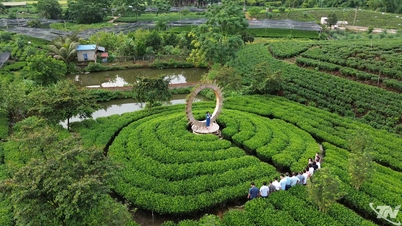
That evening, a group of teachers from District 3 also came to Nha Be to experience "Moonlit Canal Village 16". We saw the spirit of tourism development in Hiep Phuoc commune, where at least two residents had dedicated a considerable amount of land to create a "moonlit and breezy" space and a "riverside night village" for visitors to freely take photos.
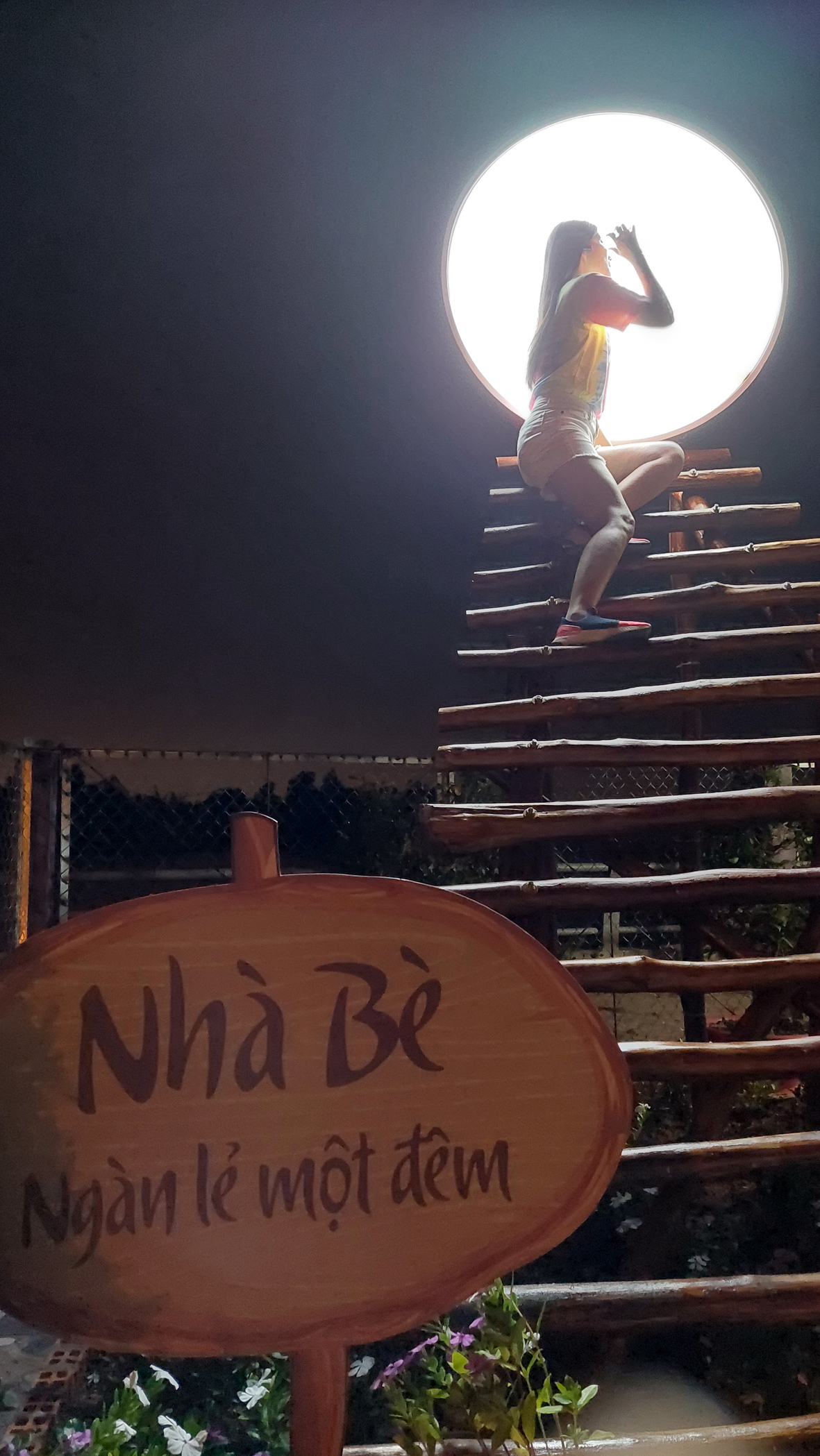
A serene space bathed in moonlight and gentle breeze.
Unleash potential
Approaching the experience of visiting a place still in its trial phase, and understanding the locals' desire to put Nha Be on the tourism map of Ho Chi Minh City, we didn't demand too much. However, what we experienced from morning to night in Nha Be shows that this suburban district deserves to be an attractive destination if it has more highlights related to the local history and culture.
Floating rafts could be recreated on the river to provide a place for tourists to experience a floating market, perhaps even with self-service kitchens, just like in the stories they've heard about the early days of settling this land.
Although the number of people engaged in agriculture has decreased, the communal houses in Nha Be still hold three annual festivals to pray for peace and prosperity in the village: the Ky Yen festival on the 16th of February; the Ha Dien festival on the 16th of May; and the Cau Bong festival on the 16th of September according to the lunar calendar. These festivals serve as opportunities to showcase local culture and enrich the experiences of tourists.
The waterways in Nha Be are quite convenient for boat travel, but Nha Be currently has a river but lacks boats, docks, and waiting areas that meet the required standards to accommodate passengers. If the system of ferry terminals, inland waterway docks, and waiting areas in Nha Be is completed soon, investors in tourist boats will be able to start welcoming more passengers more quickly.
There will be 3 types of customers.
Mr. Phan Xuan Anh, Director of Nhieu Loc Boat Company Limited - who has many years of experience in welcoming foreign tourists on cruise ships - commented: "We hope to work with the local authorities to invest in the necessary conditions to bring tourists to explore Nha Be from the river to the village. If Nha Be is determined to develop tourism, it will attract three types of tourists: people from Ho Chi Minh City who enjoy waterway tourism and appreciate peaceful natural scenery; domestic tourists visiting Ho Chi Minh City; and international tourists who want to enjoy a space different from the urban environment."
Source

![[Photo] National Assembly Chairman Tran Thanh Man working with the Standing Committee of the Law and Justice Committee](https://vphoto.vietnam.vn/thumb/1200x675/vietnam/resource/IMAGE/2026/05/21/1779378929214_ndo_br_1-4610-jpg.webp)
![[Photo] General Secretary and President To Lam presides over a working session with the Central Policy and Strategy Committee on the development of the materials industry.](https://vphoto.vietnam.vn/thumb/1200x675/vietnam/resource/IMAGE/2026/05/21/1779359935432_a3-bnd-3129-1412-jpg.webp)































































Comment (0)