

Regarding the festival commemorating the founder of pottery in Kinh Bac region.
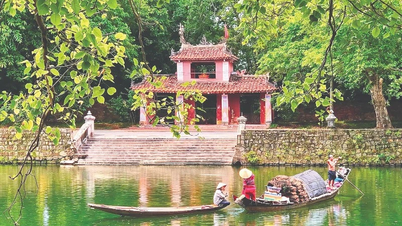
The complex of communal houses, temples, and ancestral shrines in Tho Ha is located within the ancient village of Tho Ha on the northern bank of the Cau River – a land rich in historical and cultural traditions of the Kinh Bac region. The complex comprises three main structures: Tho Ha communal house, dedicated to the village guardian deity and serving as a community center; Tho Ha pagoda (Doan Minh Temple), a place of Buddhist worship for the people; and Tho Ha ancestral shrine, dedicated to Confucius and other revered sages, reflecting the local community's tradition of valuing education and respecting teachers.
According to historical documents and surviving Han Nom inscriptions, Tho Ha communal house was built in 1692 during the Le Trung Hung era; Tho Ha pagoda has architectural traces from the 17th century; and the ancestral temple was built to worship the village's ancestors and encourage a spirit of learning. Over the centuries, these structures have been preserved, restored, and renovated by the people through various historical periods.

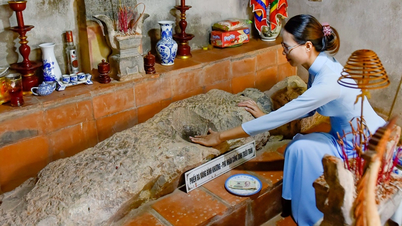
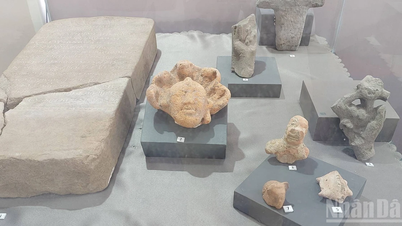
The complex of relics currently preserves many precious artifacts and antiques such as a system of ancient stone steles dating from the 17th to 19th centuries, an eight-sided palanquin, a set of eight precious objects, gilded and lacquered wooden altars, and nearly 100 ancient Buddha statues at Tho Ha Pagoda. Particularly noteworthy is the arched gateway of Tho Ha communal house, a masterpiece of wood carving from the Le Trung Hung period with exquisite dragon, phoenix, and floral motifs, which has been recognized as a National Treasure by the Prime Minister .
Over centuries of formation and development, the complex of historical relics is closely associated with the community life of the ancient Tho Ha village along the Cau River, vividly reflecting the history, culture, and traditions of the people of the Kinh Bac region. The complex is outstanding in its architecture, art, science, and socio-cultural life, with many valuable artifacts and documents, especially its ancient architectural system, exquisite carvings, and valuable collection of Buddhist statues. It is also a unique cultural space associated with traditional festivals, traditional crafts, and the Quan Ho folk songs of Bac Ninh.
Tho Ha is also a place that preserves the beautiful customs and traditions of our ancestors, most notably the Tho Ha Festival, which is famous both domestically and internationally. The festival is like a colorful tapestry of the homeland, a gathering and spreading of culture to the community. All that is considered the most quintessential and traditional is displayed and showcased here. It can be said that if you visit Tho Ha and have the opportunity to participate in and experience the festival, it is perhaps the greatest stroke of luck for every visitor during this early spring season.
Traditionally, the Tho Ha Festival is held from the 20th to the 22nd of January each year. The festival is celebrated on a larger scale every two years, in even-numbered years. The Tho Ha Festival is also an occasion for the villagers to express their gratitude to the founder of the pottery craft, Dao Tri Tien, who was instrumental in passing on the pottery skills to the villagers in the 12th century. To this day, the Tho Ha Festival continues to maintain and preserve the unique intangible cultural heritage values of this traditional festival in Northern Vietnam.

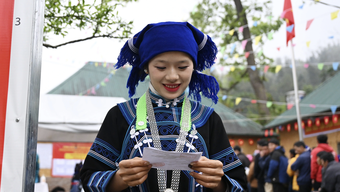
At the Tho Ha Village Festival, visitors will experience a culturally rich atmosphere with both ceremonial and festive activities. The most prominent part of the ceremony is the procession from the hamlets and villages to the communal house, with hundreds of people, all young men and women, dressed in elegant and vibrant costumes. Particularly noteworthy is the procession of the Three Gods of Fortune, Prosperity, and Longevity (symbolizing luck, prosperity, health, and longevity), along with a pair of celestial beings, dressed up by the villagers. Leading the procession is a lion dance troupe, followed by a group of musicians playing instruments such as trumpets, drums, flutes, and cymbals, creating a vibrant and colorful festival atmosphere filled with lively sounds. Following the Three Gods of Fortune, Prosperity, and Longevity are the Generals of Flag, Sword, and Gong, each representing a different group.
Following this was a procession carrying the sacred palanquin and the goddess palanquin, along with the altar and throne, accompanied by a traditional dance troupe. In addition, among the offerings to the deities was a roasted cow covered in silk cloth, and many other offerings presented by the hamlets, clans, and families. The procession from the hamlets to the Thổ Hà village temple was not far, only a few hundred meters, but it took the procession two hours to reach the destination due to the many accompanying rituals. When the procession arrived, the chief priest, dressed in traditional attire, stood on the steps to welcome the procession. Once everyone was seated, the ceremony began with solemn rituals. Everyone respectfully invited the deity to attend the festival with the villagers and prayed for the deity's blessings for a new year filled with good health, prosperity, peace in the hamlet, and happiness in the families.

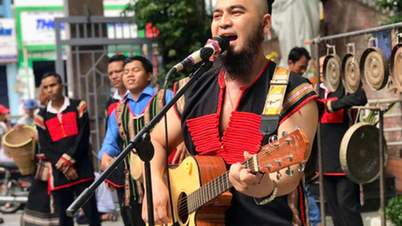
The festival concludes with an equally vibrant and culturally rich celebration featuring traditional folk games such as cockfighting, boat racing, wrestling, chess, and duck-catching boat rides… but the most prominent is Quan Ho folk singing. Tho Ha is considered the birthplace of ancient Quan Ho folk singing. During the festival, male and female singers from neighboring villages and from Bac Ninh province showcase their singing talents day and night in the village square or on boats. Here, visitors can immerse themselves in the spring festival atmosphere with singers dressed in traditional costumes, conical hats, and turbans, performing Quan Ho folk songs throughout the night and into the morning. The lyrical songs captivate visitors from near and far. With its unique cultural values, the Tho Ha Festival was recognized by the State as a National Intangible Cultural Heritage in 2012.
Admire the National Treasure
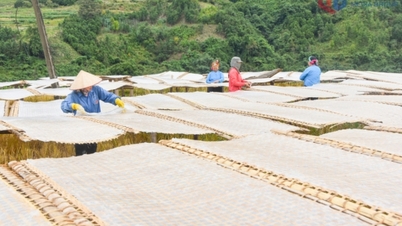
Besides the festival, visitors can also explore and experience the unique cultural space of a quintessential Vietnamese village, a feature rarely found elsewhere. This is a characteristic ancient village with a diverse and unique complex of architectural structures stretching from one end to the other, including three national-level historical sites: Tho Ha communal house - a national-level architectural and artistic monument since 1962. Notably, the communal house houses a decorative archway recognized as a National Treasure in 2021; Tho Ha pagoda - a national-level historical and cultural monument since 1996; and Tho Ha village's Confucian temple - a national-level historical and cultural monument since 1999. In addition, visitors can admire the ancient village gate, the old well, and the moss-covered narrow alleys made of fired bricks, pottery, and earthenware. They can also visit families practicing traditional crafts such as brewing rượu (rice wine), making bánh đa nem (rice paper for spring rolls), and bánh khúc tai mèo (a type of Vietnamese cake).
On March 9, 2026, at Tho Ha communal house, the Party Committee, People's Council, People's Committee, and Fatherland Front Committee of Van Ha ward (Bac Ninh province) held a ceremony to announce the Decision and receive the Certificate of Ranking as a Special National Monument for the Tho Ha communal house, pagoda, and ancestral temple complex. At the ceremony, representatives from the Department of Culture, Sports and Tourism announced Decision No. 266/QD-TTg dated February 11, 2026, of the Prime Minister, ranking the Tho Ha communal house, pagoda, and ancestral temple complex as a Special National Monument.
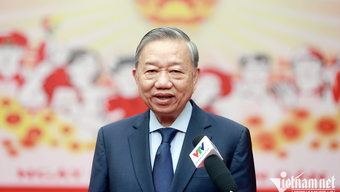
Vice Chairman of the Bac Ninh Provincial People's Committee Phan The Tuan emphasized that the classification of the Tho Ha complex of communal houses, temples, and ancestral shrines as a special national historical site is a recognition by the Party and the State of the outstanding historical and cultural values of the site, and at the same time affirms the important position of the heritage in the national cultural treasure.

Mr. Nguyen Van Tinh, Chairman of the People's Committee of Van Ha Ward, shared that the classification of the Tho Ha communal house, pagoda, and ancestral temple complex as a Special National Monument is not only an honor and source of pride for the local Party Committee and people, but also a recognition of the unique historical and cultural values that have been preserved through many generations. Van Ha Ward will continue to coordinate with specialized agencies of the province to develop a comprehensive plan for the preservation, restoration, and enhancement of the monument complex in accordance with the Law on Cultural Heritage; strengthen management and preservation of the original elements of the monument, ensuring its original state and long-term historical value.
The locality also promotes the dissemination and education of traditions within the community, especially among the younger generation; fostering unique cultural values such as Quan Ho folk songs, traditional festivals, and ancient pottery villages in conjunction with the development of cultural tourism, contributing to promoting the image of Tho Ha - a land rich in identity of the Kinh Bac region.
In the coming period, Bac Ninh province will continue to strengthen the conservation and promotion of the value of historical relics in a scientific and sustainable manner; promote the role of the community in preserving heritage; link relic conservation with the development of cultural tourism, contributing to promoting the image of the Kinh Bac homeland to international friends.
Source: https://baophapluat.vn/ve-tham-lang-co-mien-kinh-bac.html




















































Comment (0)