

Motivating young people
In the days leading up to Tet (Vietnamese Lunar New Year), passing by Pham Ngoc Thach Street (District 3, Ho Chi Minh City), it was easy to spot the alley leading to the "Vietnamese silk house" by the striking colors of the soft silk ribbons fluttering in the wind. Located in an old villa, the showroom displays silk paintings and hand-painted silk ao dai (traditional Vietnamese dress) by designer and artist Trung Dinh and his students.
With 12 years of pioneering, initiating, and creating a strong wave for the handcrafted silk dyeing and silk painting movement using new methods, the artisan from Phu Yen province had long cherished the plan to open a showroom, but only now has it become a reality. Trung Dinh shared: "Through this space, I hope to inspire students to pursue silk painting and ignite inspiration in young designers. I hope young people will give special preference to Vietnamese silk fabrics instead of foreign materials."
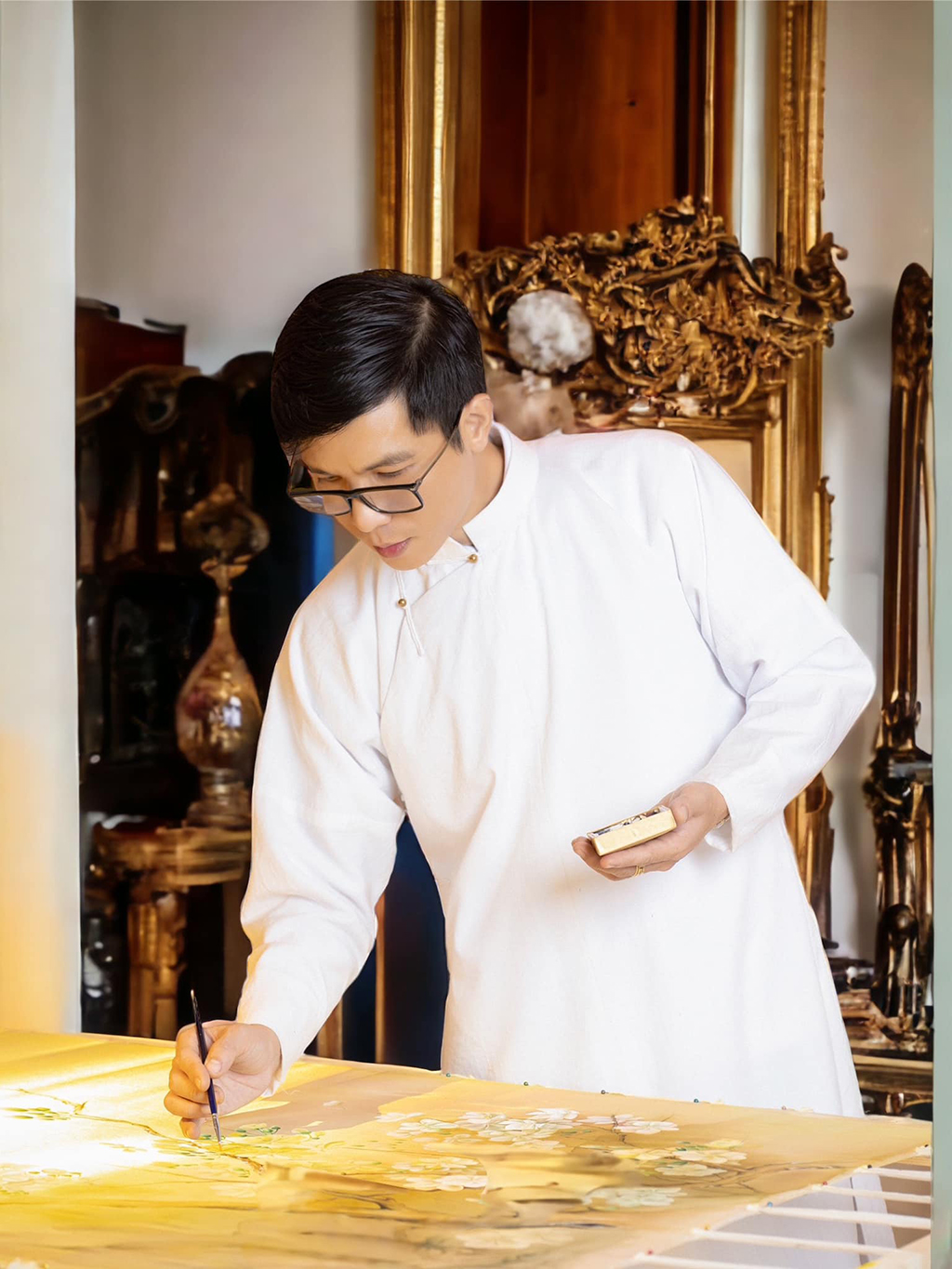
Designer Trung Dinh gives instructions on how to paint on silk.
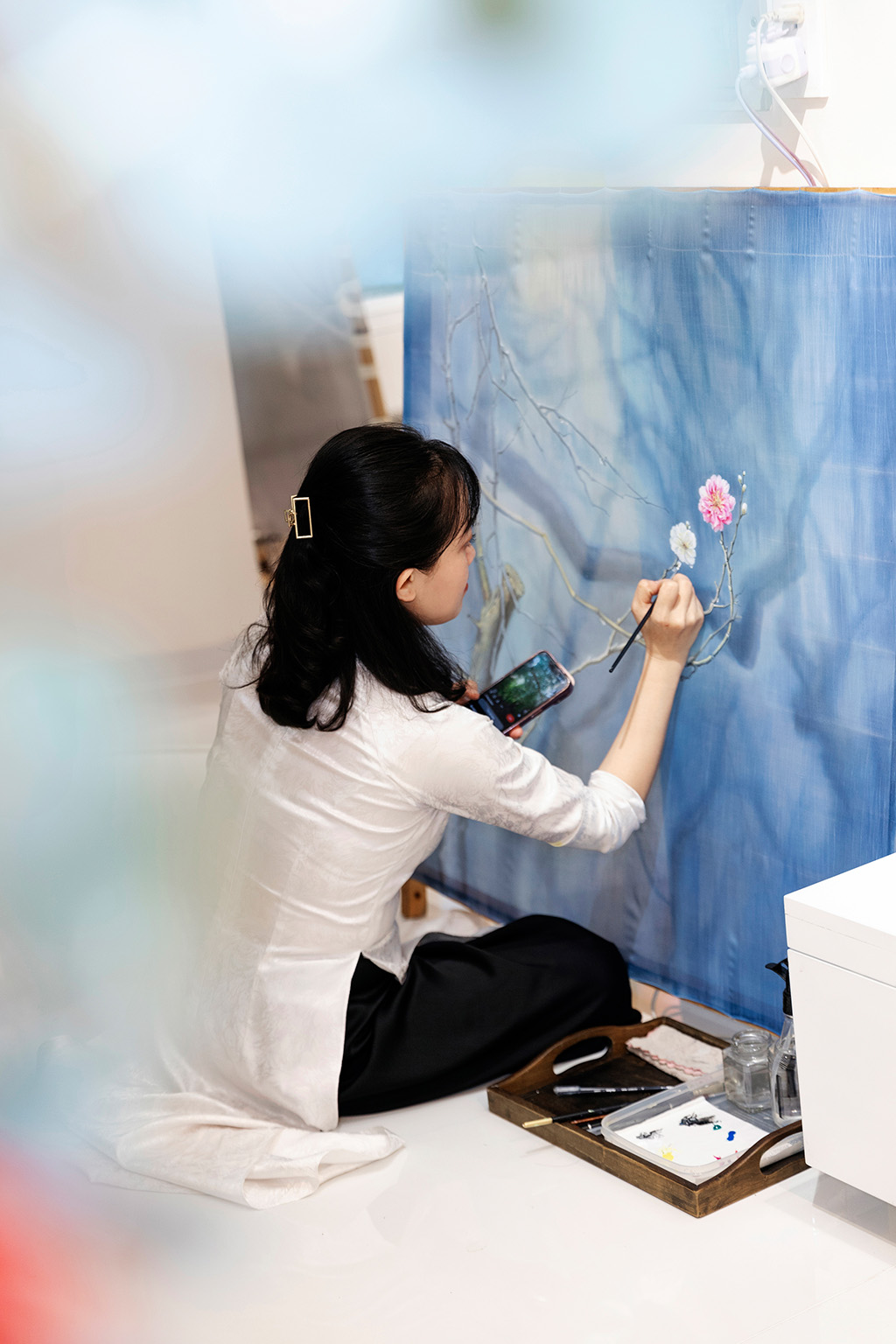
Young artist paints silk paintings on scarves and traditional Vietnamese dresses.
Before falling in love with Vietnamese silk, the designer, born in 1983, was the creative director of an Italian fashion brand. However, he decided to quit that coveted job to focus on developing ombre silk dyeing techniques and handcrafted silk painting.
Trung Dinh said that since his time as a fashion design student, he realized one of the biggest problems facing Vietnamese fashion, especially for young designers, is its dependence on the market. While large brands can order custom fabrics with specific patterns and colors, young designers can only create fashion based on what the fabric market provides. If Vietnamese silk cannot "survive" in its own country, how can it be exported? This question led him to investigate further and realize that the reason why traditional silk-growing villages are gradually declining is because they can only sell raw yarn instead of high-quality finished silk.
After more than two years of experimentation and countless failures, designer Trung Dinh successfully developed a technique for hand-dyeing silk using acrylic paint. In addition, he also developed a new, simpler, and more applicable technique for painting on silk. These two techniques are cleverly combined on ao dai (traditional Vietnamese dress), silk scarves, dresses, handbags, etc., achieving both aesthetic appeal and aligning with fashion trends and consumer demands. Trung Dinh recounts that initially, he had to seek out individual students to train and pass on his skills in order to build a movement for silk dyeing and painting on silk; today, the number of students has exceeded 4,000.
"I'm happy to be the initiator of the movement to love Vietnamese silk, culture, and handicrafts. This path is becoming clearer, and more and more young people are becoming aware of it and choosing to pursue it. I believe that many generations of artisans, artists, and designers will revive the Vietnamese silk road," Trung Dinh shared.
Connecting painting and fashion
The silk fabrics used by the 8X generation and the apprentices of artisan Trung Dinh are mostly Nha Xa silk (Duy Tien, Ha Nam), Bao Loc silk, Toan Thinh silk, etc. White silk sheets are stretched flat on bamboo frames and coated with multiple layers of color to create the desired shades. This technique allows artisans to create gradient color effects (ombre dyeing) and achieve the desired color. Following the dyeing process, thematic patterns are painted using realistic painting techniques, creating an impressive artistic effect.
Among the more than 4,000 students of designer Trung Dinh who have graduated, many have built their own brands, while others work for other brands and designers. Vo Thien Vu is one of the students retained as an artist who paints on Vietnamese ao dai (traditional dress). The young man, born in 2003, recounts that after taking the university entrance exam, he packed his bags and went to Ho Chi Minh City alone to learn the craft. Vu is satisfied with his choice instead of following his family's direction. He said: "Learning a craft requires meticulousness and patience. I find myself loving culture more, loving ao dai and hand-painted silk in Vietnam even more after three years of dedication."
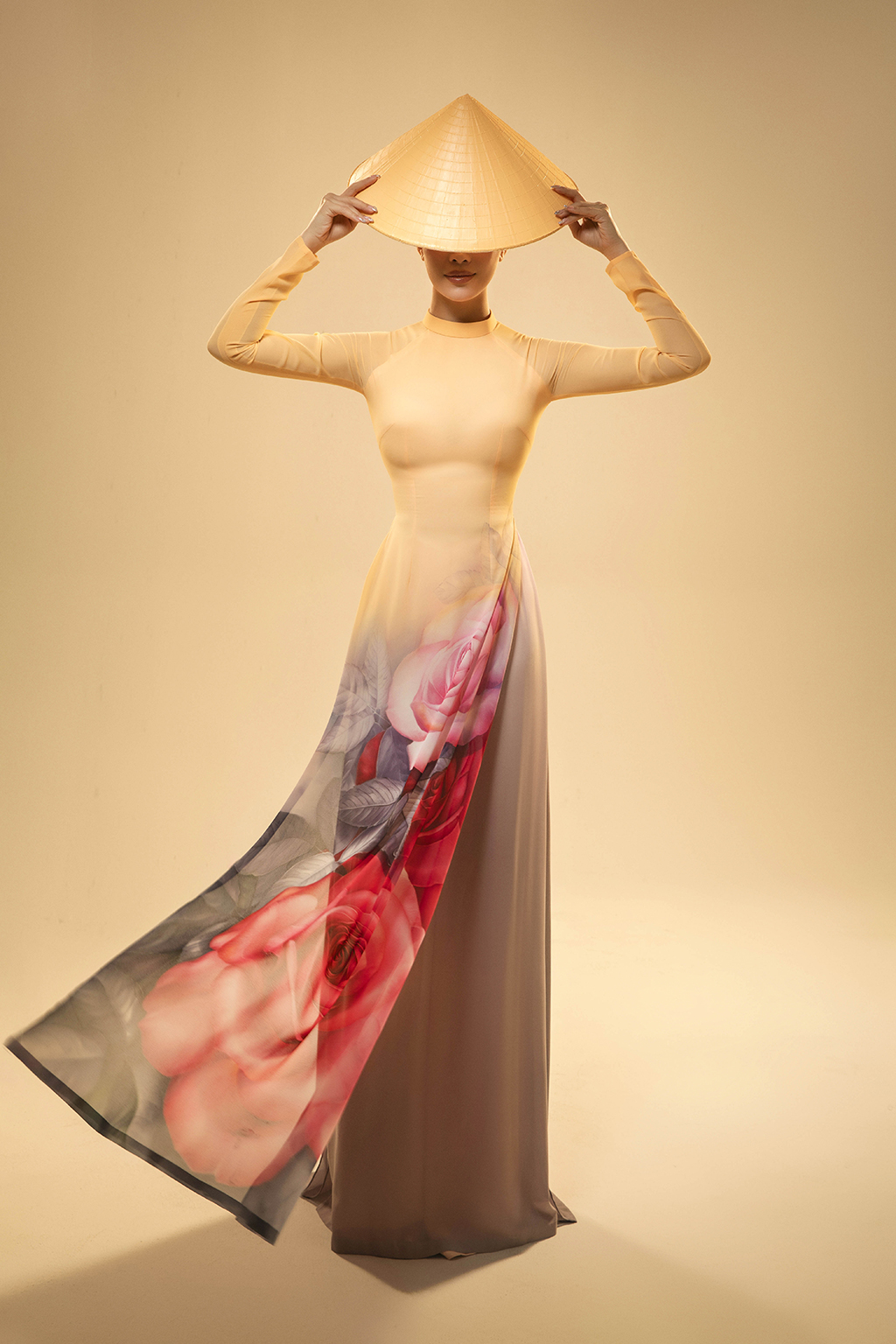
Runner-up Kim Duyên in an ao dai (traditional Vietnamese dress) with ombre dyeing and hand-painted watercolor artwork.
PHOTO: KIENG CAN TEAM
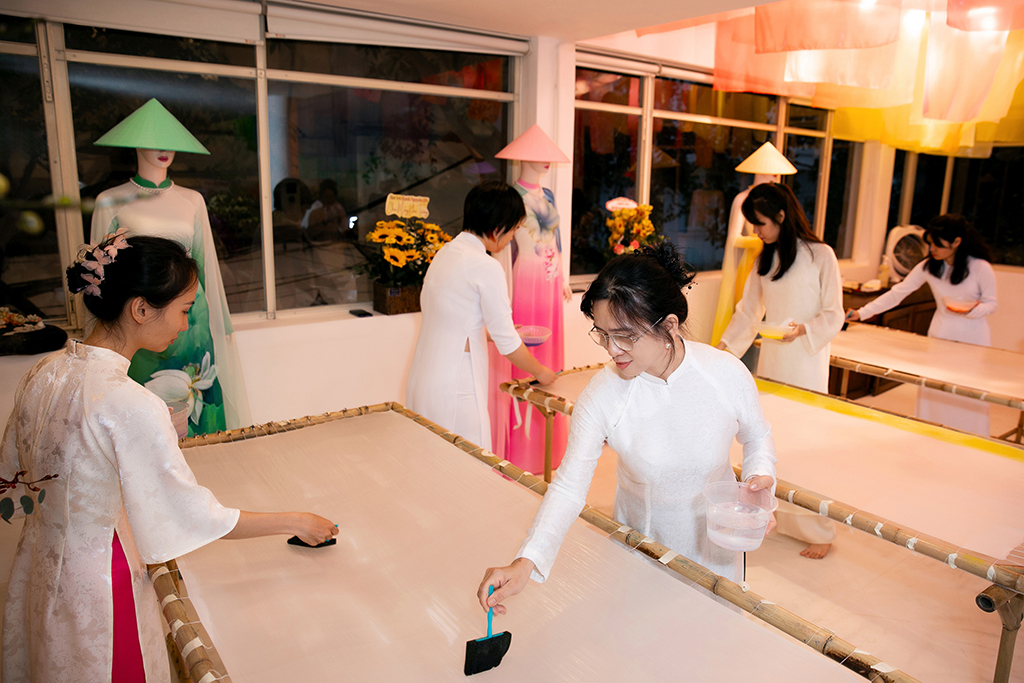
Demonstration of traditional silk dyeing
PHOTO: KIENG CAN TEAM
Meanwhile, Linh Trinh, another former student, chose the path of building a drawing center. She offers online and in-person courses to teach drawing on various products such as handbags, t-shirts, shirts, face masks, and traditional Vietnamese dresses (áo dài), with a wide variety of themes.
According to artist Trung Dinh, silk painting is not only learned by young people as a profession, to satisfy their passion for painting, but also as a healthy form of entertainment. Many students in their 70s come from all over the country, some even from the US and Canada, to Vietnam to learn silk painting and dyeing as a form of "meditation," alongside the joy of creating their own silk paintings or unique garments for personal use.
As one of the few designers who has made a name for himself with both beautiful collections and an impressive cultural story, Trung Dinh has been invited numerous times to participate in cultural and diplomatic events in Ho Chi Minh City. In 2024 alone, he showcased his ao dai (Vietnamese traditional dress) collections three times, introducing ombre dyeing techniques at tourism promotion programs organized by Ho Chi Minh City in Australia, Japan, and China. His ao dai collections featuring world landmarks and Vietnamese scenic spots have garnered significant attention. His Vietnamese silk showroom has also become a cultural hub, showcasing not only ao dai and silk paintings but also the story of Vietnamese silk and the art of silk craftsmanship.
Source: https://thanhnien.vn/ve-tranh-nhuom-lua-de-giu-van-hoa-viet-185250204222331774.htm

![[Photo] General Secretary and President To Lam presides over a working session with the Central Policy and Strategy Committee on the development of the materials industry.](https://vphoto.vietnam.vn/thumb/1200x675/vietnam/resource/IMAGE/2026/05/21/1779359935432_a3-bnd-3129-1412-jpg.webp)



















































































Comment (0)