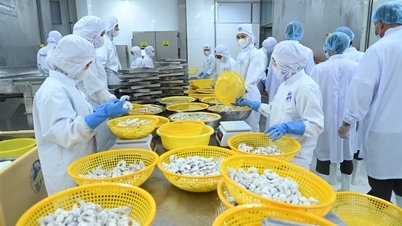
Blood samples are taken from pregnant women for testing at the health center.
Ms. NTM, from Ninh Kieu ward, said: "Both my husband and I are HIV positive, receiving ARV treatment. We are in good health, working and living normally, and our viral load is below the threshold. However, we didn't think about having children. Despite using contraception, our pregnancy was unplanned. I was worried, so I went for a check-up, and the doctor advised and explained the situation. My husband and I thought about it and decided to keep the pregnancy. The doctor tested, treated, and monitored us throughout the pregnancy, during labor, and after birth. When the baby was born, it was HIV-negative, and our family was very happy."
If an HIV-infected mother does not receive preventive treatment, the likelihood of transmitting HIV to her child is 15-40%. With preventive treatment, the transmission rate is reduced to less than 2%. Furthermore, if an HIV-infected mother receives ARV treatment before pregnancy, her viral load will be below the detectable threshold (below 200 copies/ml of blood), protecting both her own health and preventing HIV transmission to her child and partner.


According to the HIV/AIDS Prevention and Control Department of the Can Tho City Center for Disease Control (CDC), all pregnant women need to be counseled and tested for HIV during the first three months of pregnancy. The test results serve as the basis for counseling on treatment and preventing transmission to the child. Pregnant women infected with HIV are monitored and treated throughout their pregnancy until delivery, and newborns receive prophylactic medication and testing. These activities are implemented by the department at all public and private healthcare facilities. Postnatal prophylactic medication is provided to hospitals offering delivery services. As a result, the rate of HIV infection in newborns is very low; for many years, all children born to infected mothers have been HIV-negative. In most cases, HIV transmission from the mother occurs when the mother works far from home and returns to Can Tho for delivery, only to be tested for HIV later and not receive prophylactic treatment during pregnancy.
According to Ms. Nguyen Thi Thu Ha, Deputy Head of the Reproductive Health Department, CDC Can Tho City, HIV, hepatitis B, and syphilis are three infectious diseases that can be transmitted from mother to child during pregnancy, childbirth, or postpartum. Children infected with these diseases from birth face a high risk of serious complications, affecting their health and long-term development. Therefore, in addition to HIV, for many years Can Tho City (formerly) has implemented prevention measures against hepatitis B and syphilis transmission at healthcare facilities from the grassroots level to hospitals; integrating HIV, hepatitis B, and syphilis counseling and testing into prenatal and pregnancy counseling…
According to health recommendations, women should have a health check-up before pregnancy or during the first three months of pregnancy. Testing for HIV, hepatitis B, and syphilis not only protects the mother's health but also provides an opportunity for early intervention, minimizing the risk of transmission to the child. Healthcare facilities provide comprehensive counseling, testing, and treatment services. For cases where HIV infection is detected, pregnant women receive support with antiretroviral treatment, pregnancy monitoring, and postpartum care counseling. Children born to HIV-infected mothers are tested, monitored, and given preventive medication as prescribed. For hepatitis B, newborns receive the hepatitis B vaccine within the first 24 hours of birth to increase disease prevention effectiveness. Meanwhile, pregnant women with syphilis receive counseling and early treatment.
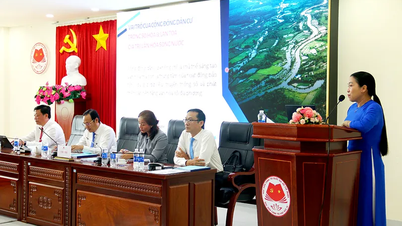
Ms. Tran Thi Thu Hong, Head of the Reproductive Health Department, CDC Can Tho City, said: From June 1st to June 30th, Can Tho City is implementing a month-long campaign to prevent mother-to-child HIV transmission with the goal of "eliminating mother-to-child transmission of HIV, Hepatitis B, and syphilis by 2030." During this campaign, the focus will be on communication, promoting the benefits of prevention; expanding service provision; and reviewing and improving monitoring and support to enhance the quality of services. During this period, the city's CDC will organize a monitoring team to oversee the activities of health stations, regional health centers, and hospitals in Hau Giang and Soc Trang (formerly) provinces. The city's CDC has also developed a plan for the mother-to-child HIV transmission prevention program for Can Tho City for the period 2026-2030, which will be submitted to the Department of Health for presentation to the City People's Committee for consideration and approval. This is a step-by-step approach to achieving the goal of eliminating mother-to-child transmission of HIV, hepatitis B, and syphilis, contributing to the protection of maternal and child health and improving the quality of the population in the new era.



Text and photos: H.HOA
Source: https://baocantho.com.vn/vi-suc-khoe-cua-me-va-be-a208165.html

![[Photo] A phone-free summer afternoon at the village library](https://vphoto.vietnam.vn/thumb/1200x675/vietnam/resource/IMAGE/2026/06/27/1782551770949_anh-1-jpg.webp)



![[Photo] "Hanoi Lotus Festival" honors the lotus flower that has been associated with Vietnam for thousands of years.](https://vphoto.vietnam.vn/thumb/1200x675/vietnam/resource/IMAGE/2026/06/27/1782516943048_sen-ha-noi-2026-minh-duy-1-jpg.webp)