

Through this, the participation of political and social organizations has been mobilized, creating consensus, unity, and joint efforts among all strata of the people. The construction of new rural areas in the province has truly created miracles.
The numbers speak for themselves.
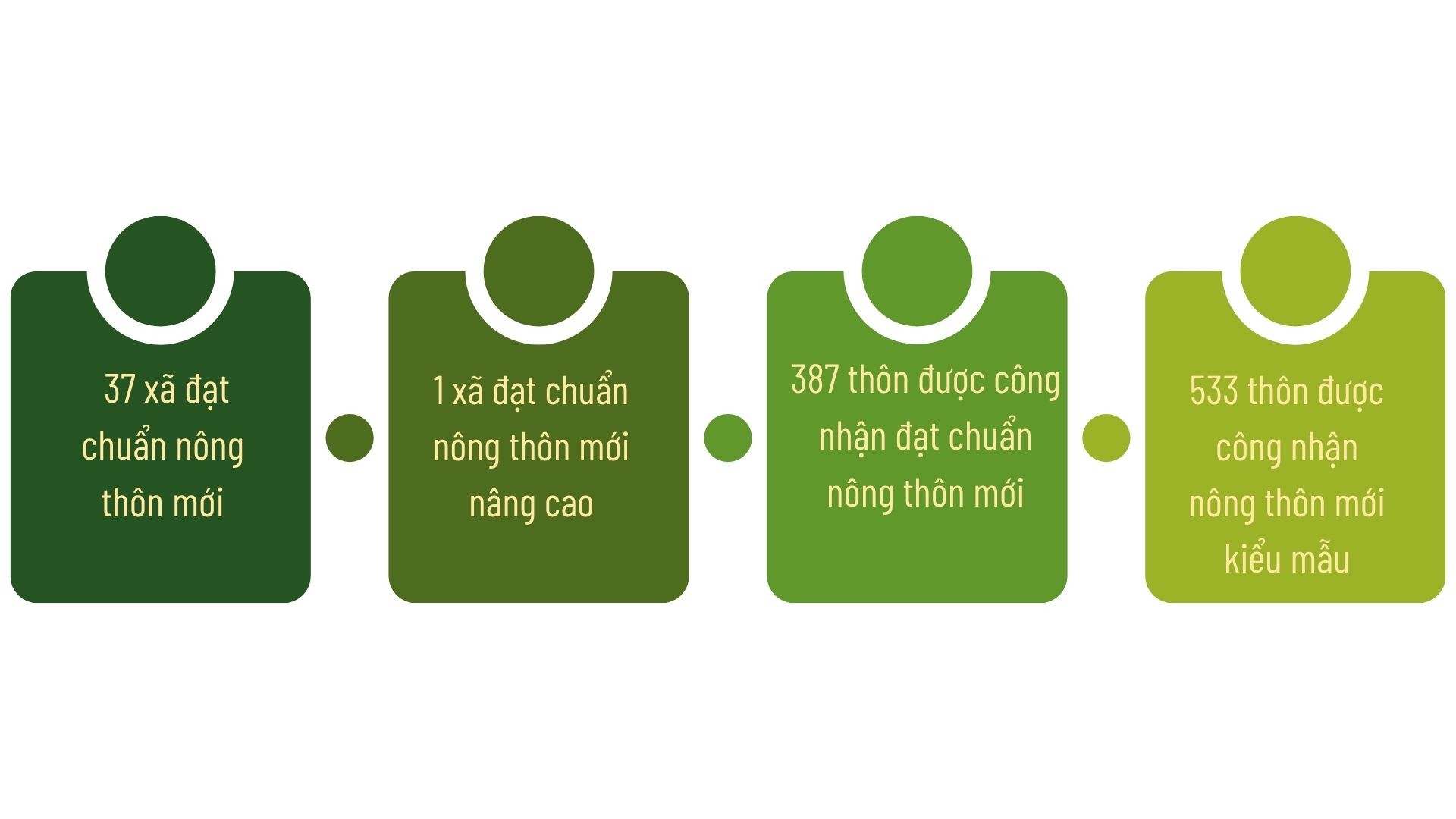
Currently, the province has 37 out of 89 communes meeting the new rural standards, achieving a rate of 41.6%; and 1 commune meeting the advanced new rural standards. 387 villages have been recognized as meeting the new rural standards; and 533 villages have been recognized as model new rural villages.
During the period 2021-2025, the total resources mobilized for the implementation of new rural development in the province (cumulative up to July 2025) reached over 26,374 billion VND.
According to the National Criteria for New Rural Communes, Lao Cai currently has 57 communes meeting the criteria for transportation; 78 communes meeting the criteria for irrigation and disaster prevention and control; 68 communes meeting the criteria for electricity; 54 communes meeting the criteria for schools and 73 communes meeting the criteria for education and training; 48 communes meeting the criteria for cultural infrastructure; 57 communes meeting the criteria for health care; 38 communes meeting the criteria for income; 42 communes meeting the criteria for multidimensional poverty; 59 communes meeting the criteria for residential housing; and 65 communes meeting the criteria for national defense and security...
These are not just numbers, but also reflect the determination of the entire political system in building each criterion, clearly outlining the roadmap, and focusing on specific goals. Rural roads have connected nearby villages and remote hamlets. A synchronized irrigation system ensures water supply for fields. The rural electricity grid is safe and stable, serving production, business, and daily life. Schools meet standards. The grassroots healthcare network ensures healthcare for all citizens...
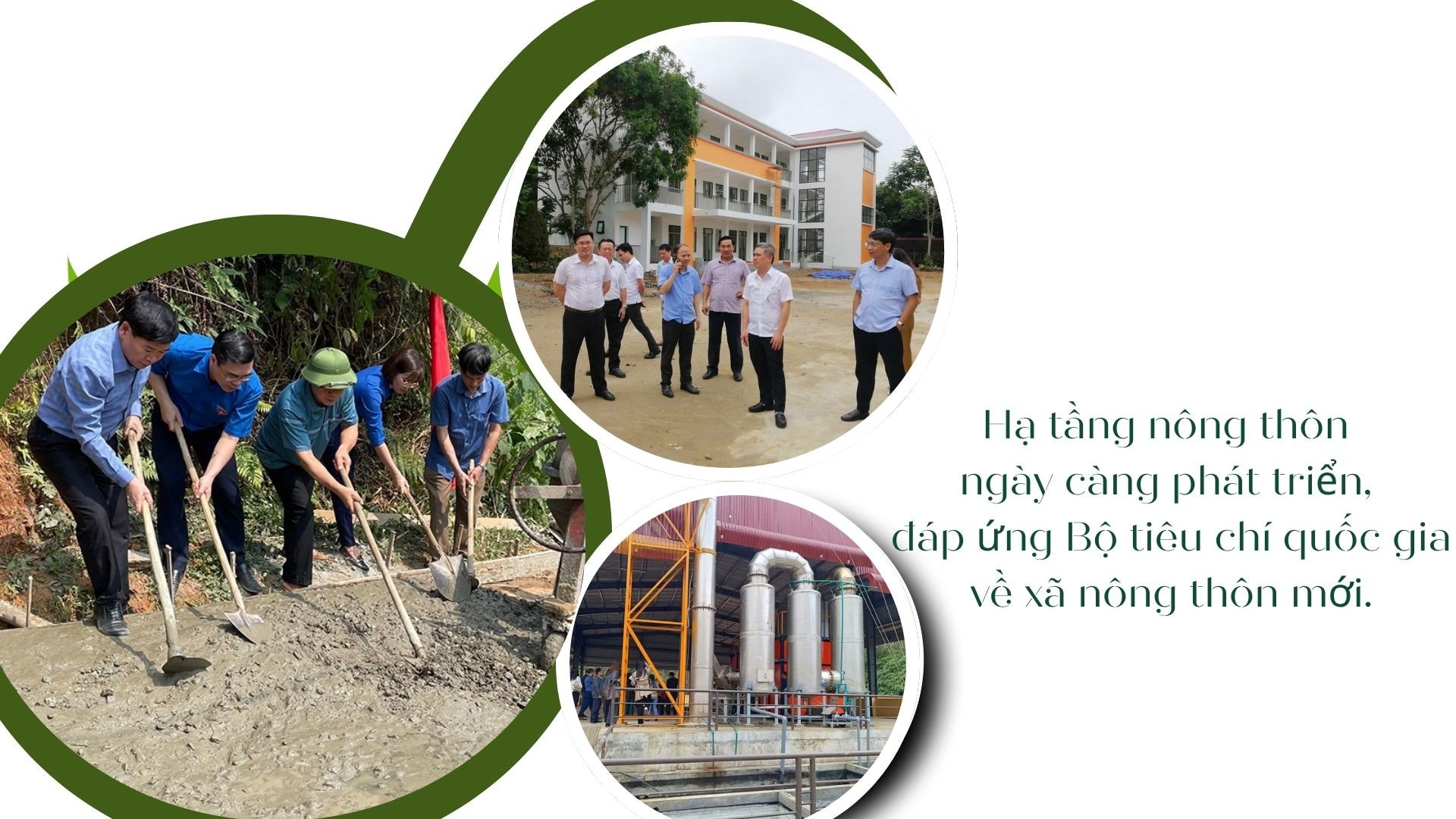
Furthermore, the new rural development program is not just about creating civilized living spaces; it's also about the Vietnam Fatherland Front and other socio-political organizations playing a key role in social monitoring and criticism. The people are truly in control of implementing this national target program.
The vitality of the new rural areas
After a period of implementation, the program has shown significant improvements in quality, becoming increasingly in-depth and widespread. Localities have clearly identified production development as a key task. Consequently, they have actively implemented support policies and models for developing household economies; and integrated resources for investing in transportation and irrigation infrastructure, significantly contributing to improving living standards and sustainably increasing people's income.
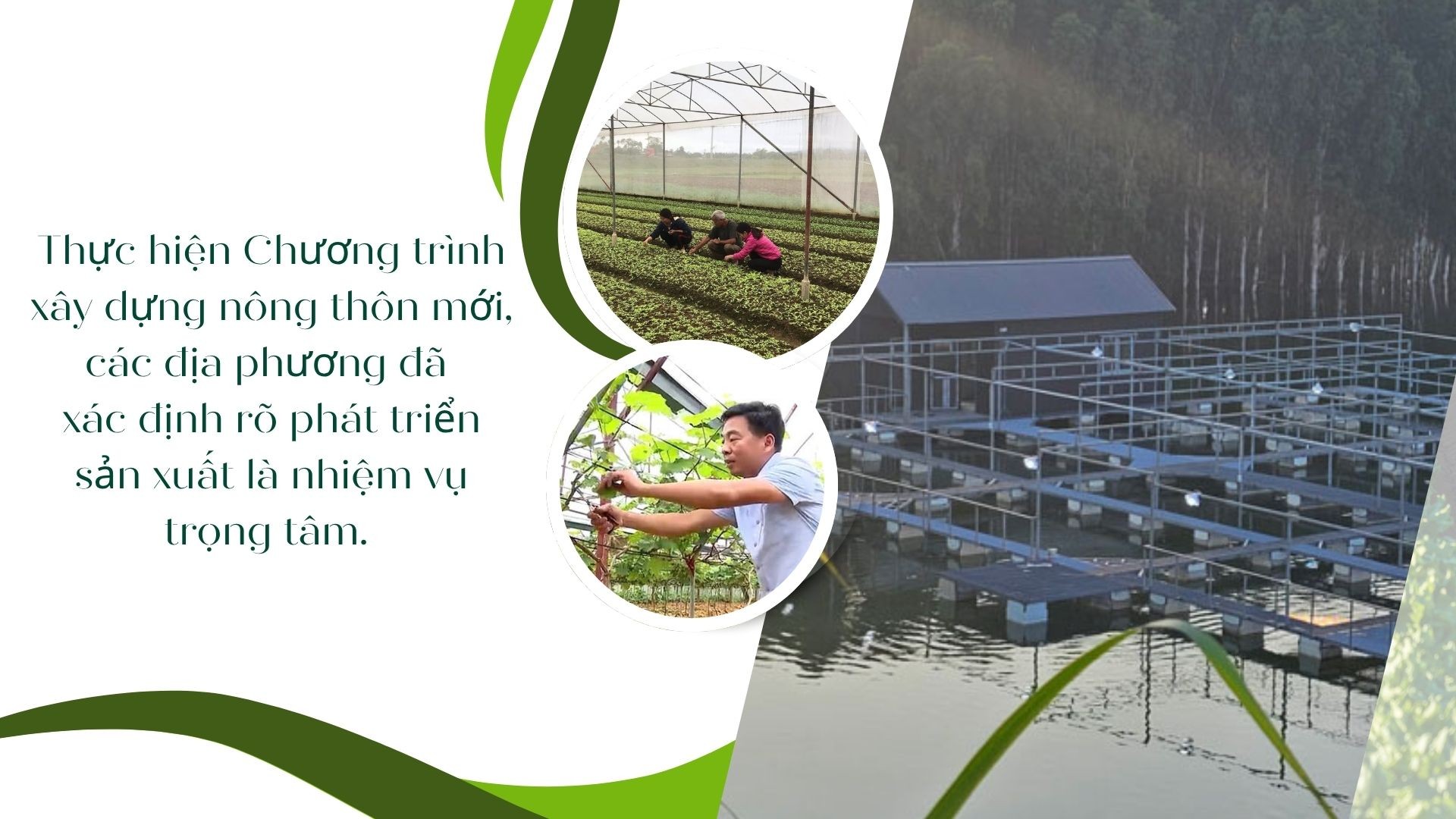
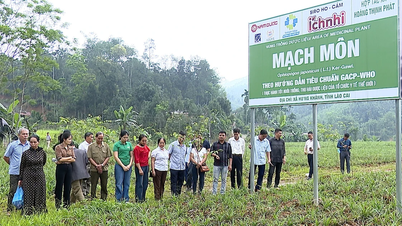
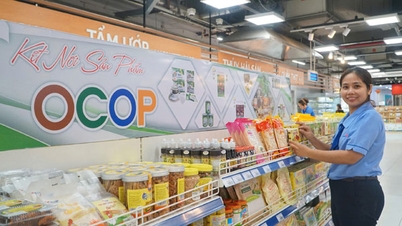
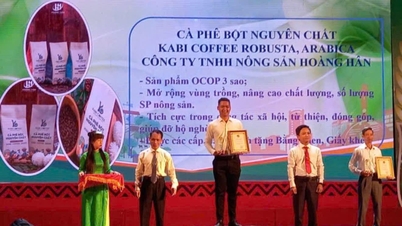
On the journey of building new rural areas, each locality has its own effective methods and positive results. For example, in implementing the criteria for organizing production and developing the rural economy, Bao Thang commune has 9 effectively operating cooperatives with stable value chain linkage contracts; 7 OCOP products that have been ranked as meeting or equivalent standards and are still valid; and 3 economic models applying high technology, or agricultural models applying mechanization in various stages, linked in value chains and ensuring food safety. The commune's OCOP products have been labeled with traceability stamps. The commune's key products have been sold through e-commerce channels... By 2025, the average per capita income is estimated to reach 77.5 million VND.
According to Nguyen Trung Thanh, Chairman of the People's Committee of Bao Thang commune: “In the coming time, the commune will mobilize the entire political system to focus on building new rural areas. Initially, the locality will develop a general plan for the commune, from which it will create sub-area and detailed plans; focusing on upgrading and expanding all rural transportation infrastructure. However, the most important thing is to improve the income and living standards of the people through creating value chains in production and attracting investment in the agricultural sector.”
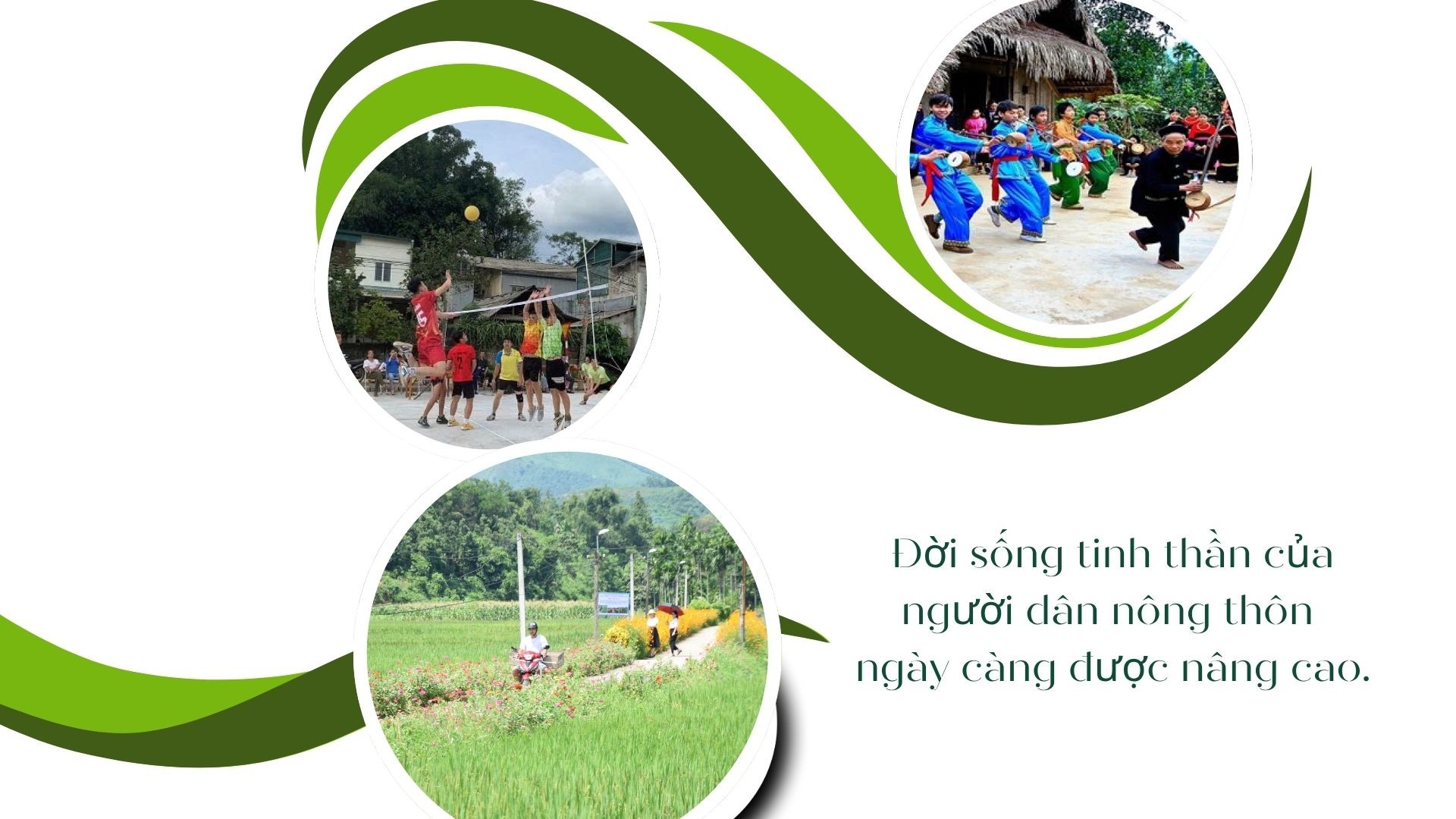
Quy Mong is the only commune in the province to have achieved advanced new rural status. The commune has implemented comprehensive solutions to maintain and improve the quality of the criteria. Convenient internal roads for transporting agricultural products, and newly built houses in a modern style have brought a new look to this land along the Red River. However, the most important change is the quality of life of the people – the main actors in the process of building new rural areas.
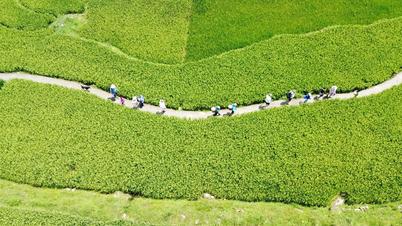
Ms. Nguyen Thi Men from Minh Tan village said: “The appearance of the countryside has changed a lot. The roads are lined with vibrant flowers, and the village lanes and alleys are clean and beautiful. After a day of work, people actively participate in cultural and sports activities at the spacious and modern community center. Every resident feels the vitality of the new rural life.”
Long-term strategy
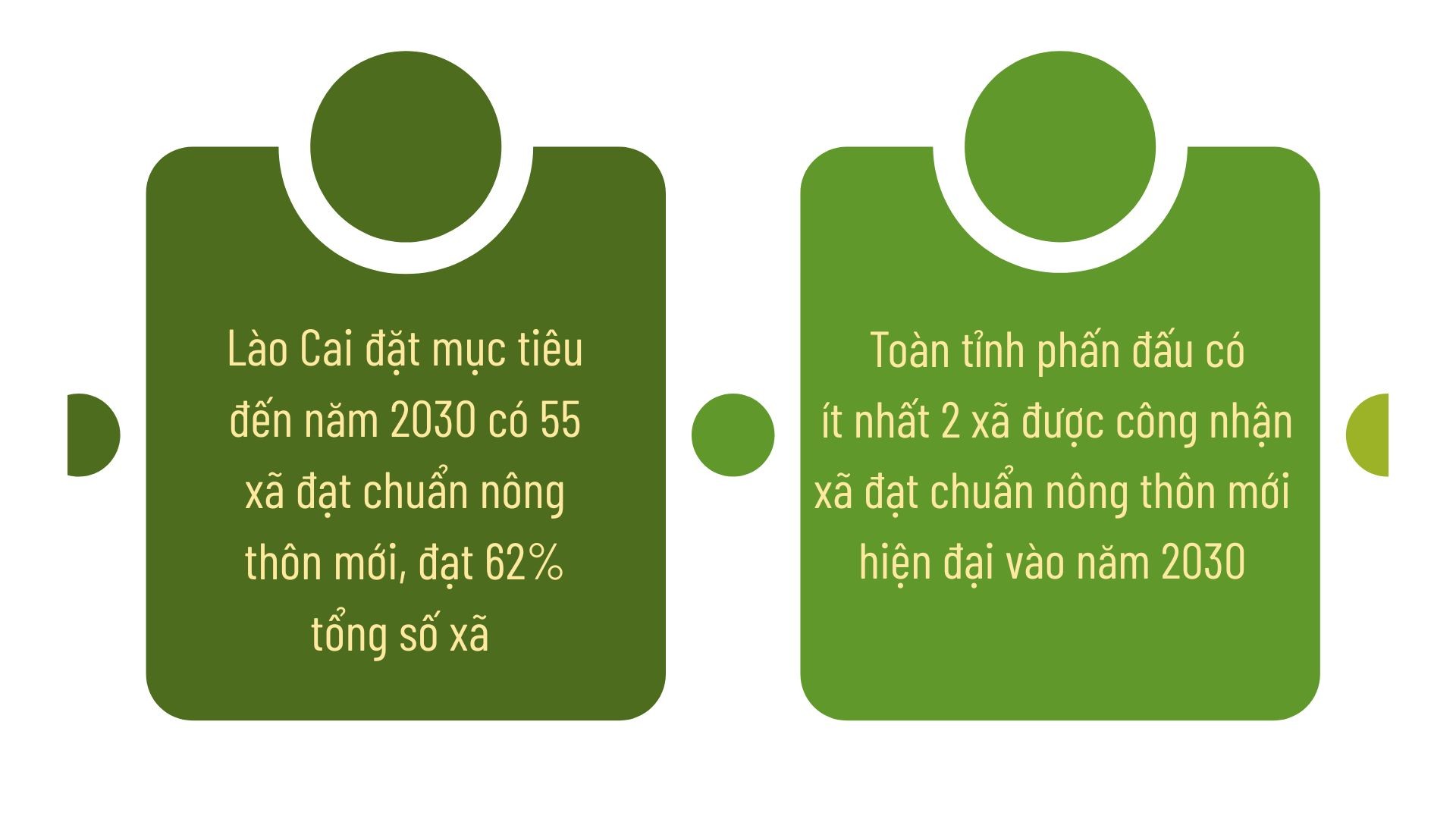
Lao Cai province aims to have 55 communes meet the new rural standards by 2030, representing 62% of the total number of communes. The entire province strives to have at least two communes recognized as modern new rural communes.
To achieve that goal, localities need to strengthen innovation in the methods and approaches of communication and dissemination of the Party's guidelines and policies, and the State's laws and regulations on the Program, in order to raise awareness throughout the political system and among the people so that building new rural areas becomes a conscious, proactive, and enthusiastic effort of each citizen. Timely encouragement, commendation, and rewarding of advanced models are crucial, with a focus on pilot projects, drawing lessons learned to replicate successful and innovative models and approaches, thereby creating a vibrant atmosphere of emulation in all villages, hamlets, and communes.
Identifying infrastructure development as a breakthrough for socio-economic development in rural areas, it is therefore necessary to focus on mobilizing and effectively integrating capital from national target programs, prioritizing funds for implementing criteria in communes and villages according to the roadmap for achieving new rural standards.
At the same time, it is necessary to accelerate the implementation of digital transformation in new rural areas to improve quality and efficiency and move towards building smart new rural areas. Strengthening essential infrastructure in rural areas; paying attention to training and improving the quality of human resources; improving the rural environment, building a bright, green, clean, beautiful, and safe environmental landscape; improving the quality of the political system, and ensuring social order and safety in rural areas.
The national target program for building new rural areas has created many livable countryside areas in Lao Cai. All levels and sectors have recognized that building new rural areas is not a destination but a journey, where the aspiration for change originates from each village, hamlet, and individual citizen.
Source: https://baolaocai.vn/viet-tiep-ky-tich-nong-thon-moi-post886737.html


![[Photo] General Secretary and President To Lam meets with National Assembly delegates from ethnic minorities.](https://vphoto.vietnam.vn/thumb/1200x675/vietnam/resource/IMAGE/2026/04/20/1776696701056_a1-bnd-8331-3342-jpg.webp)
![[Image] National Assembly discusses the implementation of the socio-economic development plan.](https://vphoto.vietnam.vn/thumb/1200x675/vietnam/resource/IMAGE/2026/04/20/1776696707422_ndo_br_img-20260420-185419-jpg.webp)















































































Comment (0)