

Investing in new gasoline-electric hybrid vehicles is one of Vinasun taxi company's key priorities for business development this year.
The above content is mentioned in the documents for the annual general meeting of Vinasun Corporation (Vinasun - VNS), scheduled to take place at the end of April. The leadership has determined that this year will continue to be a challenging period for the company in its recovery and development process. Therefore, one of the key tasks is to focus on investing in new hybrid vehicles (using a gasoline-electric hybrid engine) to replace gasoline vehicles and meet societal needs.
This year, Vinasun plans to purchase approximately 700 new vehicles, primarily focusing on Toyota's high-end hybrid models. These new taxis will be operated through self-investment or lease agreements. Additionally, the company is considering a pilot project to deploy three-wheeled electric vehicles. Management believes this model would meet market demands by reducing traffic congestion and accidents, and contributing to a greener and cleaner environment.
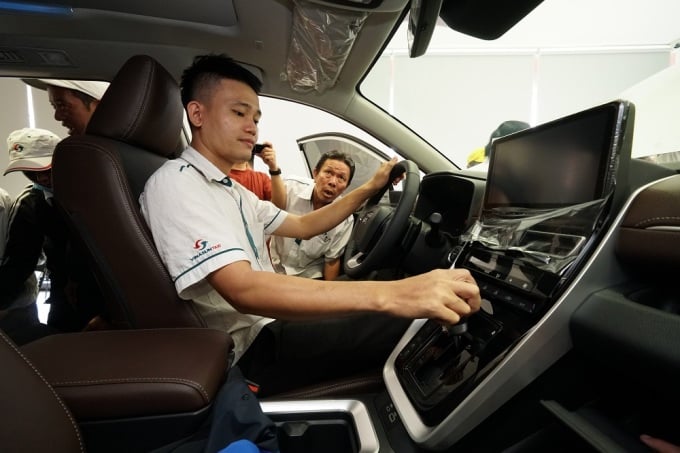
Drivers are experiencing the hybrid vehicle model that will be replaced in the near future. Photo: VNS
Replacing their fleet was a move Vinasun had considered earlier, with their initial choice being electric vehicles instead of hybrids as currently planned. At their 2023 annual meeting, the management stated they were researching and planning to introduce electric vehicles into their taxi business the previous year. According to Vinasun, electric taxis are just a means of transportation, not a new business model. The company needs to consider battery costs, charging times, and the opportunity costs of operating electric vehicles.
By the end of March, Vinasun announced a plan to invest in 550 new hybrid vehicles, expected to be operational in the second and third quarters of this year. This will be a long-term strategy for the company, as hybrid electric and gasoline engines help save fuel by 1.5-2 times. Regarding the reason for rejecting electric vehicles, the company's leadership stated that the current infrastructure and charging station system are not yet complete. Therefore, hybrids are the more suitable choice.
With its old vehicles, Vinasun will liquidate and sell approximately 500 cars to drivers on an installment basis. The company will then allow them to operate under franchise agreements. If successful, the total number of taxis by the end of this year will reach 2,790, an increase of 200 compared to the same period in 2023.
This year, the taxi company has identified Ho Chi Minh City, Binh Duong, Dong Nai, and Da Nang as its key target markets. After a period of driver layoffs, the company is also focusing on attracting back workers, especially highly skilled individuals, through a better income-sharing policy. Through this, Vinasun can improve the quality of its customer service.
Despite numerous innovation plans, this taxi company has set a downward business outlook for this year. The revenue target for this year is over 1.1 trillion VND, a decrease of more than 9%. Expected after-tax profit is over 80.5 billion VND, only half of last year's figure. According to management, this year's business will be affected by the recovery of the tourism and passenger transport industry, driver support policies and new revenue sharing ratios, industry competition, inflation, and customer purchasing power.
Tat Dat
Source link































































































Comment (0)