


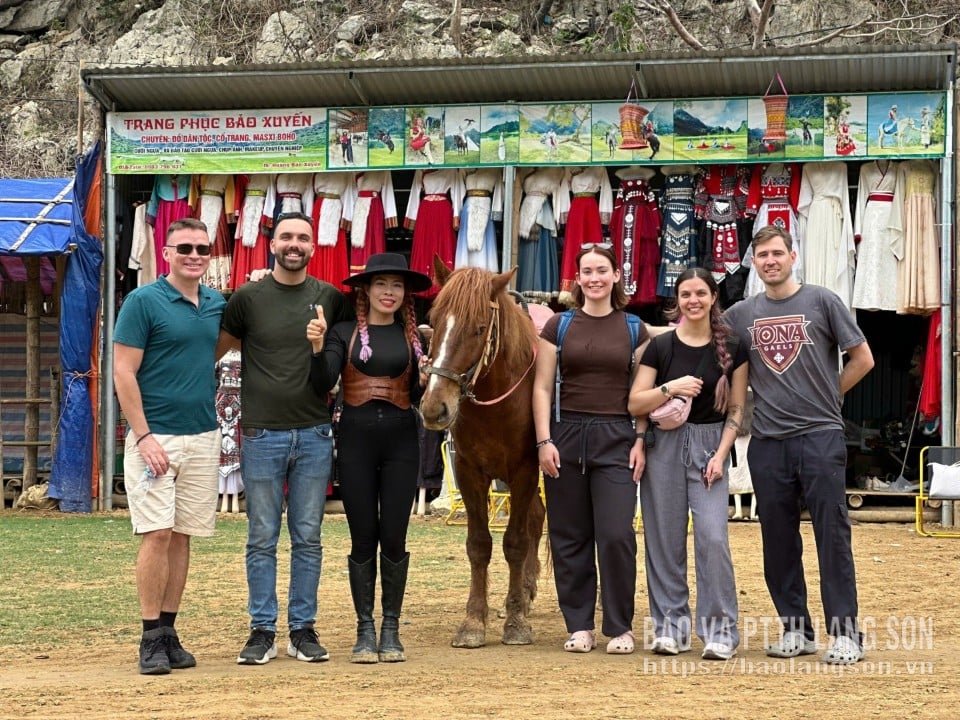
For many years, Ms. Hoang Thi Xuyen, from Doan Ket village, Huu Lien commune, has been closely associated with the sound of horse hooves. Previously, raising horses was primarily for her family's economic development, selling them according to market demand. About five years ago, as the Dong Lam grassland tourist area began to develop rapidly, attracting many visitors, she came up with the idea of utilizing her horse herd for tourism.
Ms. Xuyen recounted: In Huu Lien, horse breeding is not uncommon, as many families used to raise horses for forest work and transporting agricultural products. However, with improved transportation and the gradual replacement of horses' pulling power by motorbikes and cars, horse breeding has declined.
For Ms. Xuyen's family, raising horses is not only about preserving the traditional livestock farming profession, but also because she believes that, with the right approach, horses can become a valuable asset in a new way. In 2018, her family invested in raising three horses, primarily for breeding and training to serve tourists. In 2021, Dong Lam became a prominent tourist destination in Huu Lien commune. Along with sightseeing and nature experiences, many tourists seek out unique experiences with a strong local flavor, such as taking photos and videos. According to local estimates, on weekends, holidays, and Tet (Lunar New Year), the number of visitors to Dong Lam reaches 500 to 1,000 per day. This bustling activity has opened up opportunities for households to develop experiential services, from renting costumes and taking photos to selling local products and engaging in agricultural- related activities.
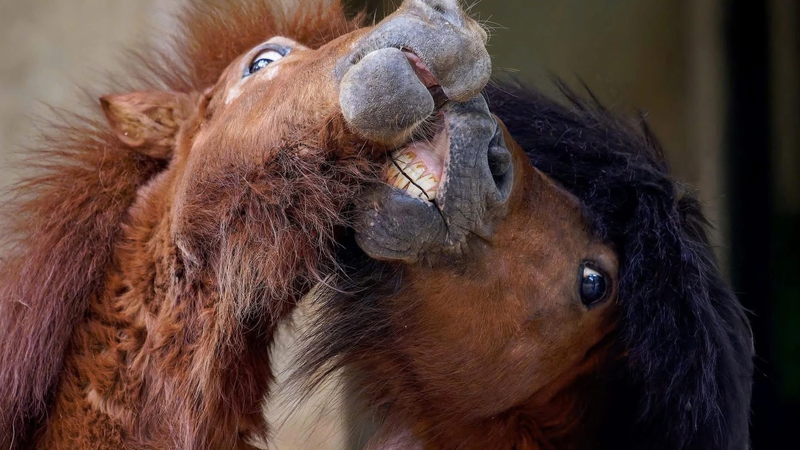
Seeing tourists' delight at encountering the horses on the grass, Ms. Xuyen began seriously considering training horses for tourism. Accordingly, she sold her old horses and invested in raising three Japanese breed horses. These horses are about 1.6 meters tall and weigh around 400 kg. According to Ms. Xuyen, for horses to be able to serve tourists, the most important thing is that they must be gentle, stable in temperament, and accustomed to humans, because even a sudden reaction from a horse could endanger tourists and directly affect the reputation of the destination. Therefore, she spends a lot of time training each horse, getting them used to the reins, to standing still when approached, to her voice, laughter, and even the sound of cameras. Some days, Ms. Xuyen only takes the horses out to the training ground, walks a few laps, then leads them back, repeating this process to help the horses develop their habits.
Of the three horses, two are regularly used for tourism, and the other is a breeding horse. Currently, whenever guests come for a riding experience, she personally instructs them on how to interact with the horses, how to saddle them, how to sit and maintain balance, and how to control them. For tourists who want to experience horseback riding, she will lead them along a short route, allowing them to feel the horse while avoiding risky situations. Thanks to combining horse breeding with tourism, Ms. Xuyen's family has a stable source of income. In parallel, she also teaches horseback riding to tourists who want it and rents out costumes for photo shoots.
Ms. Hoang Ngoc Phuong, a tourist from Hanoi, shared: "I've been to many tourist destinations, but this place feels very different because it retains its rustic charm. I was able to take photos and experience horseback riding right in the middle of a wide grassy field. I also found it very interesting because the owner gave very thorough instructions, so even though it was my first time riding a horse, I felt safe and secure."
According to Mr. Hoang Thanh Hieu, Head of the Culture and Social Affairs Department of Huu Lien commune: Ms. Hoang Thi Xuyen was the first person in the commune to boldly learn and invest in training horses to serve experiential tourism at the Dong Lam grassland tourist area. Not only does it bring economic value, but Ms. Xuyen's family's herd of horses has also become an interesting highlight. Many tourists, after experiencing it, have shared images on social media, contributing to promoting tourism in Huu Lien commune. In the future, the department will continue to advise the People's Committee to guide households to expand this type of activity as part of "tourism products," linked to the identity and cultural life of the locality.
Horses are traditionally associated with resilience, endurance, and the ability to overcome steep slopes and mountain passes. For the people of Huu Lien, they also represent perseverance in labor. From a traditional livestock farming profession, Ms. Xuyen has flexibly found a new direction, leveraging the tourism potential to enhance the value of her livestock. At the same time, this approach contributes to diversifying services in Dong Lam, making the destination more attractive to tourists.
Source: https://baolangson.vn/tieng-vo-ngua-giua-thao-nguyen-xanh-5077712.html
![[Photo] Prime Minister Pham Minh Chinh working with the Vietnam Academy of Science and Technology](https://vphoto.vietnam.vn/thumb/1200x675/vietnam/resource/IMAGE/2026/02/23/1771832245861_image-2-6431-jpg.webp)




















































Comment (0)