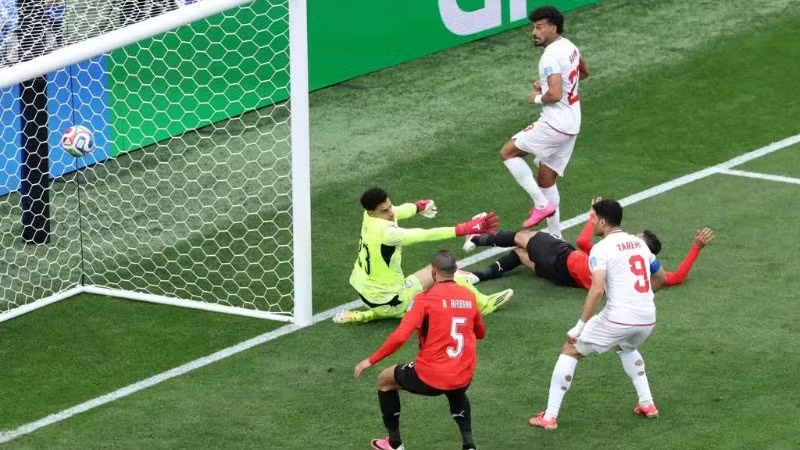
Although not exhaustive, it can be affirmed that this was a very emotional group stage. It showcased the strength of the top title contenders and also the impressive rise of many underdog teams, demonstrating the narrowing gap between different footballing nations.
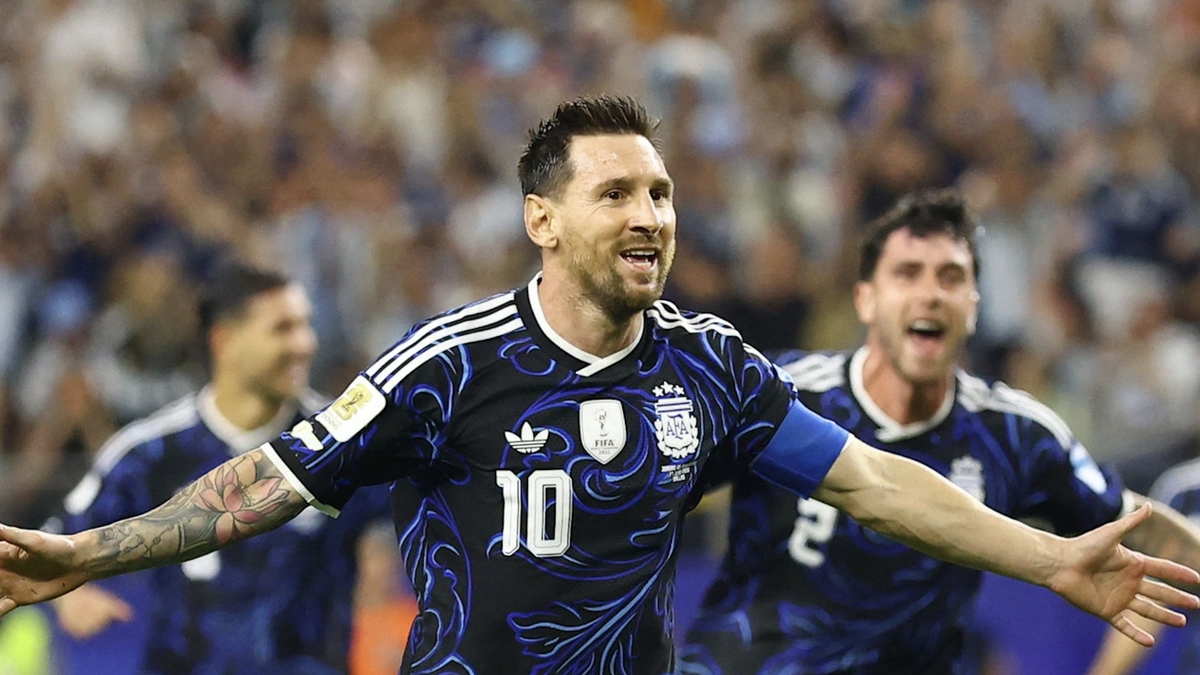
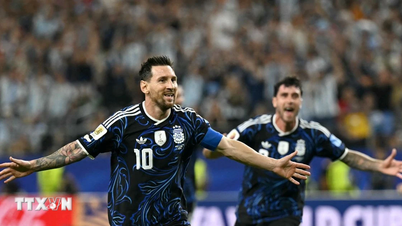
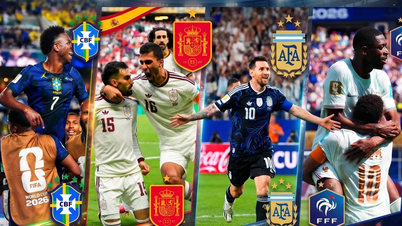
This year's World Cup saw a highly competitive format, putting immense pressure on title contenders. However, despite these challenges, resilient teams knew how to make their presence felt at the right time, and Argentina was one of the representatives who left the most significant mark. In Group J, they demonstrated consistent performance and dominance through a perfect winning record. The defending champions' strength lay not only in their solid defense but also in the depth of their squad, alongside the successful implementation of a flexible tactical system that relied less on any single individual, allowing each player to showcase their abilities at the right moment.
Another South American representative, Brazil, also proved its status as a leading football nation with improved form, gradually gaining momentum with each match. Their fast-paced attacking style, combined with strong technical skills and the ability of their key players to seize opportunities, helped them successfully decide crucial moments, thus convincingly taking the lead in the group.
Meanwhile, in Europe, teams like Portugal, Spain, and France have all shown favorable conditions in their journey to qualify for the next round. The common thread among these teams is a well-balanced squad and a well-organized tactical approach.
While the stability of the top teams was predictable, the rise of the underdogs is what makes the group stage so exciting.

In this year's tournament, defensive tactics are no longer the only option for smaller football nations. Instead, they approach the game proactively, taking control of their own play and ready to capitalize on every opportunity to create surprises.
The most notable surprise was the performance of Cape Verde. Despite not having a particularly outstanding squad, the African representative left a strong impression thanks to their determined fighting spirit. Their advancement shows that this team entered the tournament with a clear competitive goal, not just to learn from experience. Meanwhile, despite being eliminated, teams like Haiti and the Democratic Republic of Congo still demonstrated commendable effort. The progress of representatives from Africa, Asia, and the CONCACAF region has significantly narrowed the gap in skill level with Europe and South America, making the tournament increasingly balanced and attractive.
According to former football star Pham Thanh Luong, assistant coach of Hanoi Police Football Club, the group stage of the 2026 World Cup clearly revealed the trend of modern football through teams prioritizing efficiency and safety. The coaching staff's preference for a cautious approach, maintaining a balance between attack and defense instead of risking pushing forward, foreshadows tactical battles on the sidelines in the upcoming rounds.
Before the Canada-South Africa qualifying match
For the first time in history, Canada and South Africa are both participating in the knockout stage of a World Cup, making their clash in the round of 32 at 2 AM on June 29th (Vietnam time) a memorable milestone for both footballing nations.
Canada entered the match as the favored team, having finished second in Group B, where they had made a name for themselves with a 6-0 victory over Qatar before drawing with Bosnia and Herzegovina and only losing to Switzerland in the final match. Under the leadership of Jesse Marsch, the North American representatives impressed with their high-intensity pressing and fast-paced transitions, featuring attacking players like Alphonso Davies, Jonathan David, Tajon Buchanan, and Tani Oluwaseyi. Although some players were not yet in top physical condition, Marsch remained confident, asserting that they could perform even better in the knockout rounds and that the team was accustomed to playing in a tense atmosphere.
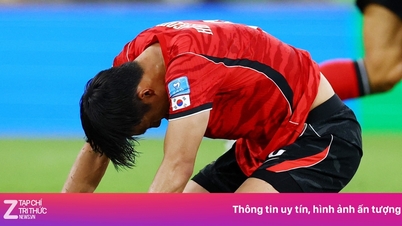
On the other side, South Africa made history by advancing beyond the World Cup group stage for the first time after a decisive victory over South Korea. Having lost to Mexico in their opening match, Hugo Broos boldly switched to an attacking style of play and quickly achieved results. The return of midfielder Teboho Mokoena after his suspension is expected to strengthen South Africa's midfield, while goalkeeper Ronwen Williams continues to be a reliable last line of defense.



Based on what both teams showed in the group stage, this will be a balanced match, where a moment of brilliance from Jonathan David or Alphonso Davies (Canada), or the solidity of Ronwen Williams and the control of Teboho Mokoena (South Africa) could completely decide who gets a ticket to the round of 16.
Source: https://nhandan.vn/vong-bang-day-cam-xuc-post971975.html






















![[Video] Weather forecast for tonight and tomorrow, June 29, 2026: Northern Vietnam to experience increased thunderstorms, Central Vietnam remains hot and dry.](https://vphoto.vietnam.vn/thumb/402x226/vietnam/resource/IMAGE/2026/06/28/1782651705021_dem-28-png.webp)