 |
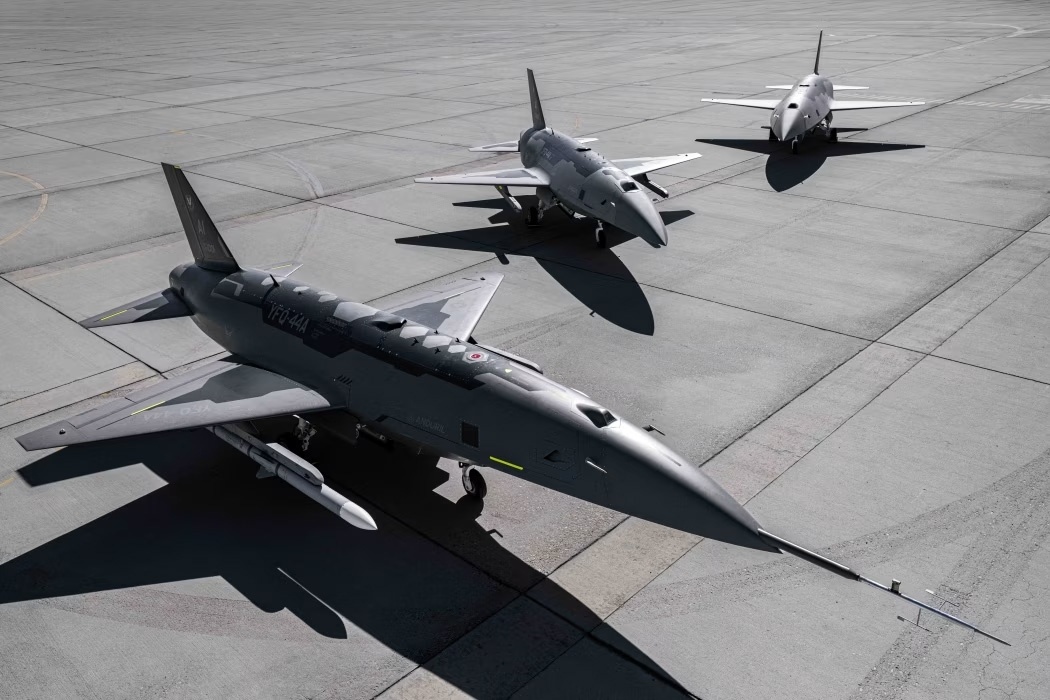
The FQ-44A UAV prototype. Photo: Anduril |
The U.S. Air Force has signed agreements with two defense companies, Anduril and General Atomics, to develop a new generation of autonomous combat unmanned aerial vehicles (UAVs) designed to support manned fighter jets in conducting deep strike missions behind enemy lines.
The program was launched against the backdrop of inexpensive UAVs significantly altering the landscape of modern conflict in Ukraine and the Middle East. However, U.S. military officials believe that future conflicts will still require more advanced combat platforms capable of operating in heavily air-defense environments.
According to the US Air Force, the new UAVs will play a crucial role in operations where manned aircraft face a high risk of being shot down.
"The new UAVs will help the U.S. Air Force change its way of fighting, increasing its ability to maintain air superiority in areas heavily protected by modern air defense systems," said General Ken Wilsbach, Chief of Staff of the U.S. Air Force.
Next-generation combat UAVs
The U.S. Air Force evaluated UAV designs from Anduril and General Atomics starting in 2024 before making a selection decision. General Atomics' UAV, the FQ-42, is larger than the FQ-44 developed by Anduril. One notable difference is that the FQ-42 has an internal weapons bay, while the FQ-44 carries weapons on underwing pylons.
The U.S. Air Force has not disclosed the number of UAVs ordered or the value of the contracts. Information regarding costs is classified. However, the latest U.S. Air Force budget proposal allocates over $1 billion to this program in fiscal year 2027 and over $9.5 billion over the next five years.
According to a statement from the U.S. Air Force, the new contracts mark “the next significant development in our air power.”
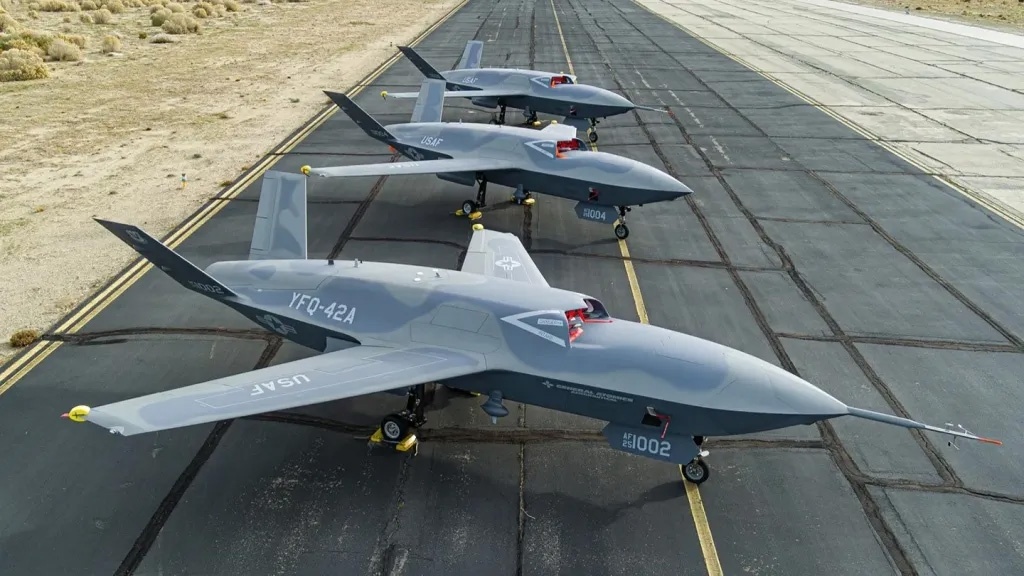 |
FQ-42A UAV prototype. Photo: GA-ASI |
These UAVs are designed to operate alongside manned fighter jets. Unlike the current MQ-9 Reaper UAVs, which must be remotely controlled by humans, the new generation is developed with high autonomy, requiring only limited supervision and command.
The US Air Force expects the cost of each UAV to be only about one-third that of a manned fighter jet. Currently, a US F-35 fighter jet costs approximately $82.5 million , while the latest version of the MQ-9B SkyGuardian UAV, manufactured by General Atomics, costs around $30 million .
The Pentagon plans to purchase approximately 150 new Joint Combatant UAVs (CCA) by 2030 and could expand that number to around 1,000 over the next four years.
According to Colonel Timothy Helfrich, in charge of procurement for the U.S. Air Force's advanced fighter and aircraft programs, selecting two manufacturers will create ongoing competition, thereby optimizing the program's timeline, cost, and performance.
In addition to hardware, the US Air Force also awarded contracts to Anduril, the startup Shield AI, and Collins Aerospace, a subsidiary of RTX, to develop software for controlling autonomous UAVs. The value of these contracts was not disclosed.
Lessons from Ukraine and the Middle East
In recent years, inexpensive UAVs have proven remarkably effective on the battlefield. In Ukraine, small, low-cost UAVs have become effective attack tools. In the Middle East, the Iranian-developed Shahed suicide drone has been widely used to attack military targets. The US has also used versions developed based on Shahed technology in military operations against Iran.
However, according to experts, the combat UAVs that the US Air Force is developing have a completely different role. They can fly ahead of manned aircraft formations, perform reconnaissance missions, detect enemy aircraft, and operate in areas protected by modern surface-to-air missile systems.
Caitlin Lee, Director of Defense Technology and Procurement Policy at the Rand Corporation, argues that what happened in Ukraine shows that modern militaries need a large number of inexpensive UAVs for large-scale deployment, even in high-risk missions. However, the U.S. military also needs UAVs with much longer ranges to perform missions in areas far from U.S. territory.
According to Ms. Lee, the enemy's diverse missile arsenal and strong electronic warfare capabilities could neutralize or destroy American aircraft both on the ground and in the air.
"The mass production of low-cost, coordinated combat UAVs will help ensure a sufficient proportion of aircraft remain capable of continuing combat after enemy attacks," she stated.
This expert also emphasized that long-range operation is a crucial factor for UAVs to be able to escort strategic aircraft such as bombers, refueling aircraft, or transport planes.



Aiming for diverse offensive missions
Over the past period, Iran and Houthi forces in Yemen have shot down dozens of MQ-9 Reaper UAVs using missiles capable of sustained flight to track targets before locking onto them via thermal signatures.
According to Stacie Pettyjohn, Director of the Defense Program at the Center for New American Security (CNAS), the U.S. military is increasingly pushing unmanned systems to the forefront to minimize risks for pilots.
"We always want the most advanced platforms deployed on the front lines. Unmanned systems are well-suited for that role because they have to operate in environments with very high levels of risk, like what's happening in Iran and Yemen," she said.
According to Pettyjohn, next-generation combat UAVs are likely to be limited to air combat missions and will gradually take on many other roles in the future, including attacking ground targets.
Source: https://znews.vn/vu-khi-moi-co-the-doi-cach-my-danh-tran-post1661383.html