

A 'slip of faith'
The incident involving MC Quyền Linh being accused of "betrayal" from the "Vietnamese Family Home" program of Hoa Sen Group is not only a personal conflict, but also reveals a significant gap between professional commitment and ethical conduct in charitable television programs in Vietnam.
Following strong reactions from sponsors, Quyền Linh recently issued an official statement on his personal Facebook page, asserting that he did not sign an exclusive contract with the program "Mái ấm gia đình Việt" (Vietnamese Family Home). Therefore, his appearance in a program with a similar format to "Hành trình ước mơ" (Journey of Dreams) does not violate the law. Legally, he is not at fault.
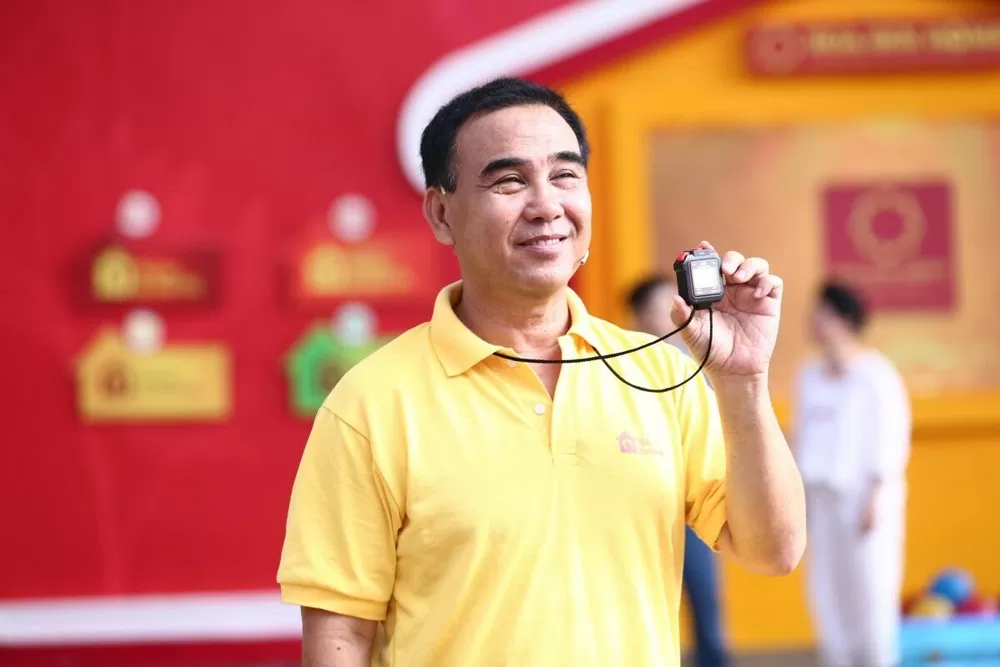 |
On Quyền Linh's side, despite receiving a certain amount of sympathy and support from the public, he still faces questions about his media tact and responsibility for his image. (Illustrative image) |
However, public opinion suggests that the root of the conflict lies beyond legal issues; it's a matter of trust, expectations, and a shared vision between a philanthropic icon and the program that helped build his reputation. The producers may not have explicitly stipulated it in writing, but they likely implicitly assumed that between like-minded individuals working for the community, a code of conduct didn't need to be explicitly stated in a contract—a mutual promise was sufficient.
It is at this point of ambiguity that conflict flared up and shows no sign of ending. Leaving aside the simple question of "Was Quyền Linh wrong?", from another perspective, this unfortunate "controversy" is exposing a long-standing flaw in the television production industry: a lack of transparency in professional standards and laxness in the framework of professional media conduct.
Lessons on proper conduct.
Charitable programs are often driven by emotion, goodwill, and voluntarism. However, precisely because of this, when conflicts arise, parties easily fall into emotional reactions. Instead of dialogue, they publicize the conflict through the media, a method that easily creates division and damages the very values they claim to protect. The consequence is that no one truly wins.
A brand like Hoa Sen Group, which has been involved in community programs for many years, is arguably being perceived as too rigid in choosing a legal solution against Quyen Linh, a figure closely associated with philanthropy.
On Quyền Linh's side, despite receiving a certain amount of sympathy and support from the public, he still faces questions about his media tact and responsibility for his image.
This incident clearly demonstrates that even humanitarian programs need to be run by clear principles. Goodwill is necessary, but it cannot replace professionalism. Every agreement, even if it begins with trust, should be formalized with specific terms. This is not due to a lack of trust, but to protect that trust from unnecessary misunderstandings.
For presenters, especially influential figures like Quyền Linh, maintaining image consistency is paramount. Appearing on similar programs is not just about the broadcast schedule, but about how they position themselves in the public eye.
When an incident occurs, what is needed is not a harsh reaction or public criticism, but the courage to sit down and engage in dialogue to resolve the issue. Because the foundation of all charitable programs is the spirit of humanity, if it is lost due to conflicts of interest, then the core value itself is also damaged.
The public may forget who was right and who was wrong, but they will remember how influential people behaved during sensitive times. Because television can create a ripple effect. But only the culture of conduct creates lasting impact.
Source: https://congthuong.vn/vu-viec-mc-quyen-linh-va-khoang-trong-trong-van-hoa-ung-xu-383057.html


![[Photo] Prime Minister Pham Minh Chinh presides over a meeting on private sector economic development.](/_next/image?url=https%3A%2F%2Fvphoto.vietnam.vn%2Fthumb%2F1200x675%2Fvietnam%2Fresource%2FIMAGE%2F2025%2F12%2F20%2F1766237501876_thiet-ke-chua-co-ten-40-png.webp&w=3840&q=75)


![[Photo] Prime Minister Pham Minh Chinh presides over the conference announcing the establishment of the International Finance Centre in Vietnam.](/_next/image?url=https%3A%2F%2Fvphoto.vietnam.vn%2Fthumb%2F1200x675%2Fvietnam%2Fresource%2FIMAGE%2F2025%2F12%2F21%2F1766309817714_ndo_br_dsc-3400-jpg.webp&w=3840&q=75)




























































Comment (0)