

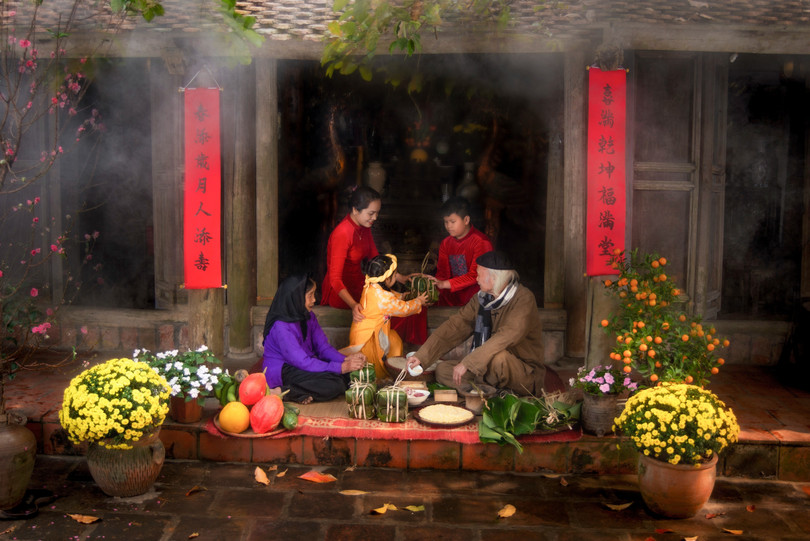
From traditional markets to supermarkets, and even online stores, my wife's aunt browses everywhere to make her selections. With the belief that Tet (Lunar New Year) only comes once a year, she always wants to prepare everything as thoroughly as possible – even though she herself realizes that with a small family and moderate food needs, there's always leftover food after Tet, sometimes even having to be thrown away.
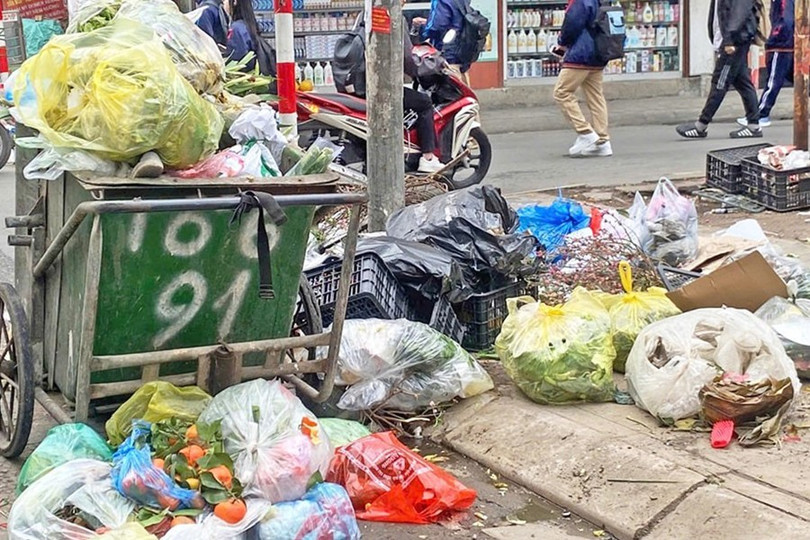
Urban sanitation workers shared that in many garbage bags dumped after Tet (Lunar New Year), they even found whole chickens, entire bundles of banh chung (traditional Vietnamese rice cakes), and boxes of cakes with their seals intact. This not only causes great waste for families and society but also increases the amount of waste generated during Tet.
Statistics compiled in 2025 by Foodbank (a non-profit, charitable organization that collects, stores, and distributes food from businesses and supermarkets to people in need) show that Vietnam ranks second in the world for food waste, with over 8 million tons of food wasted annually, causing losses of approximately US$3.9 billion (nearly 2% of GDP). More than 50% of food is wasted due to intermediaries and consumption, particularly high in cooked meat/fish (53%) and vegetables (44%).
87% of Vietnamese people admit to having a habit of throwing away food due to over-shopping or over-preparation, with an average waste of about two plates of food per week per household. This waste is even higher during holidays and Tet (Lunar New Year) due to the tendency to hoard and over-prepare.
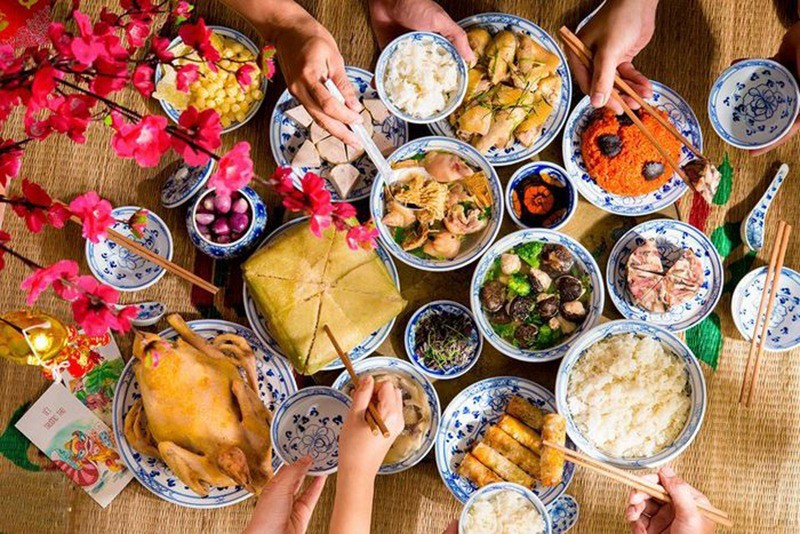
The custom of preparing offerings is one reason. There are offerings for the end of the year, offerings to welcome ancestors, New Year's Eve offerings, New Year's Day offerings, offerings to the ancestors, offerings to the gods of wealth and land... On some days, after preparing one offering in the afternoon, another must be prepared that very night. Of course, no one can possibly consume all the food after so many consecutive offerings.
It's also worth mentioning that during Tet (Lunar New Year), housewives are always under pressure; they fear not buying enough, but buying too much inevitably leads to excess. The Tet mentality of "better to have too much than too little" draws housewives into a cycle of excessive shopping.
Clearly, these mindsets need a change. While in the past, when life was difficult and scarce, the mentality of "eating well for three days during Tet" was understandable, nowadays, eating and drinking happens almost year-round. Furthermore, instead of celebrating Tet, families are now focusing on enjoying the festivities. The pressure to stockpile is no longer as great as it used to be, as markets and supermarkets selling fresh produce operate until the night of the 30th of Tet and reopen on the 2nd day of Tet. Businesses and service establishments only close for a few days during Tet, remaining busy for the rest of the year. Stockpiling will lead to food becoming less fresh, moldy, or past its expiration date.
Modern life constantly throws people into all sorts of pressures in its fast-paced rhythm. The Lunar New Year holidays are a time to unwind and relax for oneself and family. While decorating, shopping, preparing food and drinks, and other ceremonial items are necessary, is it really worth the excessive fuss and worry? And, to live a civilized life, is it absolutely necessary to prepare an elaborate feast with countless dishes and offerings as a way of showing hospitality, or even more so, as a way to demonstrate grandeur and luxury?
Source: https://baohatinh.vn/vung-tay-ngay-tet-post305076.html

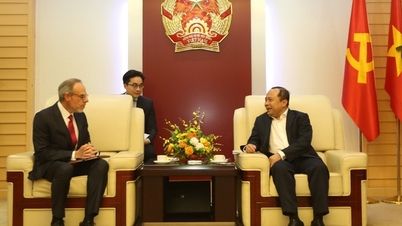
![[Photo] General Secretary and President To Lam receives Amazon's Senior Vice President David Zapolsky](https://vphoto.vietnam.vn/thumb/1200x675/vietnam/resource/IMAGE/2026/05/22/1779466547770_a1-bnd-3513-6601-jpg.webp)

































































Comment (0)