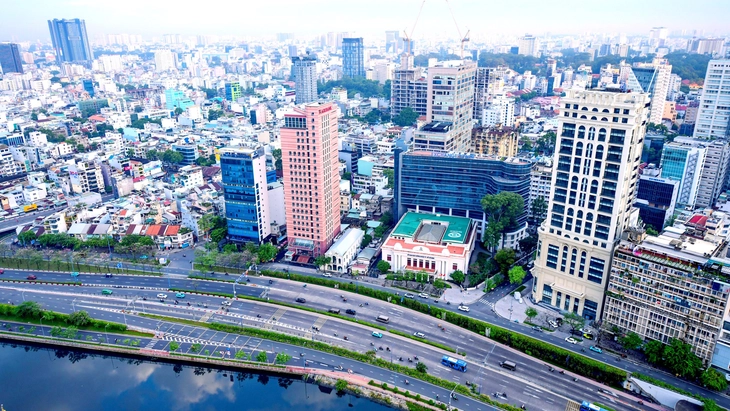
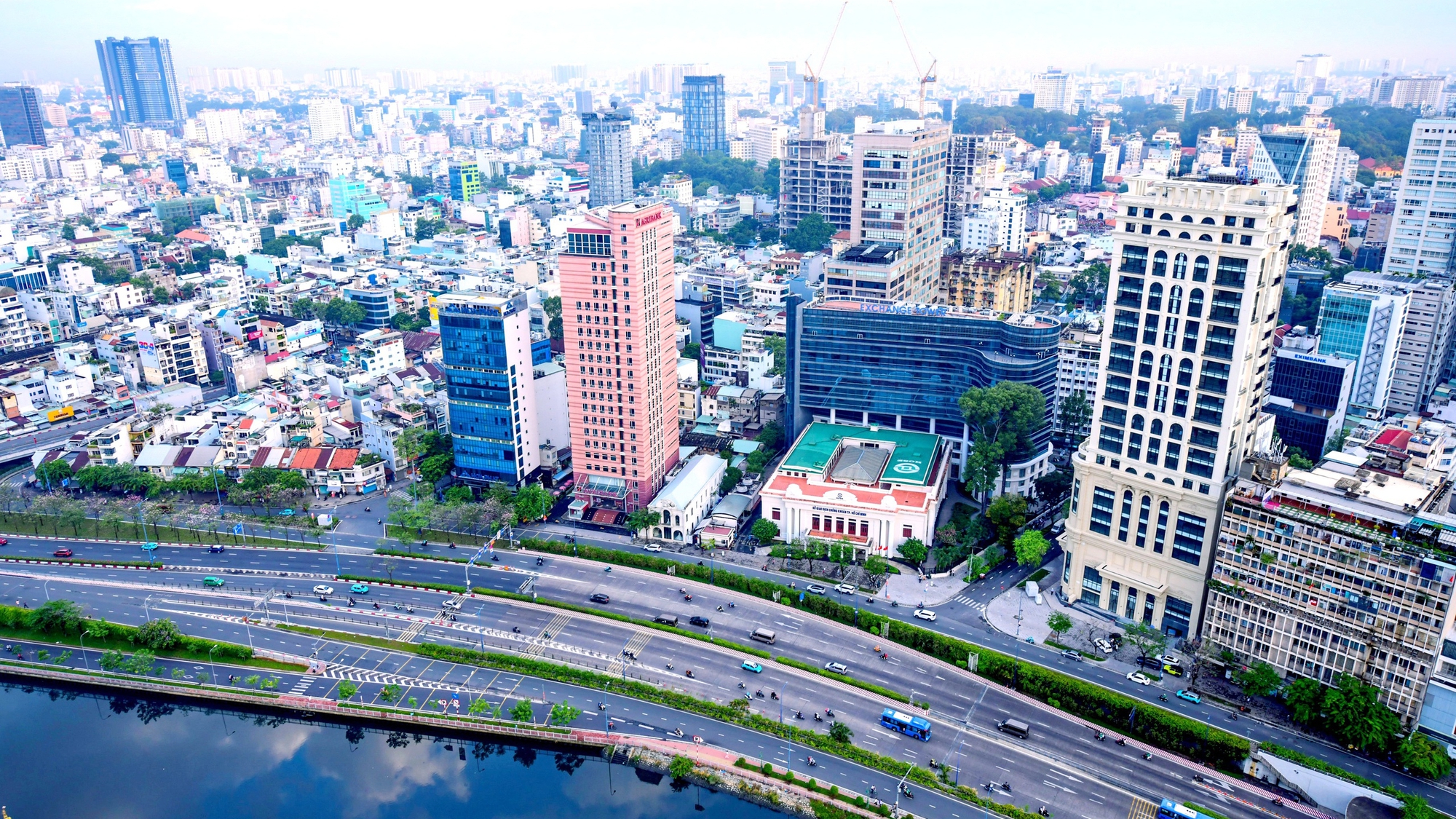
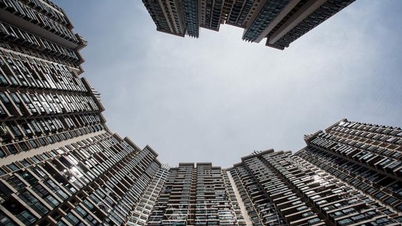
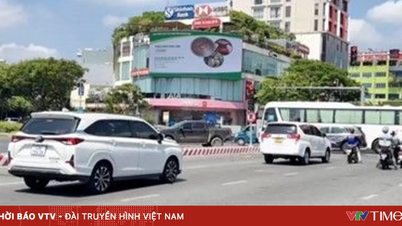
From 2025 onwards, Ho Chi Minh City has opened up a completely new development space - Photo: QUANG DINH
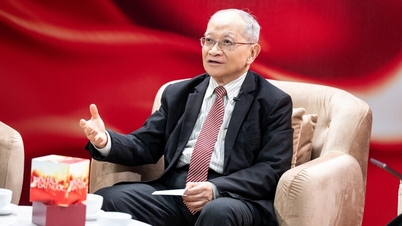
Dr. Vo Kim Cuong - former Deputy Chief Architect of Ho Chi Minh City - shared that after the congress, Ho Chi Minh City needs to explore spatial development orientations for the entire city in general, while also highlighting the unique characteristics of each area within the city.
"The merged city possesses rare conditions to become a leading driving force for the nation. I hope Ho Chi Minh City will know how to mobilize and activate that enormous resource to fulfill the great expectations that the Party and Government have placed on it," Mr. Cuong conveyed. This is also one of the heartfelt opinions of experts on the development of Ho Chi Minh City featured in Tuoi Tre newspaper's issue dated October 12, 2025.
The merged Ho Chi Minh City possesses rare conditions to become a leading driving force for the nation.
Dr. Vo Kim Cuong
The city possesses many favorable factors.
* He said that Ho Chi Minh City possesses rare conditions to become a leading driving force for the nation. How does he view the significance of "rebuilding" the integrated urban area in the context of the city becoming a regional megacity, serving both as a national center and connecting many surrounding localities?
- I think reconstruction usually involves tearing down the old to start over, but Ho Chi Minh City today is about inheriting, expanding, and developing on the foundation of existing values, on a larger scale and with a completely different stature.
The merger of Binh Duong and Ba Ria - Vung Tau into Ho Chi Minh City is a turning point with a very significant strategic vision by the Party and Government. Nowhere else in Vietnam has the geographical location, natural conditions, human resources, and population size to create such a powerful impetus for growth as this region, or even cities around the world .
A place considered a driving force for development is one that attracts resources for growth. With 14-15 million inhabitants, the merged Ho Chi Minh City has a population size nearly equal to that of two developed countries, Sweden and Finland, combined. The important thing is not just the numbers, but the power of the market, where supply and demand meet, creating enormous endogenous energy for urban development.
* One of the key messages is "a shared vision, multiple development centers." In your opinion, to realize this vision, how should the city assign roles and organize these areas so that they complement each other without canceling each other out?
- The role allocation here must stem from the actual resources and development dynamics of each region. Planners need to conduct thorough surveys, accurately identify the strengths, potential, needs, and limitations of each area to propose appropriate exploitation solutions.
A multipolar orientation is not only about development in multiple spatial directions, but also about multiple spearheads in socio-economic development: finance, innovation, logistics, high technology, quality education and healthcare, tourism, and recreation... Each direction has different motivations and requirements, from infrastructure and human resources to the legal framework.
The key point is that population concentration is the driving force behind urban development. A city is only truly vibrant when socio-economic and cultural activities are within convenient travel distance, ideally within 15 minutes, and no more than 60 minutes. Therefore, areas with high population density, existing cities with their own brand and appeal, should be considered the "engine" of the entire region.
The authorities need to define boundaries, retain names, and create separate plans for each urban area within the merged city, with integrated multi-sectoral planning. Separate planning at the ward and commune levels should be avoided to prevent overlap and save resources.
Transportation is the lifeblood.
* In terms of urban development planning, what do you consider to be the key factor for Ho Chi Minh City to both maintain its unique identity and ensure harmony within the overall plan?
- The former Ho Chi Minh City, Binh Duong, and Ba Ria - Vung Tau have long developed in a multi-polar, multi-centered manner. This is a rational and sustainable development approach, creating conditions for economic growth while ensuring ecological environment and quality of life.
High-density centers often achieve high labor productivity and infrastructure investment efficiency, forming strong economic hubs. Between them are buffer zones and green spaces that provide isolation and maintain ecological balance. If this structure is maintained, Ho Chi Minh City can be both dynamic and sustainable.
The key is to plan based on sustainable development goals, placing people at the center. Only then should we clearly identify the resources and drivers of each region within the context of global competition and integration.
And finally, I want to emphasize: transportation infrastructure is the foundation of all spatial planning. Without connectivity, all ideas remain just on paper. Transportation is the lifeblood that determines the health of the entire urban body.
* Regarding the administrative structure, how should the model of one central body, multiple centers, and a shared vision be reformed to operate effectively, avoid duplication, and prevent the dispersion of resources?
- This is the biggest problem right now. Institutions are the bottleneck to development, something the government has acknowledged. In administrative work, we sometimes tie ourselves down. Procedures for investment, construction, planning, land... are still complicated with many layers. General Secretary To Lam recently stated that up to 90% of corruption cases are related to land, which speaks volumes.
To resolve the issue, substantive institutional reforms are necessary. Administrative reform has been underway for over 35 years (since Resolution 38/1990), but the "bottleneck" has yet to be significantly addressed.
If this bottleneck is not resolved, all efforts to decentralize and reorganize the administrative apparatus will only result in superficial changes. To operate a model of one administrative body, multiple centers, and a shared vision, the prerequisite is a flexible and unified institutional framework that avoids rigid centralization, allowing different regions to proactively exploit their unique strengths within the overall framework of the city.
Multifunctional, multipolar megacity
* Looking at the long term, he expects this congress to be open.
What directions should be taken to ensure that Ho Chi Minh City not only becomes a regional megacity within Vietnam but also rises to the level of a regional metropolis in Southeast Asia?
- Everyone has expectations, and setting goals is easy. Every resolution has a system of objectives, and each objective, when broken down, can become a motivational slogan. But whether or not it can be achieved is another matter entirely.
When a city is small, it's easy to define its position, like "City of Flowers," "Pearl of the Far East," etc. But once it becomes a multi-functional, multi-polar megacity, it's difficult to assign it a single function. Therefore, instead of fixing its name, let's talk about its scale and level of development. When it reaches a certain level, Ho Chi Minh City will naturally become a center not only of the region but of the entire area.
Some positive signs
* From a socio-economic perspective, what new growth drivers can integrated urban development create for Ho Chi Minh City and the entire region?
- It is clear that leaders have recognized the need to form new growth poles, such as international financial centers, innovation belts, and port logistics hubs. The key is how to activate these drivers.
We are witnessing several positive signs: significant investment in transportation infrastructure; advancements in data systems and digital transformation; increased focus on human resource policies, particularly attracting and retaining talent; and, importantly, a clear identification of institutional bottlenecks for resolution.
Of course, expectations are just goals. Whether or not they are achieved depends on the fierce competition in development. This is a long and difficult journey. But if we know ourselves, know our opponents, understand our internal strengths, and choose the right direction, Ho Chi Minh City can absolutely become the strongest leading engine of the country.
Tuoitre.vn
Source: https://tuoitre.vn/vuon-len-tu-do-thi-hop-nhat-20251014234047859.htm


































































Comment (0)