Reporter:
Mr. Dao Minh Thang: First of all, it's important to understand that incidents occurring after refueling with E10 gasoline don't necessarily mean the cause lies with the gasoline itself. Since E10 gasoline became more widely available, we've received a few reports of cars experiencing problems after use. Most cars showed minor issues such as vibrations, loss of power, and unstable engine operation, but could still drive themselves to the garage. Only a few cases experienced engine stalling or complete engine failure, requiring roadside assistance.
Through inspections of vehicles directly handled by my company, the main cause of damage is not E10 gasoline itself, but rather a pre-existing dirt buildup in the fuel system. Specifically, the fuel tank, fuel pump, and fuel filter are clogged with deposits after prolonged use of conventional gasoline without regular cleaning and maintenance. When switching to E10 gasoline, the ethanol component can partially dislodge and break down this dirt buildup. The deposits then enter the fuel lines, causing blockages, fuel shortages, resulting in vehicle vibrations, loss of power, or engine error messages.
 |
Employees of a reputable automotive technology company perform vehicle maintenance after 10 days of using E10 gasoline. |
PV:
Mr. Dao Minh Thang: Based on our repair experience, vehicles at risk of this problem are usually those that have been used for many years but have received little maintenance to their fuel systems. Many owners only change engine oil, air filters, and perform basic maintenance, paying little attention to cleaning the fuel tank, checking the fuel pump, or replacing the fuel filter. Vehicles that frequently drive in urban areas, travel short distances, and stop often, or vehicles that have been unused for a long time, are also prone to accumulating dirt and debris in the fuel system. In addition, vehicles that have previously used fuel of inconsistent quality, or those that frequently let the fuel tank nearly empty before refueling, are also likely to accumulate sediment at the bottom of the tank. The vehicles we dealt with that experienced problems after refueling with E10 gasoline all had one thing in common: the fuel tank had never been removed for cleaning. Therefore, when switching to a fuel containing ethanol, the accumulated sediment was affected, detached, and caused blockages in the filter and fuel lines.
PV:


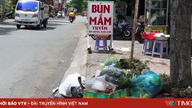
Mr. Dao Minh Thang: Ethanol should not be understood as a harmful substance for engines. Ethanol in E10 gasoline has certain properties, including the ability to help clean some of the deposits in the fuel system. If the vehicle is properly maintained and the fuel system is clean, E10 gasoline can help spark plugs and fuel injectors operate more stably, reducing the risk of premature detonation and supporting the engine's operation. However, this ability to clean and loosen deposits can also cause problems in vehicles that have not been maintained for a long time during the initial transition period. When the loosened deposits are not treated, they can travel with the fuel flow, clog the fuel filter, affect fuel pump pressure, and cause the engine to skid fuel.
Therefore, it's important to understand the true nature of the problem: E10 gasoline is not the direct cause of engine durability in these cases. It's more like a factor that exacerbates existing problems in the fuel system.
 |
| Mr. Dao Minh Thang, CEO of Uy Tin Automotive Technology Joint Stock Company. |
PV:
Mr. Dao Minh Thang: Users don't need to worry too much or take their vehicles for repairs if they are still operating normally. However, if after using E10 gasoline the vehicle shows unusual symptoms such as prolonged difficulty starting, vibration, loss of power, stalling, sluggish engine speed, or the engine fault light comes on, it should be taken to a reputable garage for inspection. The inspection should focus on the fuel system, including cleaning the fuel tank, checking the fuel pump, checking fuel pressure, replacing the fuel filter if necessary, and checking the fuel injectors, spark plugs, and related sensors. The average cost for cleaning the fuel tank and replacing the fuel filter is currently around 1 million VND, depending on the vehicle model and the level of dirt in the system.
PV:
Mr. Dao Minh Thang: In theory, E10 gasoline may consume more fuel than pure mineral gasoline due to the lower energy of ethanol. However, the difference is usually not too large, around 3-5%. If the car only consumes more fuel within this range, it can be considered normal. In cases where the car consumes significantly more fuel, other factors need to be checked such as whether the fuel filter is clogged, whether the fuel injectors are dirty, whether the spark plugs are weak, the oxygen sensor, the intake air flow sensor, tire pressure, and even the driver's driving habits.
PV:



Mr. Dao Minh Thang: The most important thing is that users should maintain their vehicles regularly, especially those that have been used for many years. The fuel system needs to be checked and cleaned when there are signs of abnormalities or when the vehicle has been operating for a long time without this maintenance. Vehicle owners should also refuel at reputable gas stations and avoid letting the fuel tank get too empty before refueling, as dirt and sediment tend to settle at the bottom of the tank. If the vehicle shows unusual behavior after refueling, it needs to be monitored carefully. If the situation is only fleeting and then disappears, you can continue to observe. But if the vehicle vibrates for a long time, experiences hesitation, is difficult to start, stalls, or displays engine error codes, it should be taken for inspection as soon as possible to avoid more serious problems.
PV:
Source: https://www.qdnd.vn/xa-hoi/cac-van-de/xang-e10-hieu-dung-de-dung-dung-1043585
![[Image] Schools organize meetings and introduce teaching models to students admitted to grade 10.](https://vphoto.vietnam.vn/thumb/1200x675/vietnam/resource/IMAGE/2026/06/25/1782368077271_ndo_br_z7970052192242-1ec8daeb77a6eed1a4e9f58c564ddd3e-jpg.webp)

![[Image] Ho Chi Minh City: Ma Lang area, Chicken-Rice Market about to change its appearance](https://vphoto.vietnam.vn/thumb/1200x675/vietnam/resource/IMAGE/2026/06/25/1782377698627_ndo_br_m1-jpg.webp)





































![[Photo] General Secretary and President To Lam receives Palestinian Ambassador Saadi Salama](https://vphoto.vietnam.vn/thumb/1200x675/vietnam/resource/IMAGE/2026/06/25/1782365384740_a1-bnd-9423-8322-jpg.webp)