The actual need for green space
Hanoi is currently facing a paradox: the rate of urbanization and high-rise construction is inversely proportional to the area dedicated to green spaces. Along major thoroughfares like Le Van Luong and Nguyen Trai, or in bustling areas like Cau Giay and Nam Tu Liem, apartment complexes and office buildings are springing up densely. This vertical development helps solve the housing space problem for a megacity of over 8.7 million people, but in return, the concrete structures and asphalt surfaces absorb solar radiation, causing a stifling urban heat island effect in the summer.
According to Hanoi's infrastructure and planning monitoring data, the ratio of public green space per capita in the inner city districts is currently only about 1.93 m²/person. Even more alarming, in the central core districts, this figure is actually below 1 m²/person.
This situation warrants serious consideration when compared to the National Technical Standard on Construction Planning (QCVN 01:2021/BXD). This standard clearly states that a special-class city like Hanoi must achieve a total urban green space target of 10-15 m²/person, and the minimum public green space area in the inner city must be 6 m²/person. This significant disparity demonstrates that the capital's green spaces are being neglected.
This deficiency also means that the city's ability to withstand natural disasters and climate change is severely diminished. Record-breaking heatwaves exceeding 40 degrees Celsius, accompanied by unusual storms during the rainy season, are directly threatening the quality of life for residents. When these "air-conditioning lungs" are reduced, the city will be more deeply vulnerable to weather pressures.
Special mechanisms stemming from the Law on the Capital City.
Faced with this urgent situation, on June 15th, the Hanoi City People's Council passed a Resolution stipulating a number of contents and policy mechanisms on the management, protection, exploitation, use and sustainable development of the entire forest area; and regulations on the development of green trees and scattered tree planting in the city.

Hanoi City People's Council delegates vote to approve the Resolution. Photo: Thanh Thai
This is a timely legislative action aimed at concretizing the specific mechanisms from the 2026 Capital City Law, bringing about three core changes:


Firstly, it assigns responsibility to specific locations. The resolution dedicates a chapter to regulating the development of urban greenery on land managed by the State but not yet allocated or leased in the inner city. This regulation completely eliminates the practice of leaving it entirely to specialized park and green space companies. Now, the People's Committees of communes and wards are given the authority and direct responsibility for planning, organizing the planting, and protecting trees in their areas. This decentralization ensures that each vacant plot of land has a responsible leader to "green" it.
Secondly, social mobilization is needed to attract community resources. Instead of relying entirely on the budget, the city has implemented mechanisms to encourage organizations, households, and individuals to participate in tree planting. This is no longer a mere appeal, but a practical solution to increase tree cover density in even the smallest spaces within residential areas.
Thirdly, the resolution emphasizes the maximum application of preferential financial mechanisms. A particularly noteworthy new point is the financial commitment from the city budget. The resolution clearly states: In cases where the same project is eligible for multiple support policies, the participating entity will be selected to receive the highest level of support. This regulation clearly demonstrates the capital's commitment to resources, ensuring that green projects are not hampered by a lack of funding and creating a genuine incentive for participants.
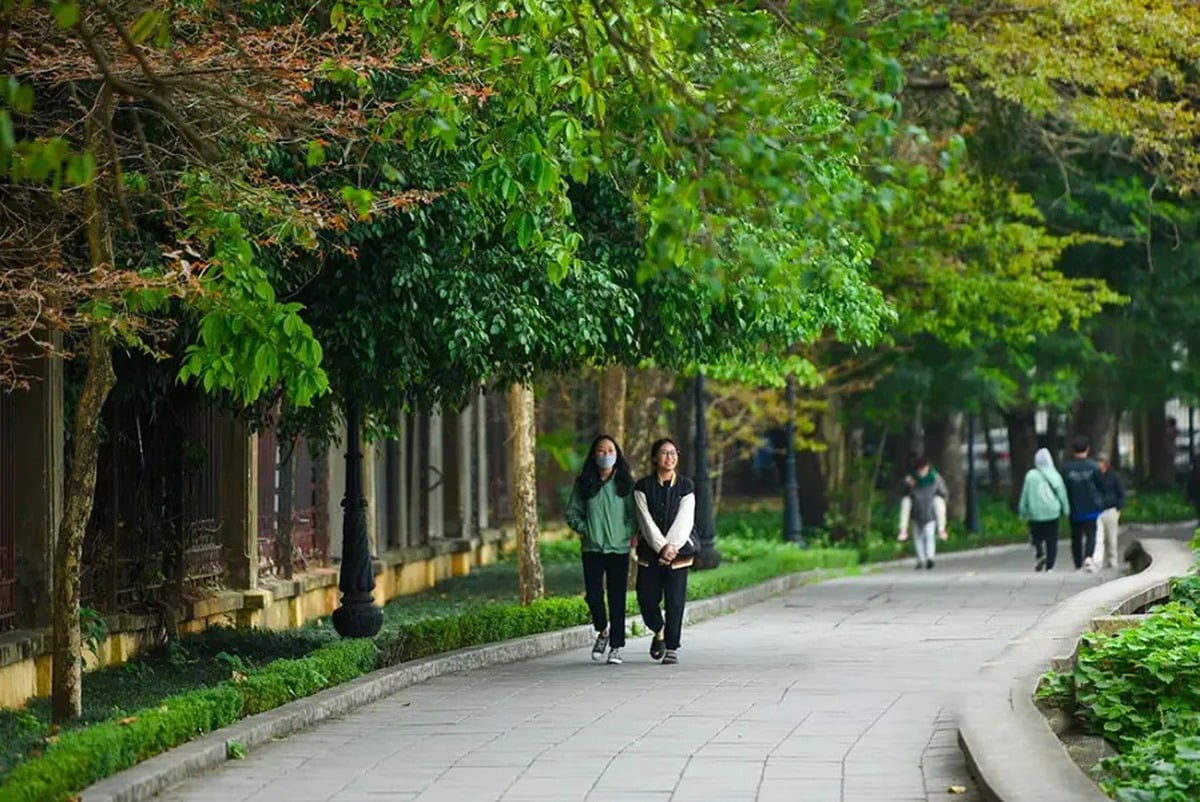
Nghia Do Park, a green and refreshing space in Hanoi.
Lessons learned from megacities
If we compare Hanoi's new approach with that of major cities around the world , we can see that the capital is moving closer to a management mindset shifting from "passive protection" to "active and multi-value development".
In densely populated megacities like Singapore or Tokyo (Japan), they have long since abandoned treating greenery as purely decorative elements and instead manage it as essential infrastructure. Singapore has even digitized each tree using a smart tracking system and mandated that high-rise buildings return green space in the form of rooftop gardens.
Hanoi's approach in the new Resolution reflects this trend by promoting a multi-value forestry economy . The city does not drastically close off suburban forests, but encourages efficient exploitation through the development of the undergrowth economy, ecotourism, and environmental services. This creates a self-driven incentive for citizens and businesses to protect green spaces because it is linked to sustainable livelihood benefits.
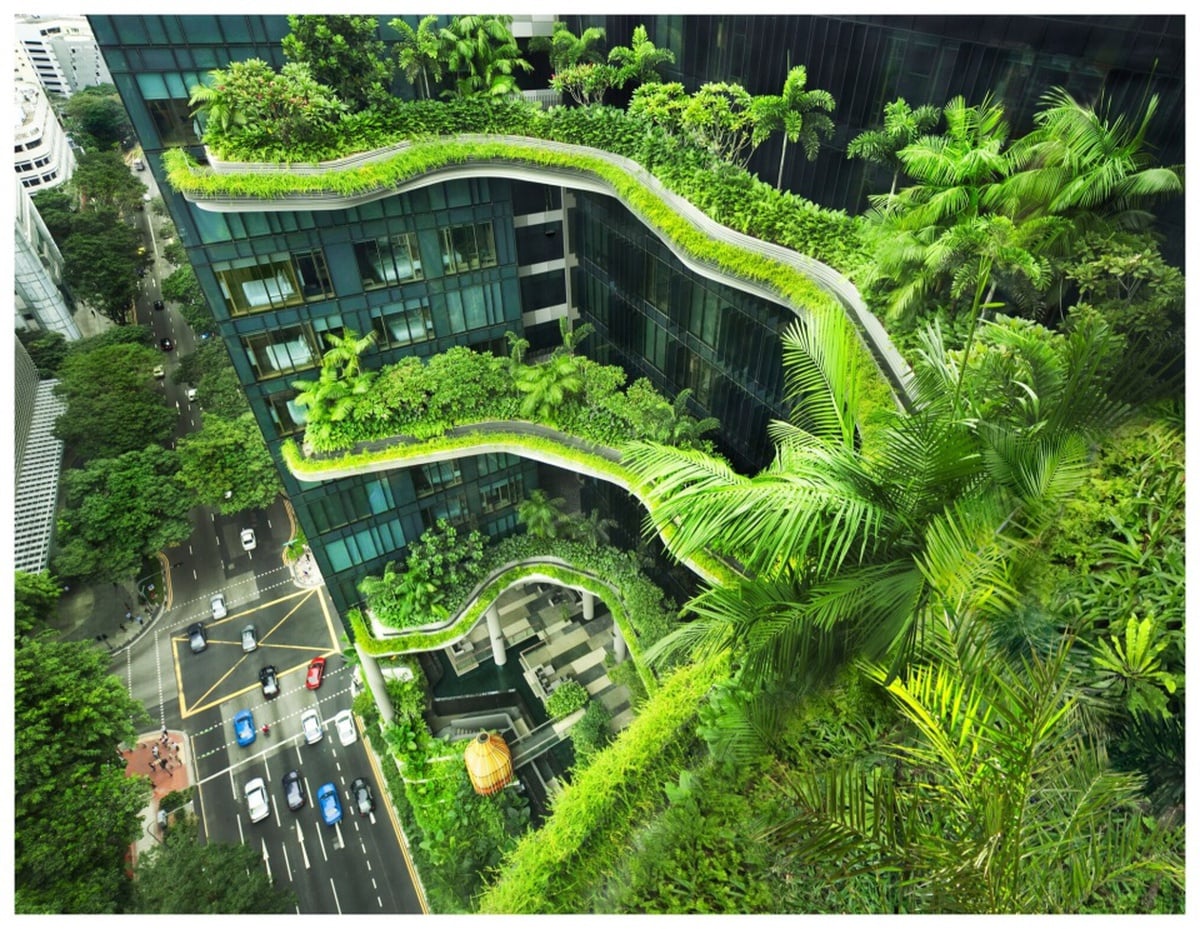
Singapore tops the list of countries with the most trees in urban areas worldwide. (Source: AFP)



Furthermore, Hanoi's focus on applying technology to monitor resources, as well as establishing inter-regional coordination mechanisms with neighboring provinces such as Phu Tho and Hoa Binh, is a necessary step. Forests and green spaces are not divided by administrative boundaries but are viewed as a cyclical, interconnected ecosystem protecting the entire delta region.
The resolution of the Hanoi City People's Council has opened up a strong legal framework. From having only a modest amount of green space, Hanoi is laying the foundation for closely connected ecological belts, from the forests in Ba Vi and Soc Son to every park in the inner city. Of course, the journey from written regulations to reality is a long one, requiring serious implementation at the grassroots level. But with a specific mechanism in the right direction, people have the right to expect a greener, safer, and more sustainable capital city in the face of climate challenges.
Source: https://phunuvietnam.vn/xanh-hoa-thu-do-bang-tu-duy-lap-phap-moi-23826061613193321.htm



































![[Photo] Thousands of people participate in a run to show their support for the campaign "Sharing a common determination to build drug-free communes, wards, and special zones".](https://vphoto.vietnam.vn/thumb/1200x675/vietnam/resource/IMAGE/2026/06/27/1782554475933_0673e2a3df7b5e25076a-8283-jpg.webp)