

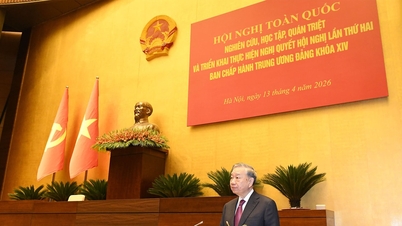
General Secretary and President To Lam emphasized this at the National Conference on studying, understanding, and implementing the Resolution of the Second Plenum of the 14th Central Committee of the Communist Party of Vietnam.
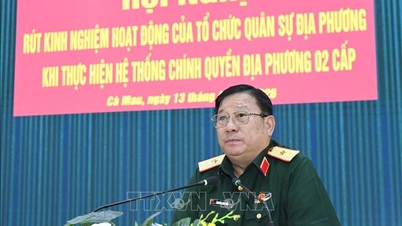
This is not the first time that the head of our Party and State has emphasized the issue of improving the effectiveness of local governments at both levels, including the commune level, and especially the capacity of commune-level officials. This is because the commune level is closest to the people, understands them best, and effectively addressing issues of public safety at the grassroots level will prevent the emergence of hotspots that disrupt social order and security.
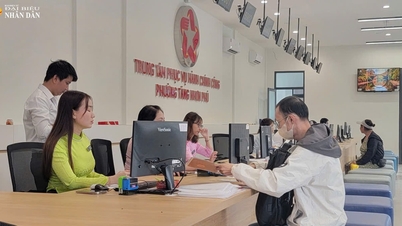
To date, after reorganizing the administrative apparatus, the country has 3,321 commune-level administrative units, including 2,621 communes, 687 wards, and 13 special zones – a reduction of 6,714 commune-level administrative units. This is the result of the concerted efforts of the entire Party and people. Currently, the grassroots-level administrative apparatus operates relatively stably and smoothly, and administrative procedures for citizens and businesses are handled conveniently and quickly.
Despite the achievements, there are still areas where the capacity of commune-level officials remains limited; they lack initiative in decision-making and are still dependent on higher levels. Many grassroots officials are still hesitant in handling emerging issues... The reasons for this situation are that in some places, decentralization is not thorough, granting authority without ensuring sufficient resources, leading to difficulties in implementation. The skill level of grassroots officials is uneven. A portion of officials have not yet caught up with modern management skills and adapted to the increasingly high demands of the new situation. This is the reason why in some places there is an excess of people familiar with old tasks but a shortage of people capable of new tasks.
To overcome the aforementioned limitations and shortcomings, solutions are needed first to enhance the capacity of the commune level, especially decision-making capacity. To achieve this, communes must be clearly empowered, with specific resources and responsibilities assigned, enabling them to proactively address issues within their jurisdiction. Next, communes need to be strong in mobilizing resources to help the provincial level be more proactive in coordinating and implementing strategic projects. Accordingly, mechanisms must be created to enable local governments to proactively cooperate with businesses, organizations, and citizens. Simultaneously, it is necessary to improve public financial management capacity, ensuring transparency and efficiency in resource allocation at the commune level to avoid potential risks.
Furthermore, it is crucial to strengthen the supervisory and feedback role of the commune level. This is because the commune is closest to the people and provides accurate and timely information about their needs and circumstances. Accurate information from the grassroots level will be a vital data source, enabling the provincial level to make accurate and appropriate decisions that meet the people's needs and aspirations, and are grounded in reality.
Decentralization and resource allocation are necessary, but they will not be sufficient if the human element in the operation of the commune-level apparatus does not meet the requirements. Therefore, it is necessary to standardize and improve the quality of commune-level officials, selecting, assigning, and utilizing capable personnel. There should be appropriate reward and incentive mechanisms, while simultaneously tightening administrative discipline and order for commune-level officials. The mechanism for evaluating officials and civil servants should be reformed, establishing a system of evaluating officials based on output results and public satisfaction. Regular training and workshops on management skills and digital capabilities for grassroots officials should be implemented. Along with this, it is necessary to tighten control over power, preventing authoritarianism, arrogance, and harassment that hinder citizens and businesses.
"A strong commune leads to a strong province, and a strong province leads to a strong central government." Therefore, enhancing the role and operational capacity of the commune level is a prerequisite for ensuring the effectiveness and efficiency of the entire political system. When the commune level is truly strong – strong in decision-making capacity, strong in resource mobilization, strong in supervision and feedback – then the two levels of local government can operate smoothly and effectively.
Source: https://daibieunhandan.vn/xay-dung-cap-xa-thuc-su-manh-10413784.html






























































































Comment (0)