

With ticket prices no longer a barrier, the next challenge is how to improve bus services in Ho Chi Minh City to provide a "door-to-door" experience, becoming a truly fast, proactive, and convenient alternative to the millions of private vehicles on the streets.
It's not just about ticket prices.
The policy of free bus travel in Ho Chi Minh City is not just about fares, but also a significant step in the strategy of developing green transportation and gradually reducing reliance on private vehicles. In the context of increasing traffic congestion, environmental pollution, and infrastructure pressure, this could become a crucial impetus to change people's commuting habits.
For many years, the issue of developing public transportation in Ho Chi Minh City has been raised and can no longer be delayed. With the majority of the population still relying on private vehicles using fossil fuels, the city simultaneously faces traffic accidents, air pollution, and energy security risks.
According to several studies, Ho Chi Minh City records approximately 600-1,000 deaths annually due to traffic accidents, based on on-site statistics. If the World Health Organization's calculation method is applied, the actual number could be 2-2.5 times higher.
More concerning, public health studies show that PM2.5 and PM10 fine particulate matter may be linked to approximately 3,000-5,000 deaths annually in Ho Chi Minh City. These are silent but significant losses to society. Therefore, providing free bus services is not simply about subsidizing transportation costs, but also represents a policy focused on environmental protection, public health, and urban welfare.

Free buses would be more effective if there were buses readily available at bus stops, allowing for quick travel. (Photo: Ngoc Quy)
Eliminate waiting times, connect right at your doorstep.
However, free bus travel is not the deciding factor in people abandoning motorbikes or private cars. Behavioral surveys show that people are most concerned about travel time and flexibility. Even middle- and low-income groups are willing to pay more for faster travel. This explains why motorbikes remain a popular choice: fast, independent, and convenient.
To make buses in Ho Chi Minh City truly attractive to users, the entire "door-to-door" journey needs improvement, including walking time to the bus stop, waiting time, travel time on the bus, transfers, and travel from the stop to the destination. If the total travel time by bus is reduced to about 1.5 times that of a motorbike, its appeal will increase significantly.
Therefore, free bus travel should be seen as an initial impetus for people to experience the service and change their perceptions. Sustainable effectiveness must also come from the quality of service.
To maximize the benefits of this policy for the people, it is first necessary to expand the bus network to areas lacking routes, especially suburban areas, new residential areas, industrial zones, and schools. People will benefit when their homes and workplaces are conveniently accessible by bus.
Next, it is necessary to increase the number of vehicles and the frequency of service. A competitive public transport system must ensure that people can find a bus at the station as soon as they arrive, minimizing waiting times. At the same time, the transition to electric buses should be accelerated. This is a direction consistent with the goal of green transportation, helping to reduce emissions, operate more smoothly, and enhance the passenger experience.
On the other hand, significant investment is needed in connecting the initial and final stages of the route. Transfer points should be linked to parking lots, public bicycles, and passenger pick-up vehicles to expand the service coverage of buses and metro. In addition, the technological platform needs to be improved so that people can easily look up routes, know the exact bus arrival times, make convenient payments, and connect multiple payment methods on a single application.
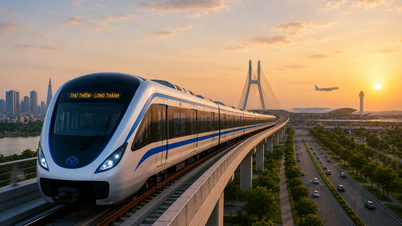
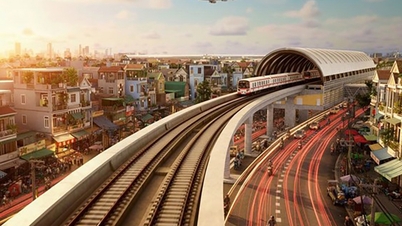
Buses are an important solution in the short and medium term, but in the long term, the metro must remain the backbone of the public transport system. Buses will play a supplementary role, gathering passengers and covering areas not yet reached by the metro.
Ho Chi Minh City currently has millions of motorbikes and private cars, putting immense pressure on urban infrastructure. Therefore, free bus travel should not be viewed as simply a budget expenditure. If done well, this is an investment that will bring about cleaner air, safer traffic, and a better quality of life for the people. Most importantly, today's policy impetus must be accompanied by real changes in the quality of service tomorrow.
Excited and heartwarming.
Hearing the news that Ho Chi Minh City plans to offer free bus services, working-class people like us are truly thrilled.
In a time of rising prices and heavy living costs, a bus fare of a few thousand dong, when added up each month, becomes a significant expense for students, workers, and low-income earners. Therefore, free bus travel is not only a practical policy to reduce traffic congestion and pollution, but also a deeply humane initiative.
After years of struggling on my motorbike amidst crowded streets and hot weather, I often wanted to switch to the bus. Now that bus fares are no longer a barrier, this policy is truly a boost, motivating us to leave our motorbikes at home. We also feel heartwarming knowing the city is making an effort to share the financial burden with the community.

People hope that along with being free, the bus system will become cleaner, more punctual, and more conveniently connected. A zero-cost ride with good service quality will certainly change the commuting habits of millions of people.
Nguyen Thi Hoa (Ho Chi Minh City)

Source: https://nld.com.vn/xe-buyt-mien-phi-can-nhanh-va-tien-loi-196260510194505998.htm





































![[Video] Sunset at Lap An Lagoon – Where the sun sets over the fishing nets](https://vphoto.vietnam.vn/thumb/1200x675/vietnam/resource/IMAGE/2026/05/31/1780192137701_beach-landscape-sea-water-nature-grass-745871-pxhere-com.jpeg)






















Comment (0)