Bicycle-based urban development platform
Unlike many large cities that are under pressure from population density and traffic, Hoi An has a moderate size and short travel distances. It is considered an ideal environment for bicycles to become an integral part of daily life and the travel experiences of tourists.
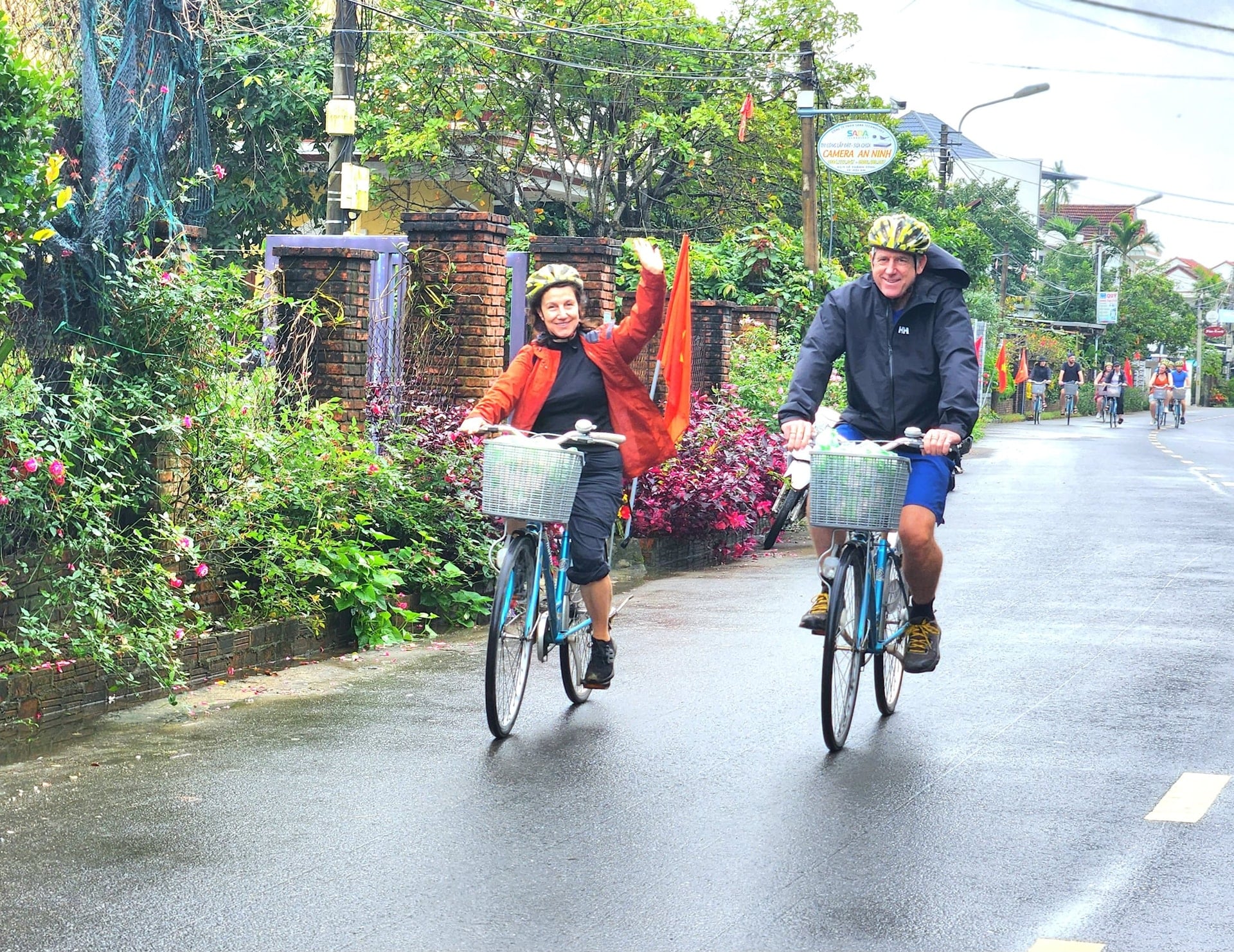
Furthermore, Hoi An boasts a diverse ecosystem and landscape. In a short trip, visitors can cycle through the ancient streets, across lush green rice fields and peaceful villages, or visit mangrove forests and long stretches of beaches. Bicycles are the perfect means of transportation, perfectly suited to the "slow living" spirit that is inherent in this region.
Increasing bicycle usage not only contributes to reducing emissions and noise but also alleviates traffic congestion and improves the quality of life. With its advantageous landscapes, rich culture, and sustainable development orientation, Hoi An has a great opportunity to position itself as a low-emission city with a distinctive bicycle culture.
According to Dr. Phan Manh Tuan, a senior expert on "Net Zero" in Vietnam, Hoi An possesses an ideal urban scale where core destinations are all within a radius of 2-5km. The current challenge is how to preserve and elevate the international standing of its green identity and the living space for bicycles.
Dr. Phan Manh Tuan recommended that localities should upgrade existing pathways into green bicycle corridors, establishing safe priority lanes connecting the heritage core with ecotourism destinations. At the same time, it is necessary to form a multimodal transit ecosystem and smart supporting infrastructure at gathering points at the city's gateways.




Leveraging community tourism
Beyond its environmental significance, bicycles also act as a catalyst for promoting community tourism. Experiential cycling tours help spread economic benefits widely, rather than concentrating them in the city center. Tourists can easily access traditional craft villages, handicraft production facilities, and small-scale agricultural businesses. As a result, the livelihoods of local people are significantly improved in a sustainable way.
This trend is particularly well-suited to middle-aged and older travelers from Europe, North America, and Australia – markets with a strong cycling culture. These customers also prioritize destinations that are environmentally responsible and deeply respect local values.
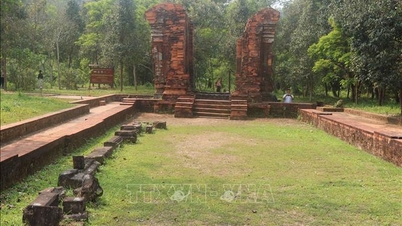
Mr. Le Quoc Viet, Chairman of the Quang Nam Destination Club (Da Nang Tourism Association), suggested that from the core of Hoi An, many cycling tourism routes could be expanded throughout the region. Typical examples include the Hoi An - Da Nang route along the Co Co River; the Hoi An - My Son route connecting the Cham cultural space; or the Hoi An - Tam Ky route along the coastal road, promising multi-day experiences for tourists who love nature and physical activity.
Simultaneously, routes connecting traditional craft villages, organic farming areas, and community eco-tourism zones will form a network of "green heritage routes." Here, bicycles play a crucial role in harmoniously connecting cultural values, nature, and the lives of local residents.
According to experts, realizing this goal requires the concerted efforts of the government, businesses, and the community. Besides planning environmentally friendly infrastructure, the locality should develop digital maps of cycling routes, establish rest stops, repair shops, and parking areas that reflect Hoi An's unique character. Solutions such as public transport rentals, integrating digital entrance tickets via QR codes, or offering incentives for tourists using eco-friendly transportation are all promising approaches.



Mr. Phan Xuan Thanh, Permanent Vice Chairman of the Da Nang Tourism Association, stated that building a low-emission city needs to be quantified using specific criteria so that businesses and residents can apply them systematically. Transforming low-emission values into a part of the local culture is a long-term journey requiring the persistent collaboration of all stakeholders.
“When implementing any model, balancing the interests of the people, businesses, and the community is a key factor. Whether it’s organizing bicycle-friendly streets or restricting motorized vehicles, every solution must ensure consensus. Only when the community recognizes the real value and voluntarily becomes the main stakeholders in protecting the model can those achievements be sustainable,” Mr. Phan Xuan Thanh emphasized.
Source: https://baodanang.vn/xe-dap-dan-loi-do-thi-phat-thai-thap-3339952.html

![[Photo] General Secretary and President To Lam attends the Central Public Security Party Committee Conference](https://vphoto.vietnam.vn/thumb/1200x675/vietnam/resource/IMAGE/2026/06/24/1782302063612_a1-bnd-9302-9166-jpg.webp)
![[Photo] The 13th National Congress of the Youth Union conducts personnel work.](https://vphoto.vietnam.vn/thumb/1200x675/vietnam/resource/IMAGE/2026/06/24/1782299943080_ndo_br_1-6868-jpg.webp)

![[Photo] Opening Ceremony of the 13th National Congress of the Ho Chi Minh Communist Youth Union](https://vphoto.vietnam.vn/thumb/1200x675/vietnam/resource/IMAGE/2026/06/24/1782286753905_ndo_br_1-8510-jpg.webp)