Let the land have a "summer break".
When I asked why people usually only see people covering rice seedlings with plastic sheeting in winter to protect them from the cold, and had never seen it done in the middle of summer, Mr. Nguyen Van Nhuong, a farmer in Hoi Thinh commune, Phu Tho province, smiled and explained: "That's how we compost the soil to kill weeds, insect eggs, and pathogens. Specifically, we mix rice bran with yeast and let it ferment for about two weeks, then mix it with manure and let it ferment for another 21 days. I spread that compost on the field, plow and till it thoroughly, then cover it with plastic sheeting and leave it for a month before opening it up and planting vegetables. Thanks to this, we hardly needed to use pesticides for the next two crop cycles."
Mr. Nhuong shared that growing cabbage is very stressful due to pests and diseases, especially cabbage worms and flea beetles. While there are biological pesticides to treat cabbage worms, there are none for flea beetles. Previously, farmers followed the experience of their ancestors, plowing and flooding the fields for 15-20 days after harvesting a cabbage crop to control flea beetles.
However, after draining the water, waiting for the soil to dry, preparing the raised beds, and planting the seedlings, flea beetles reappeared. Since using the new technique of composting the soil for a month during the summer, this phenomenon has not been observed anymore. Perhaps not only did the flea beetles die, but their eggs also perished.

Japanese-style soil composting at Vinh Phuc Safe Vegetable Cooperative. Photo: Duong Dinh Tuong.
Ms. Kieu Thi Hue, Director of Vinh Phuc Safe Vegetable Cooperative (Tam Duong, Phu Tho), said that sterilizing and renewing the soil, also known as soil treatment using solar energy, is a technical measure that the Japanese JICA project transferred to the cooperative in 2018.
This technique is applied from May to August, when temperatures are highest. When the outside temperature is 35 degrees Celsius, the temperature in the treated soil must reach 60-65 degrees Celsius, causing weed seeds to rot and lose their germination viability, while also destroying fungal diseases and pests. Conversely, at such high temperatures, beneficial microorganisms can still thrive.
Here's how to implement this technique: Step 1: Fertilizer is applied before plowing to ensure it's buried deep in the soil and evenly distributed in sufficient quantities for the plants to use throughout the growing season. NPK fertilizer can be used, but processed manure is essential.
Step 2 involves plowing and loosening the soil, creating raised beds so that the next crop can be planted immediately without further preparation. The soil should have a moisture content of approximately 60% to help increase soil temperature when covered with plastic sheeting.
Step 3: The plastic sheeting used in soil treatment is white to absorb heat. Pull the plastic sheeting to cover the entire surface area of the soil (including furrows) and secure it tightly to prevent heat from escaping.



Step 4: After a minimum of 20 days, farmers can remove the plastic sheeting to plant the seedlings. However, immediately after removing the plastic, the soil temperature is very high, so it is necessary to let the soil cool down before sowing or planting the seedlings (for about 1 day).

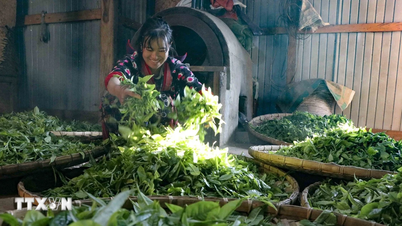
Farmers harvest leafy greens, with fields of soil being prepared in the background. Photo: Duong Dinh Tuong.
Eight years of persistent pursuit of a technique.
Ms. Hue's cooperative doesn't have a large area of land for its own production, only a small plot for experimenting with new varieties and techniques. Therefore, the cooperative relies entirely on partnerships with farmers, currently involving 15 households with a total of 11 hectares of land. At the beginning of each season, the cooperative plans production for the households according to the yield and types requested by customers, guides them on planting schedules, and assigns staff to monitor and supervise technical aspects. Of the 11 hectares of land under partnership, 8 hectares have met VietGAP standards, while 3 hectares remain uncertified due to issues related to land ownership, not because the farmers lack the necessary technical skills.
Mr. Nguyen Van Nhuong owns 1 hectare of land and started partnering with the cooperative in 2018, applying the soil composting technique ever since. At the beginning of the year, he plants 2-3 crops of cabbage, then stops, composting the soil and letting it rest for a month in the summer before planting the next crops. With the cooperative guaranteeing a stable price of 8,000-10,000 VND/kg depending on the time of year, with only two main laborers (his wife and him), they earn 300 million VND annually, with a net profit of approximately 200 million VND after deducting expenses.
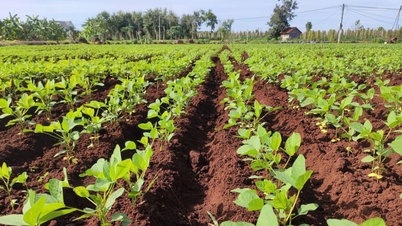
Similarly, Mr. Nguyen Van Hao, who owns 2 hectares of land, has also been affiliated with the cooperative since 2018. Initially, he grew a variety of vegetables, but recently he has shifted most of his land to growing sweet potato leaves.
“ Agricultural labor in my hometown is expensive now, and if there is any available, it's mostly people with back and leg pain because they're 60-70 years old. That's why I decided to switch to growing sweet potato leaves to save labor. I only plant them once and harvest them for 3 years. After cutting them at the root, they produce a new crop every 28-33 days. On this 2-hectare plot, besides my mother and I working directly, we still have to hire 3 more people. In total, we earn about 700 million VND per year. After deducting all expenses, especially labor costs, we make a profit of about 200 million VND,” Mr. Hao informed.

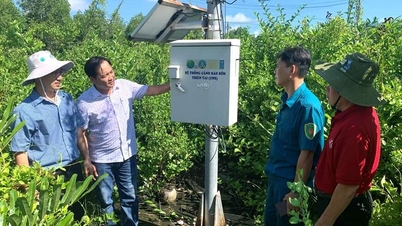
Ms. Kieu Thi Hue, Director of Vinh Phuc Safe Vegetable Cooperative (right), inspects vegetables at a cooperative household. Photo: Duong Dinh Tuong.
Since sweet potato leaves are harvested mainly in the summer, Mr. Hao can no longer apply the Japanese soil composting technique, but he is still dedicating 7 acres this season to growing cabbage. He has already cleared the weeds and is preparing the yeast for rice wine. His soil composting method is slightly different from Mr. Nhuong's: he mixes the yeast directly into the manure, composts it for a week, then spreads it on the field, covers it tightly with plastic, and leaves it for a month to fully ferment.



With traditional farming methods, you can rest when you get home, but with VietGAP-certified farming, you still have to keep regular records even after you get home. However, the advantage is that the cooperative guarantees the purchase of the product at a stable price, allowing you to invest in production with peace of mind.
Currently, products from the Vinh Phuc Safe Vegetable Cooperative are sold to the Winmart supermarket system and to schools and industrial kitchens in the area. Customers not only take samples for quality testing, but are now so meticulous that they occasionally visit the cooperative's production area to see how the farmers work in practice.
Thanks to strict adherence to VietGAP procedures and the addition of soil composting techniques to control pests and diseases, the unit has not experienced any incidents over the past 12 years, contributing to providing hundreds of thousands of safe meals for consumers.
Source: https://nongnghiepmoitruong.vn/xem-nong-dan-khu-trung-dat-kieu-nhat-d815208.html