

A breath test measuring hydrogen levels is used to diagnose conditions such as irritable bowel syndrome, dysbiosis of the small intestine, and lactose intolerance.
Dietary sugars like fructose and lactose, if not absorbed in the small intestine, travel to the large intestine where they are fermented by gut bacteria, producing methane or hydrogen gas, or both.
According to Dr. Le Thanh Quynh Ngan, Head of the Gastroenterology Department at Tam Anh General Hospital in Ho Chi Minh City, the hydrogen methane test is used when there is suspicion of irritable bowel syndrome, carbohydrate malabsorption (lactose, fructose, sucrose, or sorbitol intolerance), small bowel dysbiosis, functional dyspepsia, bloating, flatulence, and indigestion. People with chronic inflammatory bowel disease, chronic pancreatitis, and intolerance to milk and dairy products may also undergo this test.
To prepare for a hydrogen methane test, patients should fast for at least 6-8 hours before the test, avoid colonoscopies or antibiotics within the previous month, and refrain from taking laxatives within the previous week. They should also limit sugary foods (milk, sweets, honey, fruit) and refrain from smoking during the test. Test results are available after 2-3 hours.

Doctor Quynh Ngan examines a patient before conducting a methane/hydrogen test. Photo: Provided by the hospital.
To perform this test, the patient breathes into a breath analyzer. Before blowing into the tube, the patient takes a deep breath, holds it for about 10-15 seconds, and then blows forcefully into the tube. Afterwards, they drink sugar water and repeat the above steps about 5-6 times.
The doctor will take breath samples over the next few hours, approximately every 15-30 minutes. During this time, the patient should limit physical activity and record any digestive symptoms experienced, such as abdominal pain, bloating, or flatulence.
Dr. Ngan explained that hydrogen levels are measured in ppm (parts-per-million), which vary depending on the specific condition. Normal hydrogen levels in a healthy digestive system are below 16 ppm. If the readings are higher than this, the patient may have digestive problems such as poor carbohydrate absorption or dysbiosis in the small intestine. Based on the results, the doctor will make a diagnosis and prescribe appropriate treatment.
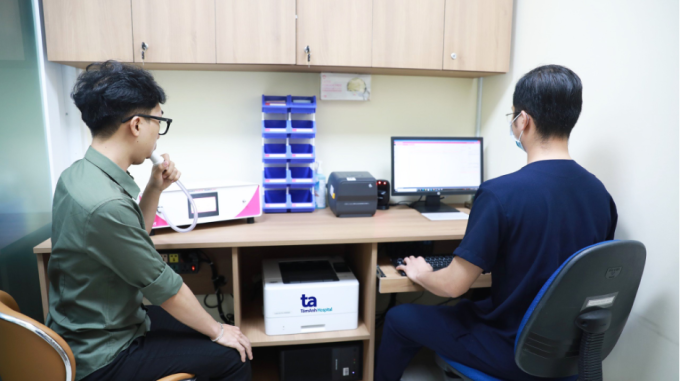
The patient undergoes a methane/hydrogen test as instructed by the technician. Photo: Provided by the hospital.
According to Dr. Ngan, the methane hydrogen test is non-invasive and causes virtually no side effects. However, patients may experience abdominal discomfort when breathing into the analyzer and drinking sugary water.
This test is not recommended for children under two years of age, unless directed by a pediatrician or gastroenterologist.
Le Thuy
| Readers can ask questions about digestive diseases here for doctors to answer. |
Source link





![[Photo] General Secretary and President visit the China-ASEAN AI Application Cooperation Center](https://vphoto.vietnam.vn/thumb/1200x675/vietnam/resource/IMAGE/2026/04/17/1776404277677_vna-potal-tong-bi-thu-chu-tich-nuoc-tham-trung-tam-hop-tac-ung-dung-ai-trung-quoc-asean-8706616-2286-jpg.webp)


























![[Photo] National Assembly Chairman Tran Thanh Man attends the policy seminar to promote Vietnam-Türkiye cooperation.](https://vphoto.vietnam.vn/thumb/1200x675/vietnam/resource/IMAGE/2026/04/16/1776351415367_vna-potal-chu-tich-quoc-hoi-tran-thanh-man-du-toa-dam-chinh-sach-thuc-day-hop-tac-viet-nam-tho-nhi-ky-8705791-jpg.webp)






































































Comment (0)