

For a long time, five-colored sticky rice has been known as a specialty dish and a traditional food served during festivals and holidays by the Muong ethnic group (Tan Phu commune, Tan Son district, Phu Tho province). Five-colored sticky rice symbolizes yin and yang and the five elements, representing the solidarity of the Muong ethnic community in particular and ethnic communities in general.
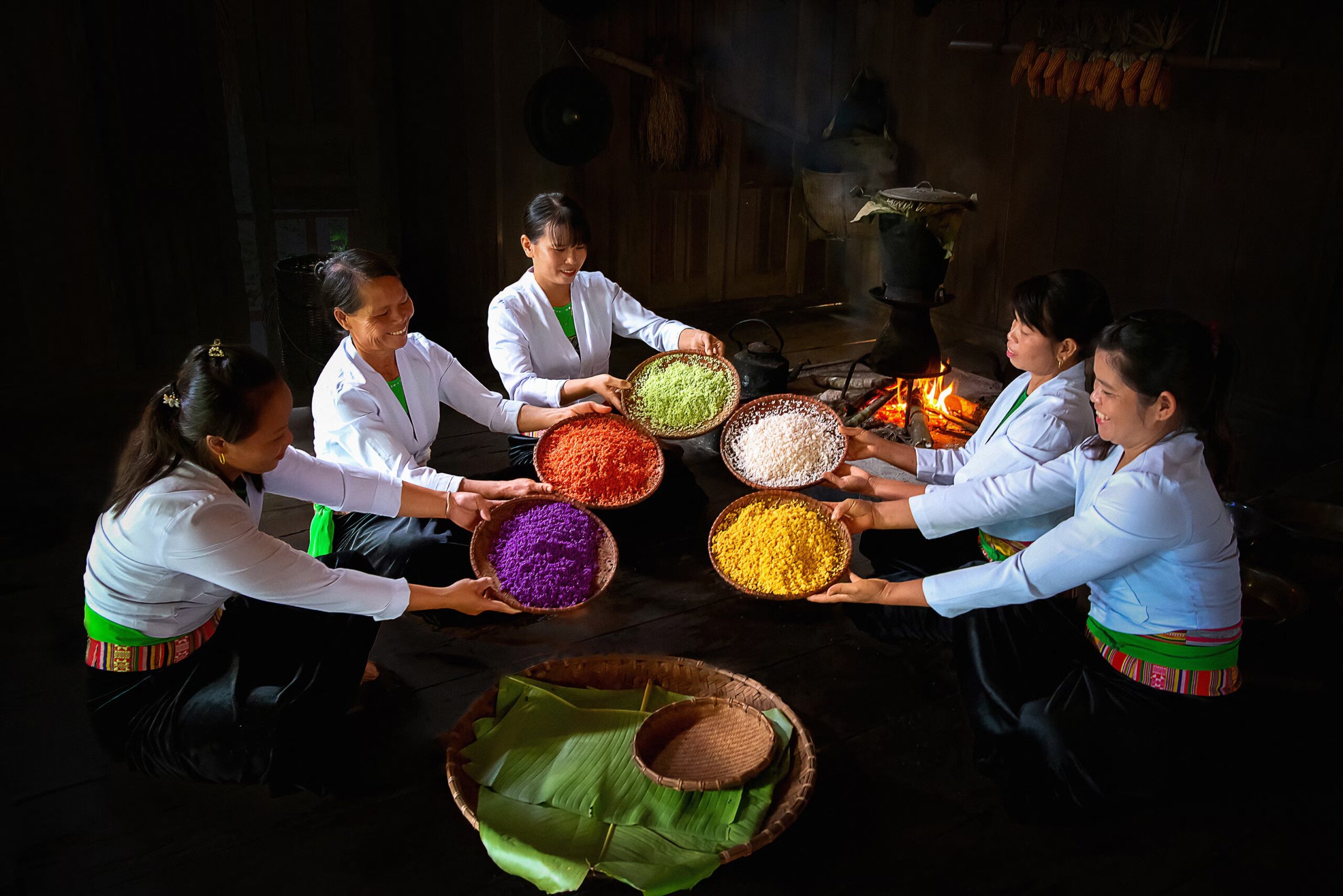 Author Nguyen Thi Thuy Hang's photo series "Five-Colored Sticky Rice" will give you a clearer understanding of the meticulous process of making five-colored sticky rice, from selecting the glutinous rice to cooking the leaves, pounding the leaves and roots to extract the colored water to mix with the rice. The cooking process must be precise to ensure a pot of sticky rice with rich colors, and the colors don't blend together. The cooked sticky rice requires the skillful hands of the person scooping, leveling, and mixing the layers of colored rice to create a visually appealing and delicious five -colored sticky rice dish with the distinctive aroma of the mountains and forests. The photo series was submitted by the author to the Happy Vietnam Photo and Video Contest, organized by the Ministry of Information and Communications .
 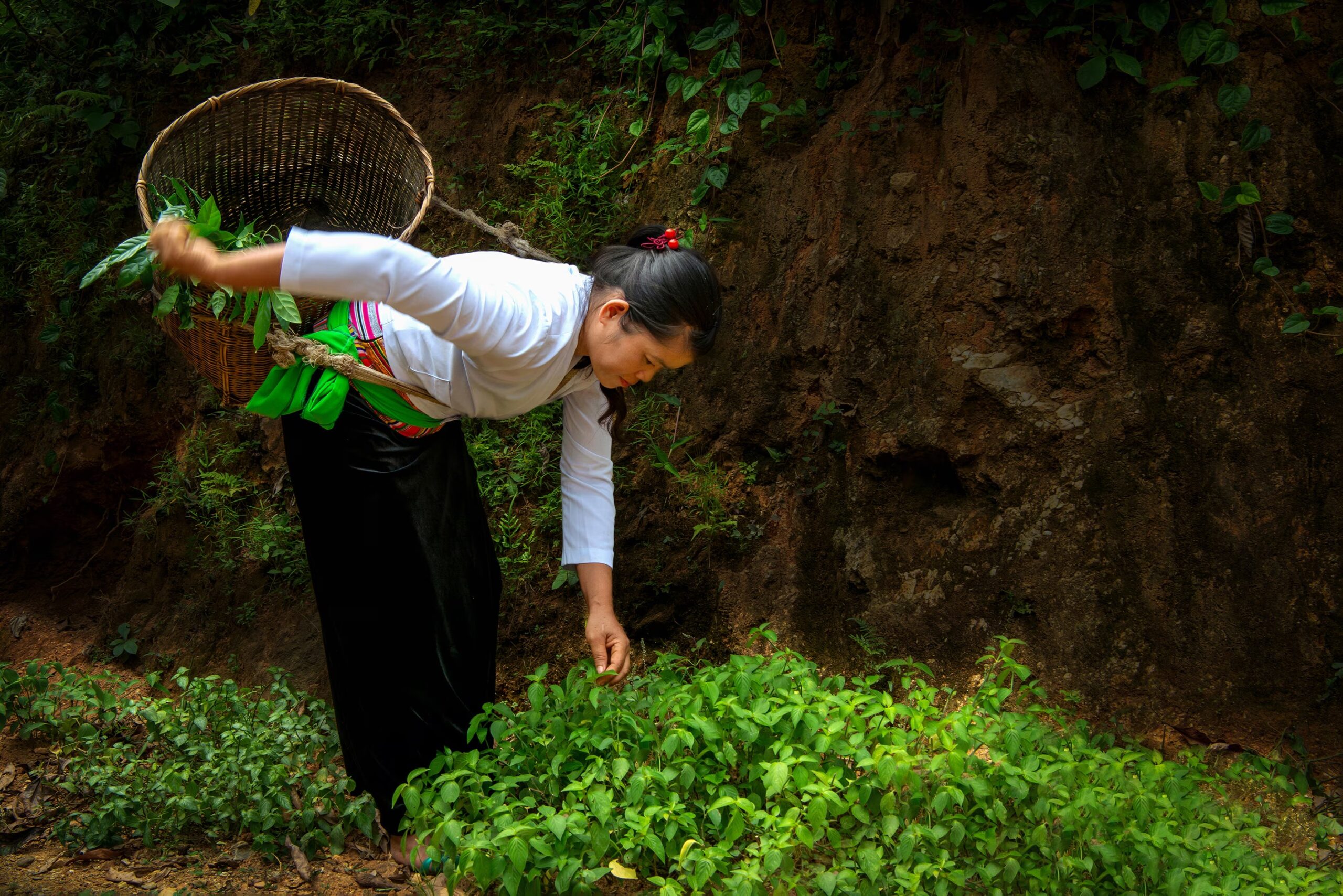 The ingredients for making purple, blue, and red sticky rice are derived from soaking rice in three types of leaves from the Com Nap plant; yellow comes from the dried flowers of a forest plant; and white is made from plain rice, resulting in five beautiful colors.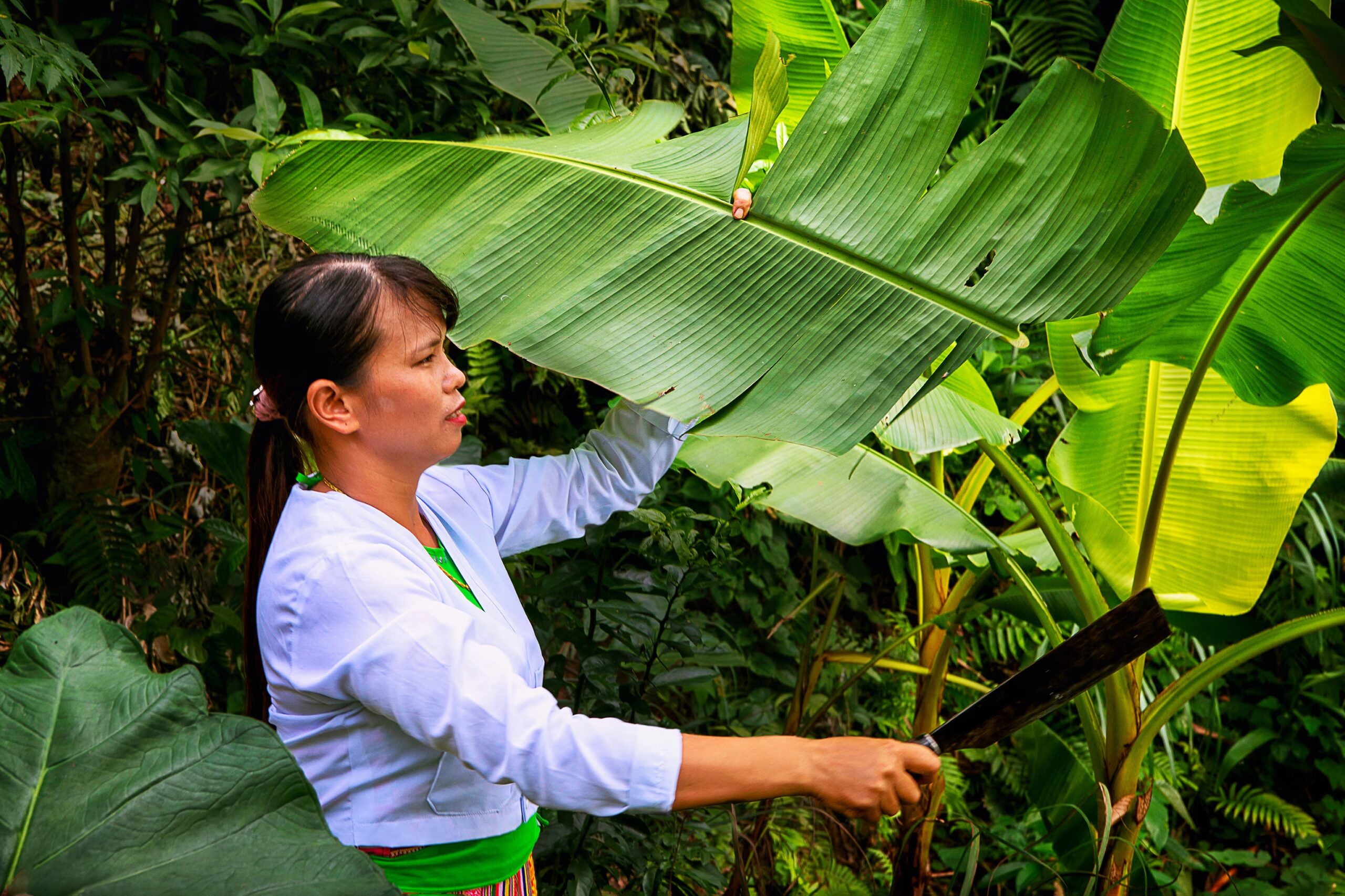
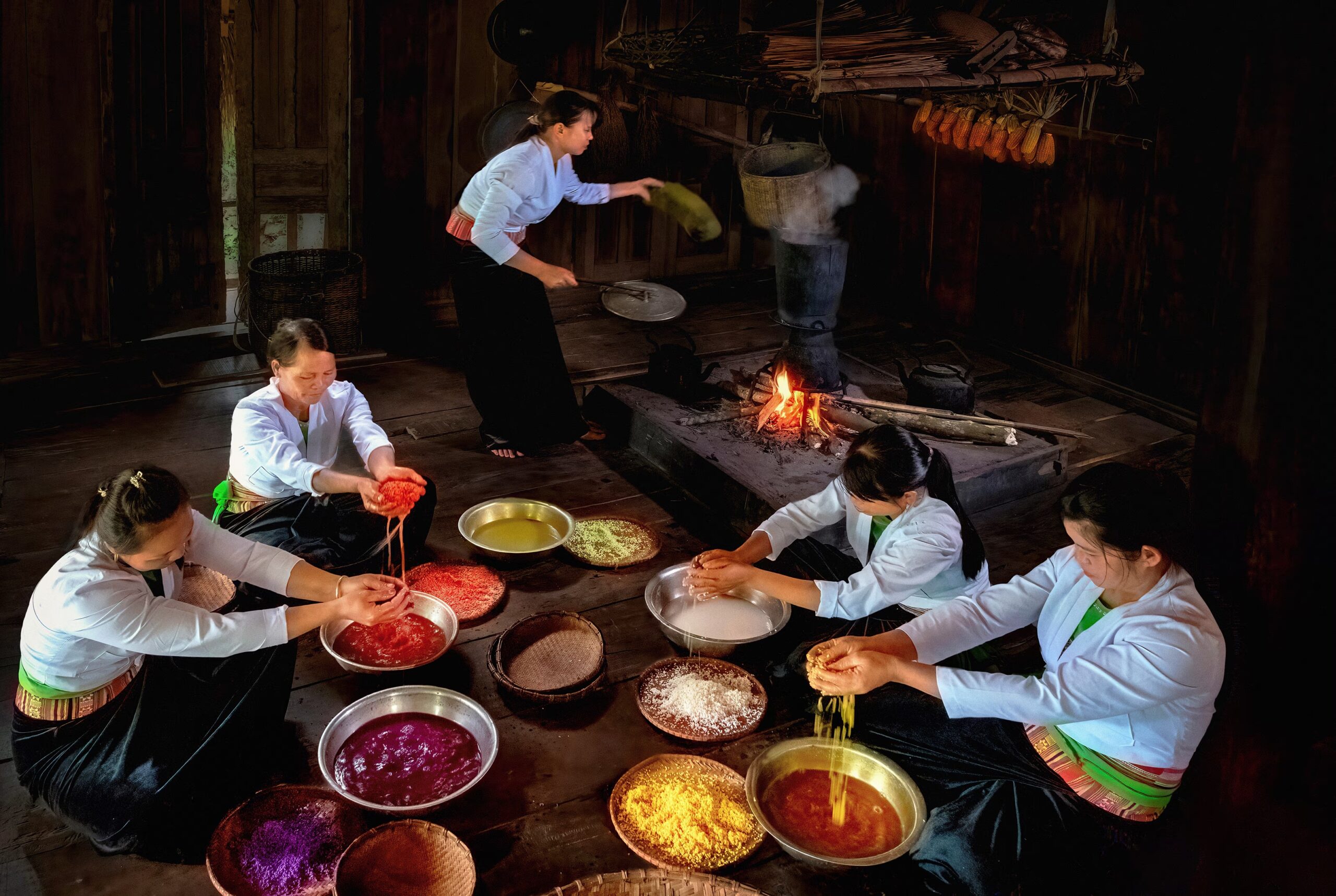 To ensure beautiful colors, the leaf gatherers must avoid mixing different colored plants together. Next, there's the meticulous process of cooking and pounding the leaves and roots to extract the colored liquid, which is then mixed into the glutinous rice to create the desired colors. The glutinous rice, after being soaked in water, is mixed with different colors and left to soak overnight so the color permeates each grain. The meticulousness of the five-colored sticky rice dish also lies in the fact that the different colored plants and leaves must be cooked in separate pots to prevent color mixing.
 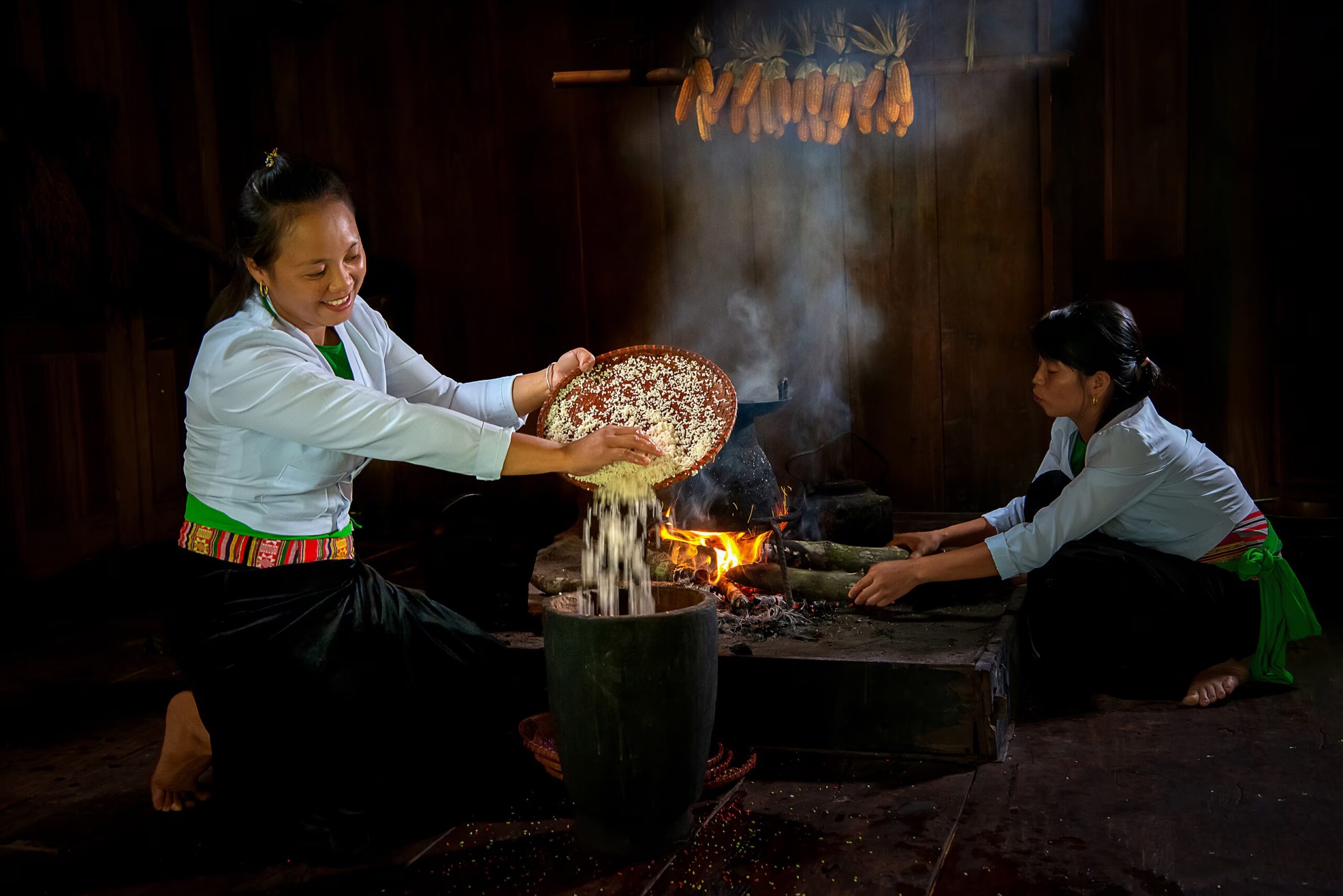 The process of making five-colored sticky rice also requires a keen sense of taste from the cook to ensure the rice is cooked for the right amount of time, perfectly done, and has the right color.
 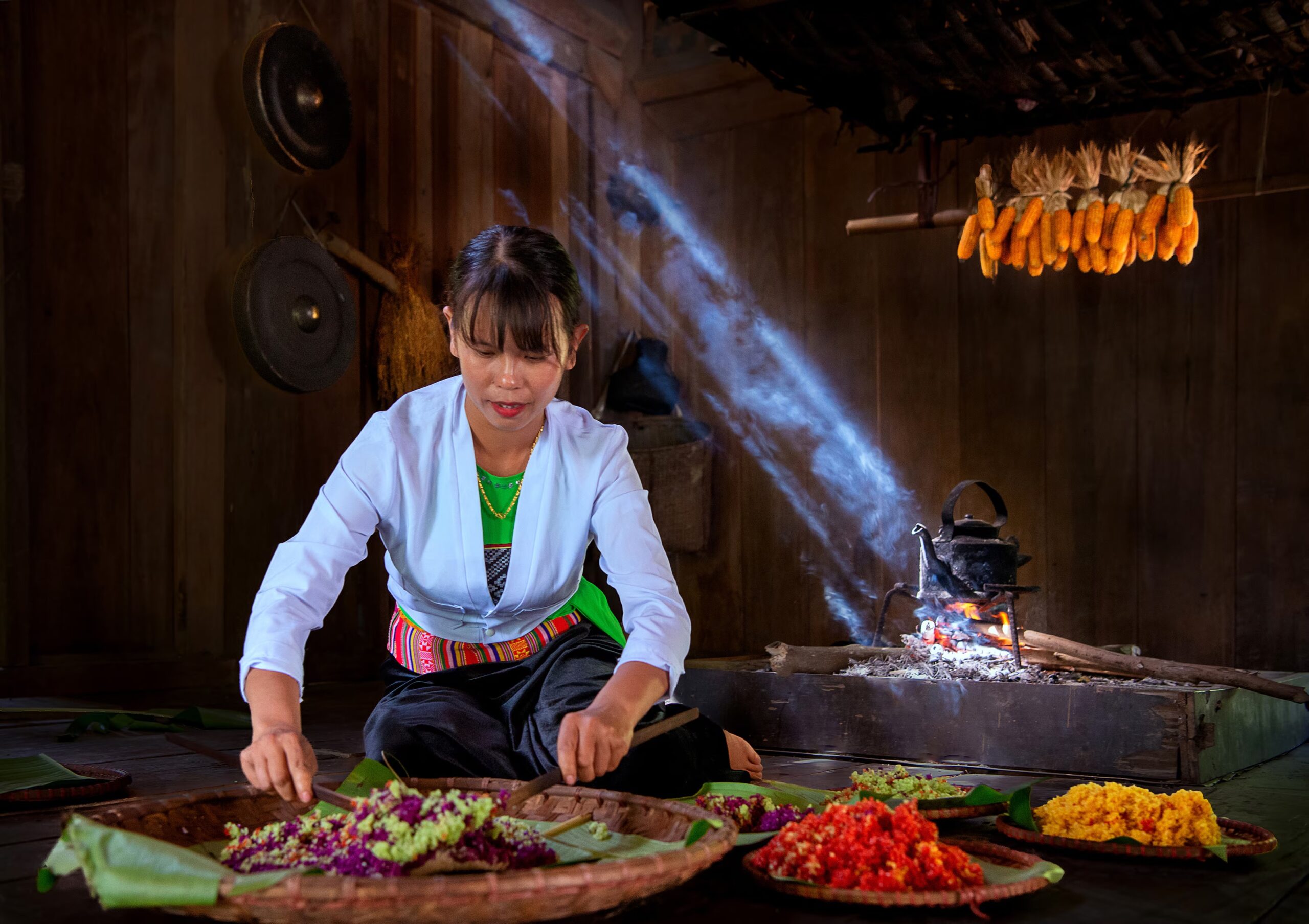 The process of steaming sticky rice is equally meticulous, as the cook must carefully place each layer of colored rice into the steamer. Rice dyed with strong colors that easily bleed onto other colors, such as yellow, red, and purple, is usually placed at the bottom of the steamer, separated by banana leaves, and the top layer must be the original, white glutinous rice. The white rice is placed on top to prevent it from being colored by other colors.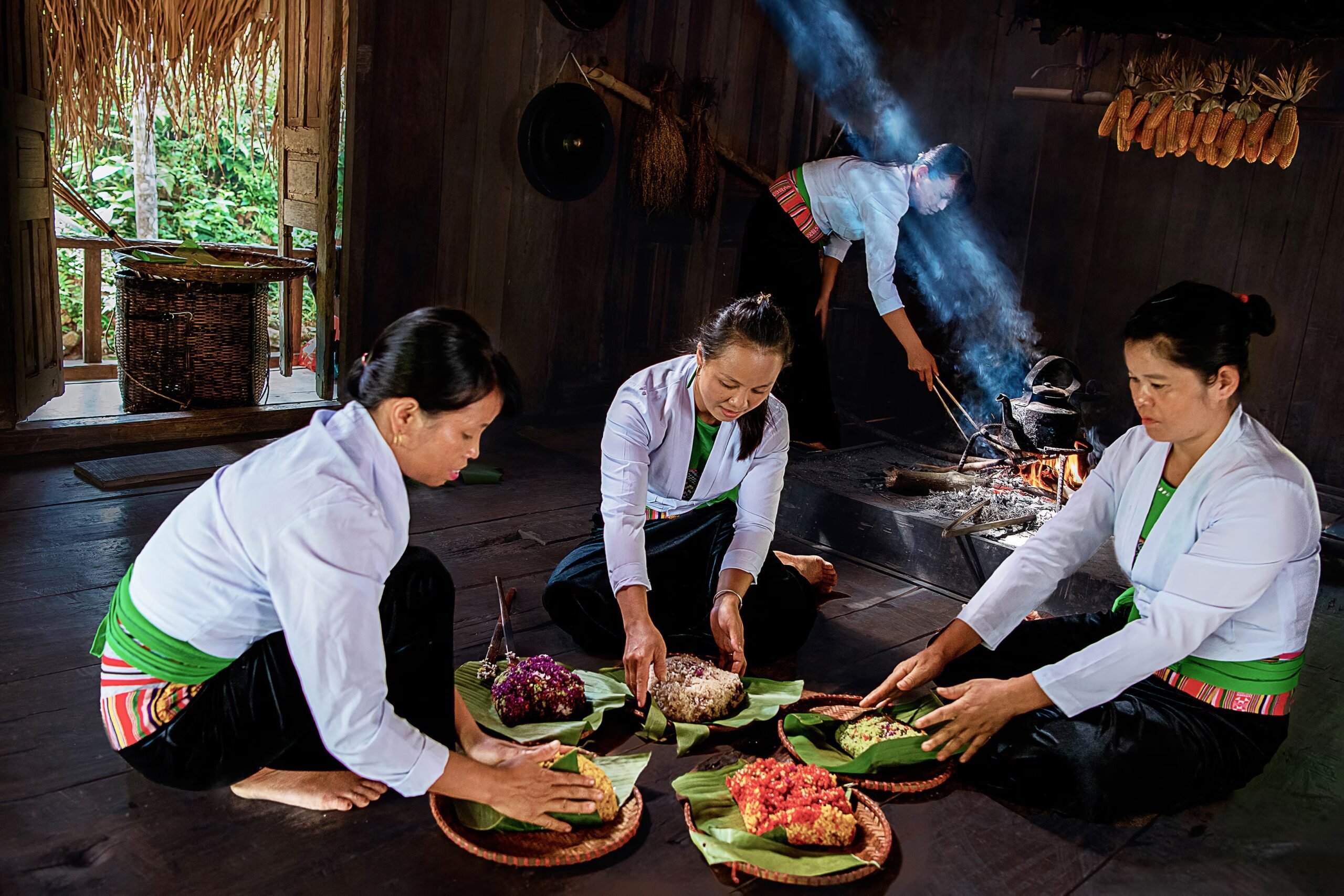
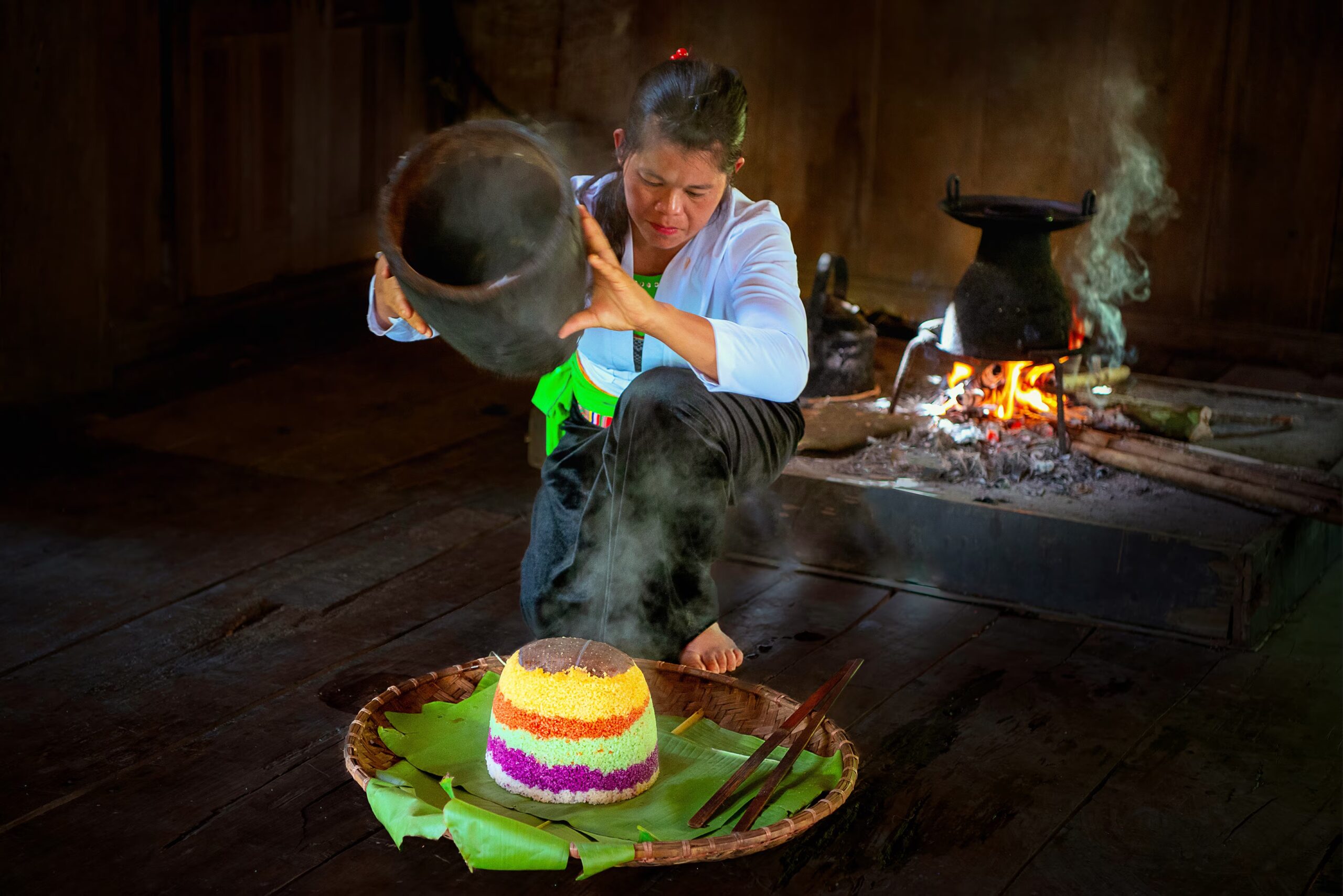 The Muong people believe that the five colors of sticky rice symbolize the philosophy of the five elements, yin and yang, and human harmony. Red represents Fire, white represents Metal, blue represents Water, yellow represents Earth, and purple represents Wood. At the same time, it also expresses the solidarity of the Muong people in particular and the ethnic groups in the Northwest region in general. The colors of the sticky rice also reflect the Muong people's aspirations for a life in harmony with heaven and earth, family reunion, community cohesion, and good fortune. Perhaps that is why five-colored sticky rice is a dish often prepared for festivals, holidays, and banquets to welcome honored guests. Five-colored sticky rice is often present on the altar during the Lunar New Year or on the full moon days of the first, fifth, and eighth months of the lunar calendar to worship ancestors, as an affirmation of the filial piety of descendants remembering their ancestral roots.
Vietnam.vn



![[Image] Nearly 125,000 Hanoi students completed the Literature exam for the 10th grade entrance exam.](https://vphoto.vietnam.vn/thumb/1200x675/vietnam/resource/IMAGE/2026/05/30/1780117233041_ndo_br_thiet-ke-chua-co-ten-2-png.webp)



























































Comment (0)