

Pressure from rising fuel prices
Recently, the price of RON 95-III gasoline has at times exceeded 34,000 VND/liter, a sharp increase compared to the previous level of over 20,000 VND/liter. A difference of over 10,000 VND per liter may seem small, but when added up over each trip and for each family, it becomes a significant burden on the living expenses of many households.
In March 2026 alone, fuel prices were repeatedly adjusted upwards on March 5th, 7th, 10th, 12th, 19th, and 24th, including some sharp increases that directly impacted travel costs. This pressure was particularly evident for those who frequently travel between provinces.
Mr. Nguyen Phi Tuyen, an official working in Tuyen Quang, said: “Previously, I traveled to Ha Giang twice a week, and the fuel cost was only a little over 200,000 VND per trip. Now, the total cost for both the round trip is nearly 2,000,000 VND. With our current income, my family is forced to reduce the frequency of travel and switch to using buses or carpooling.”
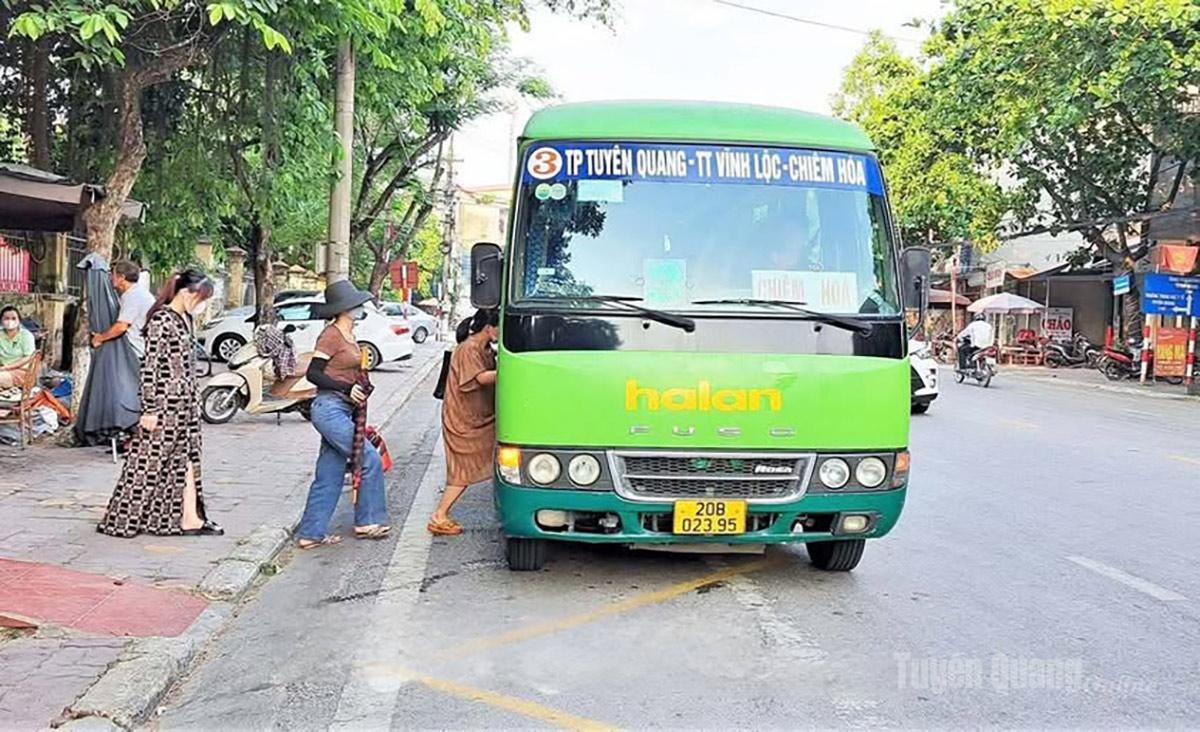 |
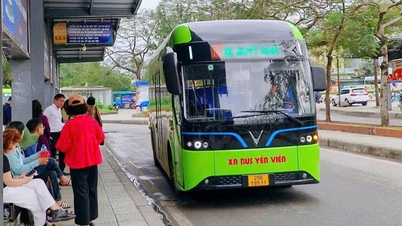
| More and more people are choosing public transportation as fuel prices rise. |
This isn't just happening in one family; it's occurring in many households. Regular trips are becoming less frequent, and travel decisions are being made more carefully. Many people are choosing to reduce the number of trips, share transportation, or switch to public transport as a cost-saving solution.
In Tuyen Quang, many young families who once considered personal cars their primary mode of transportation are now having to adjust their habits. The cars are still there, but they are no longer the preferred choice. Carpooling and fuel-sharing have become temporary solutions. These small changes within individual families are contributing to a significant shift in societal transportation behavior.
Observations at bus stops throughout the province in late March showed a slight increase in passenger numbers. The increase wasn't significant, but it clearly reflects the initial shift from private vehicles to public transportation.
The passenger demographics have also changed. Nguyen Trung Kien, a bus conductor on the Tuyen Quang - Chiem Hoa route, said: "Besides students and workers, recently more officials and civil servants have chosen buses due to the reasonable cost."
Currently, on average, a bus passes through the pick-up and drop-off points every 30 minutes. Maintaining a stable schedule, stopping at designated stops, and ensuring passenger safety are factors that contribute to building trust among users.
Ticket prices are publicly displayed, and the introduction of electronic monthly passes makes travel more convenient for passengers. While these improvements haven't created a breakthrough, they are gradually contributing to a higher quality of service.
Adapt to change
Based on their experiences, many passengers have made specific comparisons and considerations between convenience and cost when choosing a mode of transportation. Ms. Nguyen Tuyet Lan, a small business owner who frequently travels between markets in Tuyen Quang, shared: “Taking the bus is more economical, but you have to wait and depend on the schedule. Although it is inconvenient, under current conditions, it is still a suitable option.”
Public transportation is clearly shifting from an "alternative" to a "necessary" option amidst rising living costs. However, to become the preferred choice, more favorable conditions are still needed.
From the perspective of the operating unit, Ms. Do Thi Mai Huong, Director of the Tuyen Quang Branch of Ha Lan Trade and Tourism Joint Stock Company, stated that the unit currently operates 5 bus routes. Route 1: from Tan Trao University to Son Duong. Route 2: from Hung Vuong General Hospital to Ham Yen. Route 3: from Tuyen Quang to Chiem Hoa. Route 4: from Phuong Bac General Hospital to My Bang. Route 5: from Tan Trao University to Tan Trao Special National Historical Site (Son Duong).
According to Ms. Huong, recently, the number of passengers has increased by about 5% depending on the route and time of day. "The increase is not significant yet, but it shows that people are showing renewed interest in public transportation in the context of rising travel costs," Ms. Huong commented.
Notably, the increase is mainly concentrated among passengers with stable travel needs. Based on that, the unit continues to maintain operating frequency, review routes, and improve service quality and apply technology in management. "To retain customers in the long term, convenience and stability remain decisive factors," Ms. Huong emphasized.
In reality, the habit of using private vehicles is deeply ingrained in daily life, especially in mountainous areas where the population is dispersed and travel distances are long. Therefore, the transition from private vehicles to public transportation is unlikely to happen quickly and requires time and gradual adaptation.
In the context of a volatile energy market, every small change in people's commuting habits is contributing to a larger trend: cost savings, flexible adaptation, and a more sustainable transportation system. As public transport becomes a familiar choice in daily life, a civilized transportation lifestyle is gradually taking shape.
Text and photos: Hao Le
Source: https://baotuyenquang.com.vn/kinh-te/202604/xu-huong-lua-chon-phuong-tien-cong-cong-f2f17af/





















































Comment (0)