


Quang Tri tourism is clearly defining its own identity on the Vietnamese tourism map with its exploration of magnificent caves, community experiences in mountainous areas, eco-cultural tours, and historical destinations that create a distinctive impression. These locations possess a majestic, mysterious beauty and offer many new experiences, and are mentioned by international travel magazines and organizations as attractive destinations in Vietnam. In northern Quang Tri (formerly Quang Binh province), in addition to traditional tourism products, adventure tourism is a prominent highlight, attracting many visitors.
Son Doong Cave is hailed as a magnificent masterpiece of nature and has become a magnet for adventurous tourists. However, recently, tours exploring Son Doong Cave have faced many difficulties due to legal regulations in the border area. Previously, Son Doong Cave belonged to Tan Trach commune, Bo Trach district, Quang Binh province (formerly), which was not a border commune. After the administrative merger, Tan Trach commune merged with Thuong Trach commune to form the new Thuong Trach commune, which is a border commune and must comply with regulations when bringing foreign tourists in.
According to Oxalis Company's leadership, in the past, the company was permitted by the People's Committee of Quang Binh province (formerly) to exploit the Tu Lan cave system in Tan Hoa commune, Minh Hoa district, which is not a border area, so everything proceeded normally. Foreign tourists participating in tours to explore the Tu Lan caves and staying in Tan Hoa commune did not face strict procedural requirements. However, after July 1, 2025, Thuong Hoa commune (a border commune), Tan Hoa, Trung Hoa, and Minh Hoa communes merged to form Kim Phu commune in Quang Tri province. According to Government Decree No. 299/2025/ND-CP dated November 17, 2025, Kim Phu commune is designated as a border commune. Therefore, Oxalis Company's eco-tourism project exploring the Tu Lan cave system and its rest stops for tourists now falls within a border area. During the process of organizing tourist arrivals, due to the lack of specific guidelines on the scope of the border area according to the new administrative boundaries, some difficulties arose. Several international tourists were issued citations for not having permits to enter the border area.
In 2023, Tan Hoa Tourist Village was honored by the World Tourism Organization (UN Tourism) as one of the "Best Tourist Villages in the World". According to current regulations, foreign tourists participating in tours in this border tourist village must obtain a permit and pay a fee before entry. However, the nature of adventure tourism means that tourists often register close to the departure date, making it difficult to obtain permits and incurring additional costs (US$10 per person), while tour prices are already fixed and publicly listed.
Tran Xuan Cuong, Director of Netin Limited Liability Company, added that previously, in many communes not located in border areas, domestic and foreign tourists could visit and experience the area normally without having to go through special procedures. However, after merging with border communes, these areas are now collectively designated as border communes, leading to the application of immigration management regulations and border control to the entire newly merged commune. As a result, tourists have to go through the registration process to enter the border area, incurring additional costs, time, and administrative requirements. For tourists planning short trips or deciding to travel urgently within 1-2 days, completing the procedures is almost impossible, directly affecting the tourist's experience as well as the ability of travel businesses to organize tours...
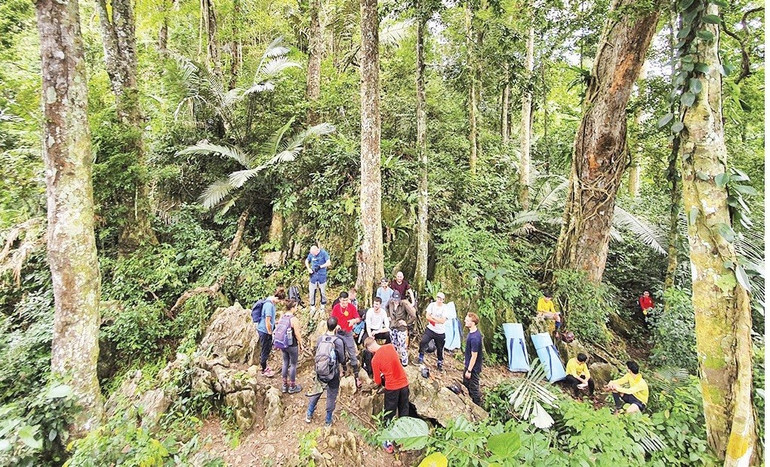
According to Dang Dong Ha, Deputy Director of the Department of Culture, Sports and Tourism of Quang Tri province, not only Son Doong Cave but also many other cave exploration tourism products in Phong Nha-Ke Bang National Park that were previously exploited normally are now subject to strict legal regulations due to the merger of commune-level administrative units, thus becoming border areas.
Following feedback from tourism businesses, the Department is gathering information to advise the Provincial People's Committee on solutions that aim to effectively manage the border area while also creating conditions for tourism development, especially attracting international tourists to visit and experience the region.
Leaders of tourism businesses in Quang Tri province have requested that the Provincial People's Committee quickly take the lead in working with relevant tourism agencies in border areas to provide specific guidance for businesses and residents.
Businesses propose considering allowing international tourists to enter border areas at locations that already have specific tourism products and have been licensed by the province for tourism activities, with flexible management mechanisms while still ensuring national defense and security requirements. On the other hand, the Provincial People's Committee should soon recognize regional or inter-regional tourism zones and destinations where tourism products and services have been clearly established and licensed for operation...
In 2025, Quang Tri province is expected to welcome over 9.6 million visitors, a 16.9% increase compared to the previous year, including 426,500 international visitors, a 42.8% increase. This result is still quite low compared to the local expectations and potential. Currently, the local tourism industry is seeking ways to attract international tourists to this World Natural Heritage site. The province aims to make tourism a key economic sector, one of the four pillars of development by 2030...
Source: https://nhandan.vn/xu-ly-vuong-mac-de-thu-hut-khach-quoc-te-post939335.html
![[Photo] General Secretary and President To Lam meets with National Assembly delegates from ethnic minorities.](https://vphoto.vietnam.vn/thumb/1200x675/vietnam/resource/IMAGE/2026/04/20/1776696701056_a1-bnd-8331-3342-jpg.webp)
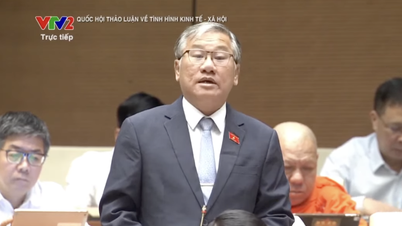
![[Image] National Assembly discusses the implementation of the socio-economic development plan.](https://vphoto.vietnam.vn/thumb/1200x675/vietnam/resource/IMAGE/2026/04/20/1776696707422_ndo_br_img-20260420-185419-jpg.webp)



















































































Comment (0)