

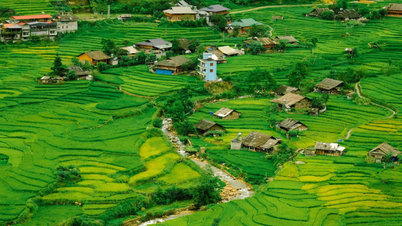
After the joyful days of the traditional Lunar New Year, filled with warm family reunions, farmers throughout the province are busily starting the spring planting season, turning their fields into lush green meadows with the hope of a prosperous and happy new year.
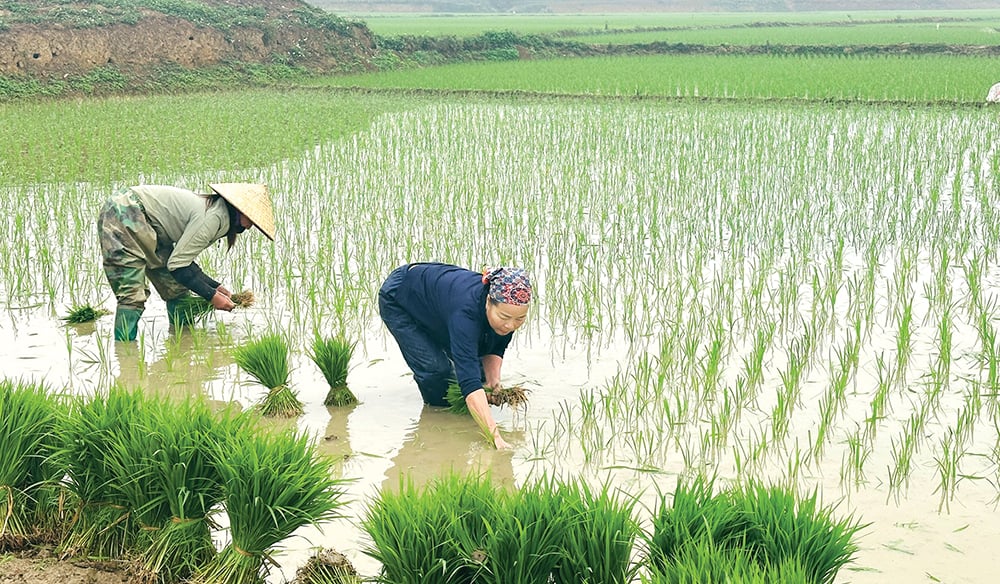
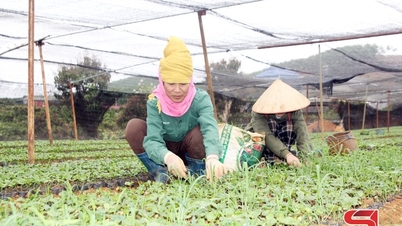
Taking advantage of favorable weather, farmers in Phuong Lau commune, Viet Tri city, are heading to the fields to sow and plant the spring crop, ensuring it is done according to the planting schedule. Photo: Truong Quan
Proactively manage the schedule.
Right from the first days of the new year, farmers in the districts have been urgently heading to the fields to prepare the land and sow the spring-summer crop to ensure progress within the best timeframe. Taking advantage of favorable weather and adhering to the planting schedule, Mr. Hoang Minh Long in Hop Hai commune, Lam Thao district, has mobilized people and machinery to plow and harrow the land for the spring-summer crop, hoping for a successful and bountiful harvest. Mr. Long said: “My family is planting nearly 2 acres, mainly with the J02 rice variety. Taking advantage of the favorable weather, my family has focused on plowing and harrowing the land for sowing. By this time, my family has basically finished planting within the best timeframe.”
According to the plan, this year's spring crop will see the entire province planting approximately 35,300 hectares of rice, including nearly 11,800 hectares of hybrid rice, 21,100 hectares of high-quality rice, and the remainder being other rice varieties. The expected yield is around 61.7 quintals/hectare, with a total projected production of approximately 217,700 tons. According to the issued planting schedule, early spring rice accounts for 2% of the total planted area, while late spring rice accounts for 98%.
To ensure a successful spring crop, the agricultural sector has proactively coordinated with districts, cities, and towns to guarantee sufficient supply of seeds, fertilizers, and water for planting according to farmers' needs. However, according to forecasts from the Northern mountainous region's meteorological and hydrological station, from December 2024 to February 2025, rainfall may be lower than the multi-year average, and there may be prolonged periods of severe cold weather, affecting agricultural production. Some common pests and diseases may emerge and cause severe damage at the end of the season; some farmers are not enthusiastic about production. In addition, the prices of input materials and services for production continue to rise, and production and product consumption markets face many difficulties, affecting the morale of producers.
Meanwhile, the spring crop is the main agricultural production season of the year, determining over 60% of the province's annual food production target. To date, the entire area of late spring rice crop (seed 1) has been basically completed, and farmers are now plowing and harrowing the land for planting late spring rice crop (seed 2). To ensure a successful spring crop, localities continue to implement policies supporting production and key agricultural economic programs; increasing investment in intensive farming to increase rice productivity and output based on the application of technical measures in production.
Comrade Tran Tu Anh, Deputy Director of the Department of Agriculture and Rural Development, stated: “The Department has developed a production plan for the Spring 2025 crop, linked with the production plans for other crops throughout the year to create a rational crop rotation chain, with the previous crop creating favorable conditions for the next. We will focus on directing the formation of concentrated commodity production areas, especially for key crops. We will encourage and create favorable conditions for businesses inside and outside the province to invest in the production, processing, and consumption of agricultural products in the area. We will maximize the area for planting high-quality rice varieties, linked with the development of single-variety fields to increase the value of rice-growing land. We will review the area of high-yield rice that lacks reliable irrigation throughout the season and switch to planting suitable vegetable crops that are more economically efficient and aligned with land use plans...”
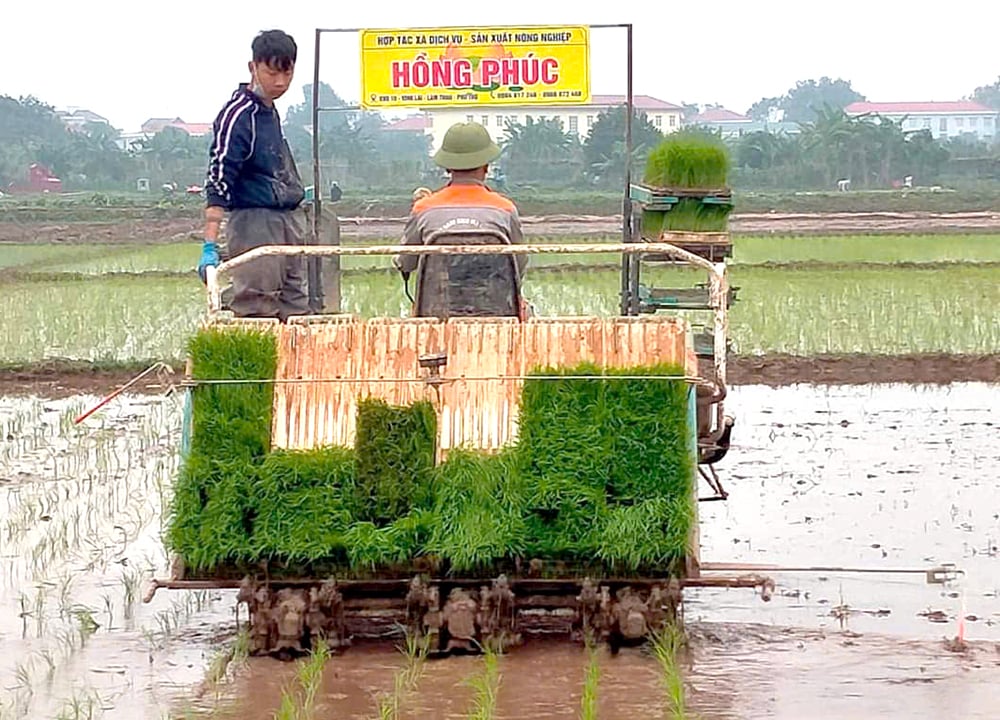
Sowing seedlings in trays and transplanting rice using machines have been adopted by farmers in Hop Hai commune (Lam Thao district) in their production.
Improve crop quality and efficiency.
Based on the province's policies and guidelines, localities need to closely monitor production conditions and weather developments to provide timely, decisive, and appropriate guidance and direction to ensure that all planned areas are planted, avoiding abandoned fields and crop failures. At the same time, focus on effectively implementing the crop structure and seed varieties, sowing seedlings according to the province's seasonal schedule; encourage land consolidation and concentration associated with the development of single-crop fields to uniformly apply technical advancements and introduce mechanization into production to achieve the highest possible results in the spring crop.
To date, localities have prepared sufficient quantities of seeds, with the correct structure, fertilizers, irrigation water, and other agricultural supplies according to the production plan for the Spring crop of 2025 that has been implemented. The Department of Agriculture also requires localities to effectively implement the Provincial Guidelines on arranging the structure of seeds and planting seasons for some crops in the Spring crop of 2025. In particular, for late spring rice, based on the growth time of each variety and the actual conditions of the locality, appropriate planting seasons should be arranged according to the principle of ensuring that rice panicles differentiate and flower during favorable weather conditions; avoiding the "Nang Ban" cold spell; and expanding the area of high-quality rice.
Local authorities are proactively guiding farmers to avoid using purebred rice grains for seed production, especially the J02 variety; continuing to develop single-variety rice fields using high-quality rice varieties; expanding the area of intensive cultivation of improved rice varieties (SRI) and tray seedling cultivation; prioritizing the use of biological products, foliar fertilizers, and organic fertilizers; and strictly adhering to the technical procedures and instructions of the seed supplier. Farmers are encouraged to use microbial products to treat rice stubble, increase lime application, and thoroughly prepare the soil to minimize physiological diseases and post-transplanting toxicity in rice; and guided to sow seedlings sparsely to ensure healthy seedlings. The area of intensive cultivation of improved rice varieties (SRI) and tray seedling cultivation is being expanded on land with controlled irrigation. Investment in intensive cultivation is being promoted, along with increased application of manure, early topdressing, sufficient and balanced NPK fertilizers, and increased use of foliar fertilizers; pest control and plant health management are being implemented according to IPHM (Integrated Pest Management).
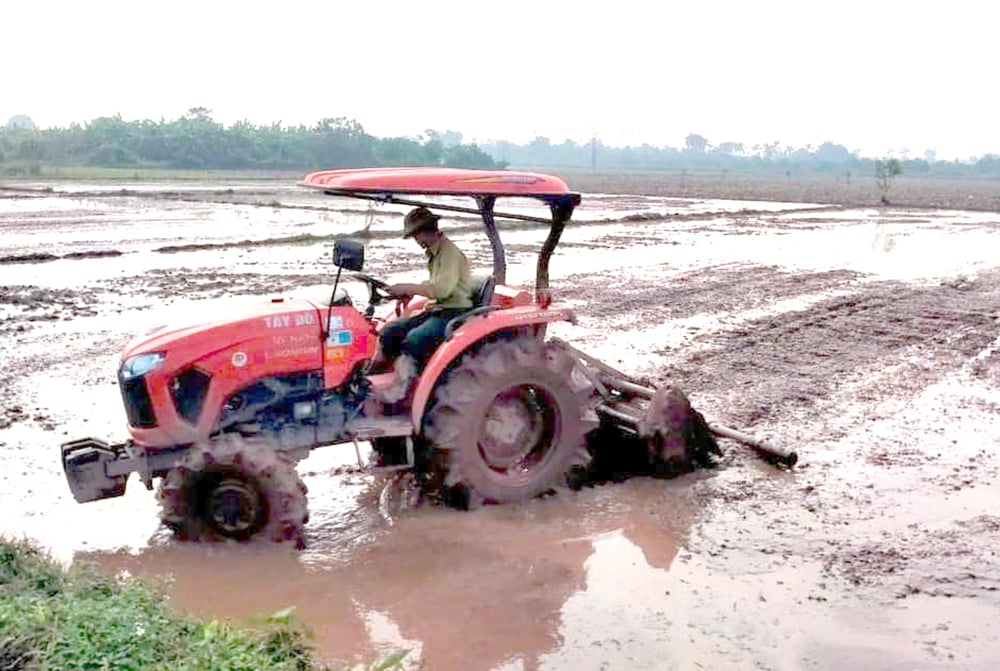
People use plows and harrows to cultivate the land, freeing up manual labor.
To minimize the risk of farmers purchasing substandard supplies that could negatively impact productivity and yield, the Department of Agriculture and Rural Development has assigned units to coordinate with local authorities to inspect agricultural supply businesses, ensuring the supply of quality seeds and materials in accordance with the issued catalog. The Department of Agriculture and Rural Development also requested the Phu Tho Irrigation Works Exploitation Company Limited to direct its irrigation enterprises to cooperate with local authorities in repairing and dredging canals, ensuring sufficient water supply for production, and strictly prohibiting any actions that drain water for fishing.
Besides implementing support policies, districts, cities, and towns also continue to implement mechanisms and policies to attract businesses to invest in the agricultural sector, with a focus on processing; continue to promote the construction of linkages from production to processing and consumption of products; encourage potential entities to develop OCOP products to enhance the value of agricultural products, and move towards expanding production and raw material supply areas... Localities need to proactively monitor weather conditions closely and prepare prevention and control plans to minimize damage in case of natural disasters.
Thuy Hang
Source: https://baophutho.vn/xuan-am-ruong-dong-227560.htm
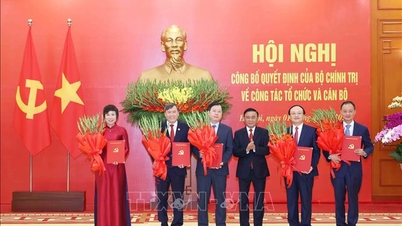
![[Photo] Conference announcing the Politburo's Decision on organizational and personnel matters](https://vphoto.vietnam.vn/thumb/1200x675/vietnam/resource/IMAGE/2026/04/01/1775017881825_bnd-2410-1472-jpg.webp)





























































Comment (0)