

Under the roof of the traditional communal house, the villagers joyfully welcome the spring, organizing festivals together to thank the gods for helping them have a bountiful and prosperous harvest.
Spring – the season of festivals
The communal house (Nhà Rông) is a symbol of faith and strength for the ethnic groups in the Central Highlands, and it is also where sacred objects of the villages are kept. Every Tet (Lunar New Year), villagers gather under the roof of the traditional communal house. By the crackling fire, Jrai and Ba Na girls hold hands and perform the rhythmic and graceful xoang dances, harmonizing with the lively sounds of gongs and drums played by young men, celebrating a new year of good fortune, prosperity, and happiness.
For generations, spring has been the season of festivals and joy for the ethnic minorities in the Central Highlands. During these days, the sounds of gongs and drums resonate throughout the vast forests, connecting people with nature and the community. Wishing for a prosperous year, a bountiful life, and full granaries, every Tet (Lunar New Year), the Ba Na people in Kte Kchang village, Kong Chro district ( Gia Lai province) prepare and perform the New Year's rituals together in a lively and joyful atmosphere.
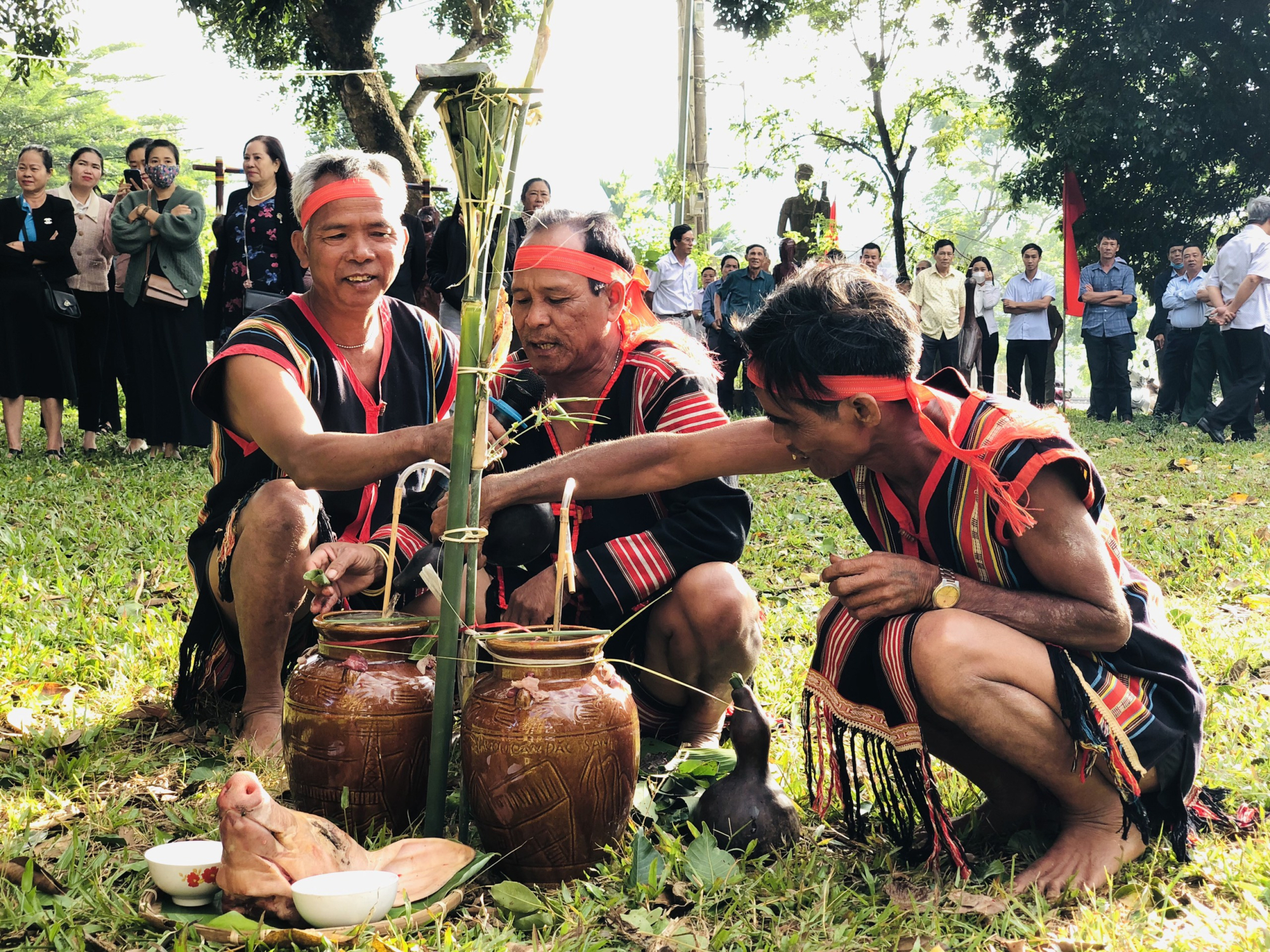
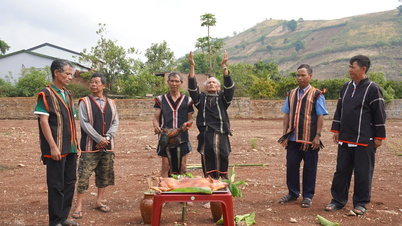
Elder Siu Nui (in the middle) performs the ceremony to celebrate the new communal house – one of the particularly important rituals of the Jrai people.
Accordingly, Kte Kchang is the most remote village in Kong Chro district, with over 90% of its population being Ba Na people. However, visiting this impoverished village in the early days of the new year, we felt the vibrant atmosphere of spring permeating every stilt house.
Along the clean and well-maintained concrete village road, the villagers are busily sweeping and preparing offerings for a particularly important ceremony – the New Year's worship. This ceremony heralds a year of peace, abundance, and bountiful harvests, ensuring prosperity for the villagers. Accordingly, the people of Kte Kchăng village will celebrate the New Year over three days, starting at the communal house and then separately at each household.
According to Mr. Dinh Alenh – Secretary of the Party branch of Kte Kchang village: “Every year, the village organizes a New Year's ceremony, a ritual of great significance to the people of Kte Kchang village. Besides wishing for a prosperous new year, good health, and peace for the villagers, the village elders also pray to the deities for favorable weather so that the seedlings grow well and the villagers have a bountiful harvest.”
Sharing with reporters, village elder Dinh Blin (65 years old), who presides over the New Year's ceremony in Kte Kchang village, said: " After a year of hard work, the arrival of Tet (Lunar New Year) is an opportunity for the villagers to prepare important offerings to Yàng - the deity. This ceremony is an occasion for the villagers to ask the deity to grant them good health, freedom from illness, and abundance. The offerings to the deity include: 3 pigs, 3 chickens, and 3 jars of wine. The ceremony itself will be handled by the Council of Village Elders (consisting of 3 people), with one elder chosen as the chief officiant to pray to the deity."
“ After the offering ceremony is complete, the village elder will pour pig's blood and wine and distribute it to everyone to take home. The next day, the village elder will be invited to each family to perform the ritual of taking pig's blood and wine from the jar and smearing it on houses, equipment, tools… and on the foreheads of family members, hoping that the new year will dispel all misfortunes and bad luck, and at the same time bring blessings and prosperity, ” said village elder Blin.
Throughout the festival days, the villagers come together to play gongs, dance, drink rice wine from earthenware jars, and wish each other the best. This is also an opportunity for everyone to strengthen solidarity and strive for a better life.
Preserving and promoting cultural heritage through festivals.
Besides the New Year's ceremony, this spring in the districts and towns of Gia Lai province, many important festivals are also held, such as: the New Rice Festival, the Victory Festival, the Water Source Festival, the Courtyard Festival, etc. Among these, the ceremony celebrating the new communal house is particularly noteworthy, representing one of the unique traditional cultural values that the Jrai people always hold in special regard.
According to the Jrai people's beliefs, the communal house (Rong house) is a symbol of the community's shared culture and beliefs. The Rong house is not only a place for community activities, meetings, and festivals, but also a sacred place with significant importance in their spiritual life. Therefore, the ceremony of offering prayers at a new Rong house is one of the important and unique rituals of the Jrai people. After relocating, renovating, or building a new Rong house, villages must hold a ceremony to thank the spirits for their support and assistance to the villagers in the past and to pray for peace and prosperity in the new Rong house.
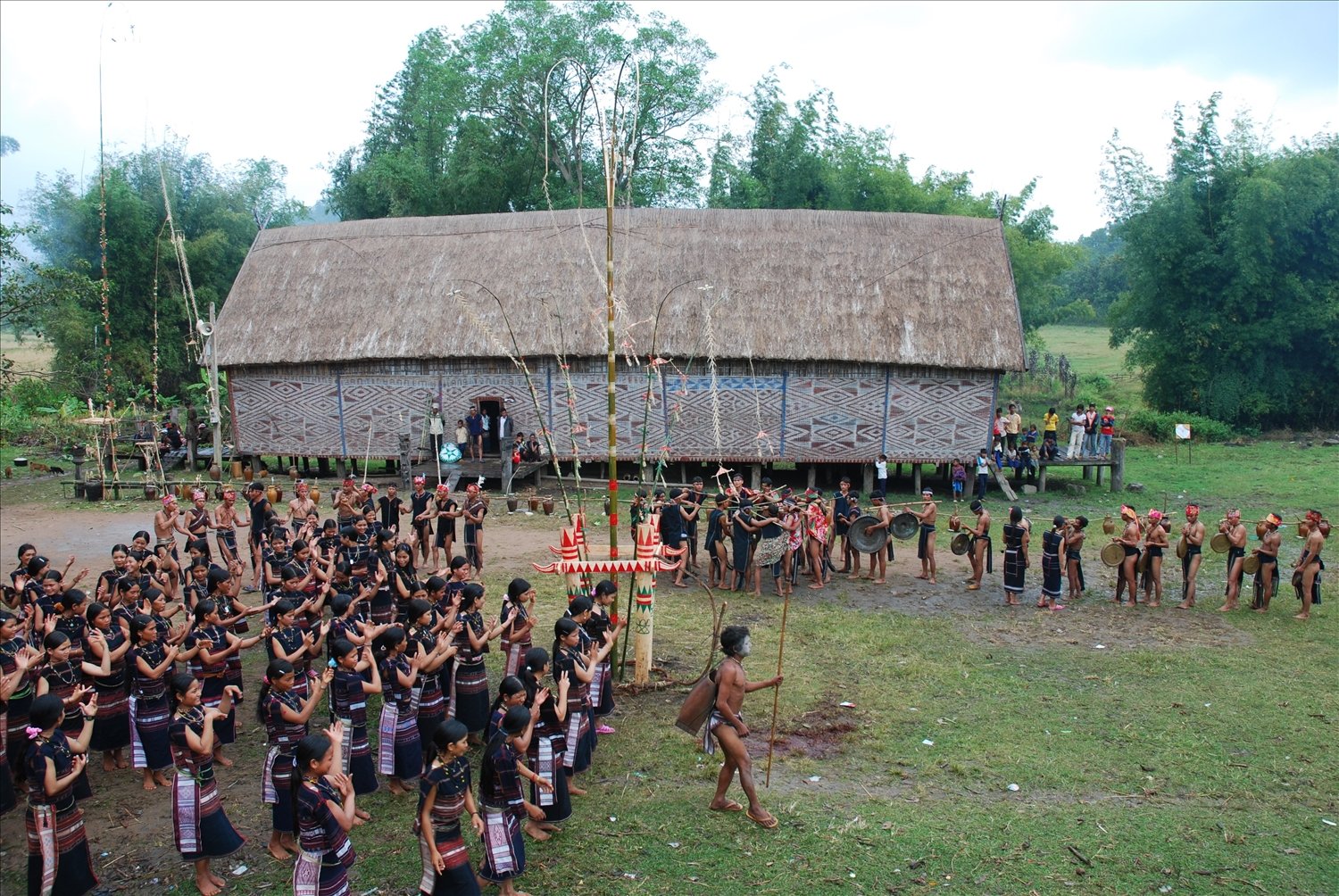
Under the roof of the traditional communal house, the villagers joyfully welcome the spring, organizing festivals together to thank the gods for helping them have a bountiful and prosperous harvest.
Mr. Do Van Dong, Vice Chairman of the Ia Grai District People's Committee, said: “The ceremony of consecrating the new communal house is one of the unique traditional rituals of the Jrai people that the district preserves and promotes. Along with many festivals held throughout the year, the district hopes that through these traditional rituals, the cultural and spiritual life of the villagers will be enhanced, and their awareness of preserving and promoting cultural values will be improved. At the same time, it will introduce and promote cultural heritage, creating a unique highlight to boost tourism development, create jobs, increase income, and improve the quality of life for the people.”
In order to preserve, protect, and promote the cultural identity of ethnic minorities, the Department of Culture, Sports and Tourism of Gia Lai province has organized many cultural activities in recent years, including the restoration and reenactment of traditional rituals of ethnic minority communities.
Accordingly, at these festivals, many traditional rituals of ethnic minorities have been revived. These rituals create a colorful cultural space and become one of the unique elements that attract domestic and international tourists. This is the highlight that creates a distinctive characteristic and a strong breakthrough for tourism in Gia Lai. In particular, it provides motivation for ethnic minorities to preserve their traditional culture while developing tourism, contributing to improving their material and spiritual lives.
Alongside preserving and promoting the traditional values of the community, the restoration of traditional rituals also provides an opportunity for locals and tourists to learn about and experience the unique cultural values passed down from their ancestors for generations. A notable example is the Gia Lai Culture and Tourism Week, which took place at the end of 2023.
Many attractive activities such as the Intangible Cultural Heritage Performance Festival of the Central Highlands Gong Culture Space; recreating community living spaces, restoring traditional rituals… with the participation of more than 1,300 artisans from 5 Central Highlands provinces have attracted 165,000 tourists to visit and experience.
According to Mr. Tran Ngoc Nhung, Director of the Department of Culture, Sports and Tourism of Gia Lai province: “ In the coming time, the cultural sector of Gia Lai province will strengthen the preservation, restoration and promotion of the unique cultural values of ethnic groups in the province. At the same time, we will increase investment in cultural preservation; cultural heritage, customs and traditions of ethnic groups. The Department will continue to implement activities to preserve and promote cultural heritage according to the plan of the National Target Program for socio-economic development in ethnic minority and mountainous areas; diversify tourism programs associated with learning about local culture; and strengthen the socialization of cultural activities and cultural heritage in the locality.”
Tran Hien
Source

![[Image] National Assembly discusses the implementation of the socio-economic development plan.](https://vphoto.vietnam.vn/thumb/1200x675/vietnam/resource/IMAGE/2026/04/20/1776696707422_ndo_br_img-20260420-185419-jpg.webp)
![[Photo] General Secretary and President To Lam meets with National Assembly delegates from ethnic minorities.](https://vphoto.vietnam.vn/thumb/1200x675/vietnam/resource/IMAGE/2026/04/20/1776696701056_a1-bnd-8331-3342-jpg.webp)


























































Comment (0)