

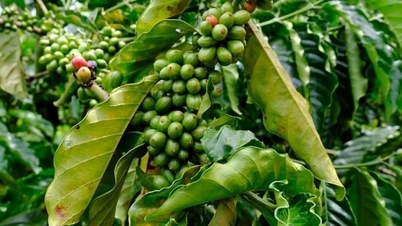
Vietnam earned over $1 billion from pepper exports in the past nine months.
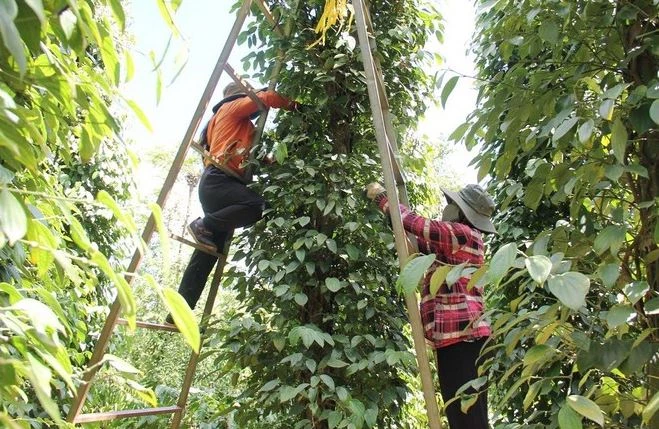
According to preliminary data from the General Department of Customs, in the first nine months of the year, Vietnam exported more than 200,000 tons of pepper. Although the export volume decreased by 1.5% compared to the same period last year, the value increased by nearly 47%.
In September alone, the average export price reached nearly $6,240 per ton, the highest level in eight years.
The Import-Export Department ( Ministry of Industry and Trade ) forecasts that global pepper prices will remain high in the short term due to limited supply.
According to Ms. Hoang Thi Lien, President of the Vietnam Pepper and Spice Association (VPSA), one of the main reasons driving up pepper prices recently is the limited global supply. Even Indonesia and India are facing supply constraints, and smaller producing countries like Malaysia, Sri Lanka, and especially Brazil and Vietnam, two countries that determine global supply, have experienced reduced production due to the El Nino weather phenomenon causing droughts. Looking at the long term, over the next 3-5 years, the amount of pepper produced will not be able to meet the world's consumption needs.
From the perspective of pepper industry expert Hoang Phuoc Binh, Permanent Vice Chairman of the Chu Se Pepper Association, Gia Lai , the recent rapid increase in pepper prices is due to speculative factors. This is because world prices are rising, while domestic prices are lower than world prices, leading many small retailers to hoard goods and drive up prices. The scarcity of supply coupled with high market demand is pushing pepper prices back up. Furthermore, some believe that China's return to purchasing pepper is also strongly impacting prices.
However, speculation in pepper supply is also considered to have positive aspects. Ms. Hoang Thi Lien observed that many farmers with sufficient financial resources, instead of depositing money in banks with very low interest rates, have purchased several tons of pepper for storage, similar to businesses. Previously, people did not buy pepper, but now they have a good understanding of the market and are buying and stockpiling it.
Ms. Hoang Thi Lien also recommended that businesses adjust their import and selling prices to increase proportionally to avoid price risks. If domestic pepper prices rise, businesses should increase export prices accordingly. Furthermore, businesses can purchase gradually, avoiding sudden surges, otherwise it could impact prices when large orders arrive, creating further shortages.
According to PV/VTV
Source: https://doanhnghiepvn.vn/kinh-te/xuat-khau-ho-tieu-can-moc-1-ty-usd/20241002080438211
![[Image] National Assembly discusses the implementation of the socio-economic development plan.](https://vphoto.vietnam.vn/thumb/1200x675/vietnam/resource/IMAGE/2026/04/20/1776696707422_ndo_br_img-20260420-185419-jpg.webp)


![[Photo] General Secretary and President To Lam meets with National Assembly delegates from ethnic minorities.](https://vphoto.vietnam.vn/thumb/1200x675/vietnam/resource/IMAGE/2026/04/20/1776696701056_a1-bnd-8331-3342-jpg.webp)





























































































Comment (0)