

Amendments to the 2013 Constitution: The Party's Will, the People's Hearts
Informing the press, Minister of Justice Nguyen Hai Ninh stated that, based on reports from various agencies, ministries, and localities, as of June 5, 2025, the total number of comments from agencies, organizations, and individuals on the contents of the draft Resolution was over 280 million.
“ In particular, the process of soliciting public opinion through the VNeID application has attracted more than 20 million citizens to contribute their opinions. Among these, the amendments and additions to Article 9 of the 2013 Constitution concerning the Vietnam Fatherland Front and its member organizations received the most attention and feedback from agencies, organizations, and individuals, ” Minister Nguyen Hai Ninh emphasized.
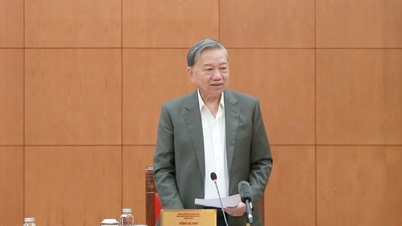
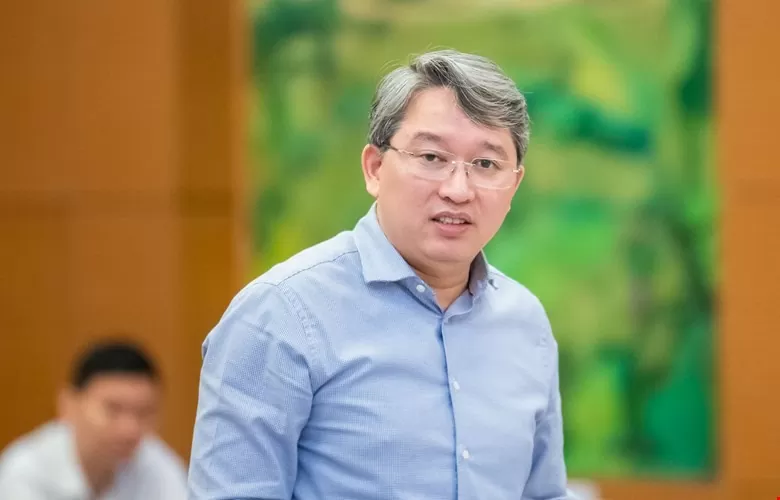 |
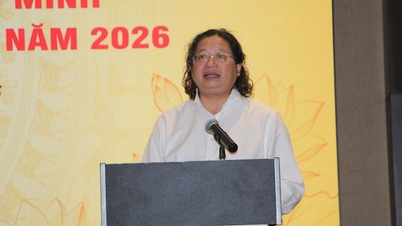
| Minister Nguyen Hai Ninh shared information about the process of gathering public opinion on the amendments to the 2013 Constitution. Photo: Pham Thang |
According to Minister Nguyen Hai Ninh, on average, the approval rate for the contents of the draft Resolution reached 99.75%. This confirms that the policy of amending and supplementing some articles of the 2013 Constitution truly reflects " the will of the Party and the aspirations of the people ," reflecting the very high level of consensus and unity among all strata of the people, sectors, and levels.
Accordingly, the Government agrees with the proposed amendments and additions to Article 110 of the Constitution in the draft Resolution to institutionalize the policy of streamlining and reorganizing the political system's apparatus in accordance with Resolution No. 60-NQ/TW.
The general provision, without specifically listing the names of administrative units, allows for flexibility in adjusting the administrative unit model to suit new realities and requirements if necessary, without having to amend the Constitution.
Mr. Nguyen Hai Ninh informed that the National Assembly can decide to adjust the organization of administrative units through laws or resolutions in a flexible manner, in accordance with the specific situation of each period.
However, the Government proposes to retain the provision in Clause 2, Article 110 of the 2013 Constitution regarding "The establishment, dissolution, merger, division, and adjustment of administrative boundaries must be based on the opinions of the local people and follow the procedures prescribed by law," to ensure the people's right to self-governance and to provide a basis for people to openly and democratically discuss important issues directly related to them.
In addition, it is proposed to retain the provision on the right of People's Council representatives to question the Chairman of the People's Committee, other members of the People's Committee, the Chief Justice of the People's Court, the Chief Procurator of the People's Procuracy, and heads of agencies under the People's Committee, as a basis for further specifying it in the Law on Organization of Local Government and other relevant laws.
At the same time, the draft Law on Organization of Local Government adds specific regulations on the organization of local government in special zones as follows: “ In special zones where, due to circumstances, it is not possible to hold elections for People's Council representatives, the Provincial People's Committee shall specify the implementation of tasks, powers, organization and operation of the People's Committee, the Chairman of the People's Committee, and specialized agencies under the People's Committee of the special zone; the Chairman of the Provincial People's Committee shall appoint, dismiss, transfer, reward, discipline, and remove from office the Chairman, Vice-Chairman, and members of the People's Committee of the special zone .”
Regarding other matters, the Government also agreed to amend and supplement Articles 111, 112, and 114 of the 2013 Constitution to stipulate that local government organizations consist of People's Councils and People's Committees; to avoid using the term "local government level" to ensure uniformity in the model of local government organization, preventing confusion and different interpretations of local government organization; and to review and revise some regulations to conform with the organizational model of the political system after restructuring and streamlining. Essentially, the regulations on the organizational principles and working regime of People's Councils and People's Committees at the provincial and commune levels will remain unchanged.
Regarding the effective date and transitional provisions (Article 2 of the draft Resolution), the Government agrees to determine the effective date of the Resolution amending and supplementing a number of articles of the 2013 Constitution as July 1, 2025, in order to create a constitutional basis for implementing the Party's policy in Resolution No. 60-NQ/TW of the 11th Plenum of the 13th Central Committee of the Communist Party of Vietnam.
The Government agreed to regulate the declaration of the termination of the operation of existing district-level administrative units nationwide. At the same time, it agreed on the content of the transitional provision (Clause 3, Article 2) stipulating the designation of positions in the People's Council, People's Committee, and Head and Deputy Head of the National Assembly Delegation, creating a legal basis for consolidating the organizational structure of agencies during the 2025 provincial and commune-level administrative unit restructuring and consolidating the organizational structure of the People's Council and People's Committee for the 2021-2026 term when there are no longer any district-level administrative units, ensuring the timely institutionalization of Conclusion No. 150-KL/TW dated April 14, 2025, of the Politburo guiding the development of personnel plans for provincial-level Party committees subject to merger and consolidation, and for newly established commune-level Party committees.
Furthermore, it is suggested that there should be a formal way to announce the termination of the current district-level administrative units nationwide, in order to acknowledge their contributions to the building and protection of the nation.
Gathering feedback via VNeID: Convenient, transparent, and modern.
The government believes that this revision and amendment of several articles of the 2013 Constitution needs further thorough review of constitutional drafting techniques to both properly institutionalize the Party's major policies and orientations, and to be consistent with the requirements of reforming legislative thinking. In particular, the Constitution and laws should focus on fundamental, highly stable provisions that fall under the National Assembly's decision-making authority.
Although the scope of the revisions is not comprehensive, it still requires a modern, scientific approach that meets the requirements of sustainable development. Based on feedback from the public and various levels and sectors, in addition to the eight proposed amendments, many suggestions have been made to add other content.
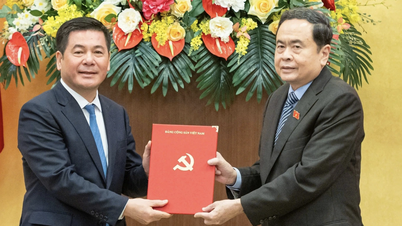
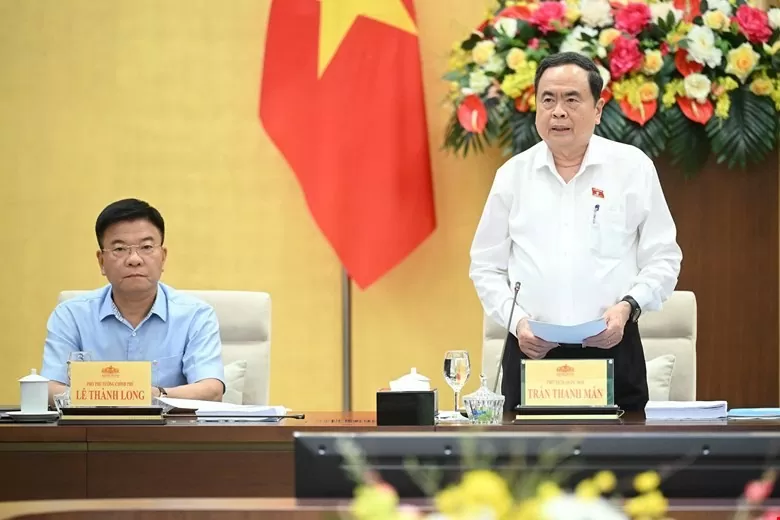 |
| National Assembly Chairman Tran Thanh Man presided over a meeting of the Committee drafting amendments and additions to several articles of the 2013 Constitution on the afternoon of June 9, 2025. Photo: Pham Thang |
However, to ensure progress and focus, the Government has agreed to initially concentrate only on issues related to the organization of local governments at two levels and streamlining the Vietnam Fatherland Front, political and social organizations, and mass associations assigned tasks by the Party and the State.
" Other issues will be further studied and proposed at an appropriate time, " said Mr. Nguyen Hai Ninh.
The process of soliciting opinions on the draft Resolution was carried out seriously, scientifically, and democratically, closely following the Government's directives and Plan No. 05/KH-UBDTSĐBSHP of the Committee for Drafting Amendments and Supplements to the 2013 Constitution. Ministries, sectors, and localities mobilized the synchronized participation of the entire political system, emphasized the responsibility of the heads of departments, ensured the leadership of Party committees, and maintained close coordination among agencies and organizations.
In particular, the methods of soliciting opinions were very diverse and flexible. As of May 29, 2025, the whole country had organized more than 288,000 conferences, seminars, and forums to gather opinions. In these, the application of information technology was clearly effective: more than 20 million people participated in providing feedback online through the VNeID application.
| " Gathering opinions through digital platforms not only helps people easily participate anytime, anywhere, but also affirms the determination to promote national digital transformation, effectively utilizing the population database in important tasks such as amending the Constitution, contributing to enhancing transparency, openness and social consensus in the law-making process," Minister Nguyen Hai Ninh affirmed. |
Source: https://congthuong.vn/y-dang-long-dan-trong-qua-trinh-sua-doi-hien-phap-2013-391624.html

![[Photo] Prime Minister Pham Minh Chinh presides over a meeting on private sector economic development.](/_next/image?url=https%3A%2F%2Fvphoto.vietnam.vn%2Fthumb%2F1200x675%2Fvietnam%2Fresource%2FIMAGE%2F2025%2F12%2F20%2F1766237501876_thiet-ke-chua-co-ten-40-png.webp&w=3840&q=75)


![[Photo] Prime Minister Pham Minh Chinh presides over the conference announcing the establishment of the International Finance Centre in Vietnam.](/_next/image?url=https%3A%2F%2Fvphoto.vietnam.vn%2Fthumb%2F1200x675%2Fvietnam%2Fresource%2FIMAGE%2F2025%2F12%2F21%2F1766309817714_ndo_br_dsc-3400-jpg.webp&w=3840&q=75)


































































Comment (0)