In response to the 500-day campaign to intensify the search, collection, and identification of the remains of fallen soldiers, a large-scale mobilization of personnel across the entire political system is being implemented.
The homecoming was incomplete.
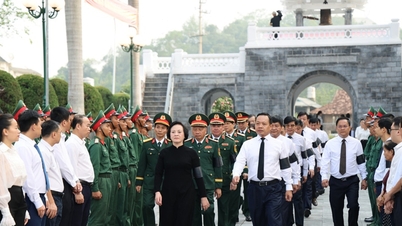
On the afternoon of June 1st, hundreds of people and officials gathered in the grounds of the Phu Thuan Commune People's Committee headquarters to conduct a particularly sacred ceremony: a memorial service and the burial of a fallen soldier whose remains had just been unearthed during the 500-day and 500-night campaign.
Many people couldn't hold back their tears when they witnessed officers and soldiers of the City Military Command handing over the remains to the local authorities for a memorial service. The very fabric of today's villages and country bears a part of the blood and selfless sacrifice of those liberation soldiers.
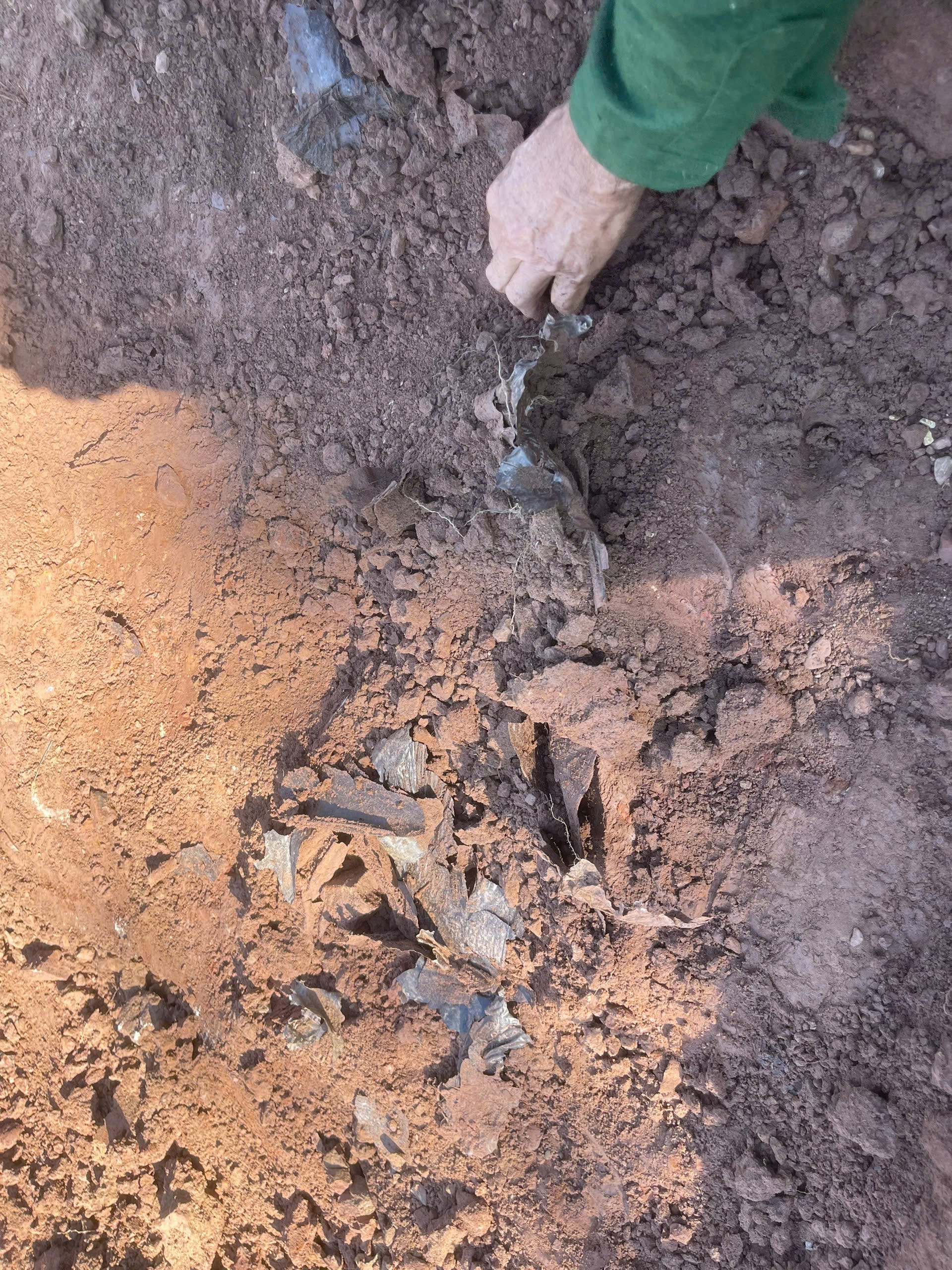
For decades since the moment he was laid to rest, the soldier's body lay in the ground, clad only in a military raincoat and a vial of penicillin containing a piece of paper with his information, but time had eroded everything away.
According to the 5th Military Region Command, the entire area under its management currently has more than 50,000 graves of martyrs in cemeteries whose names and ages have not yet been identified. Da Nang currently has 151 martyrs' cemeteries with 73,617 graves, of which 26,003 remain unidentified.
On the day his remains were brought to the ground, the authorities and the people stood in a circle to welcome this loyal and devoted son of the nation, but the heartbreaking aspect and the incomplete joy stemmed from the fact that information about the fallen soldier could not yet be verified.
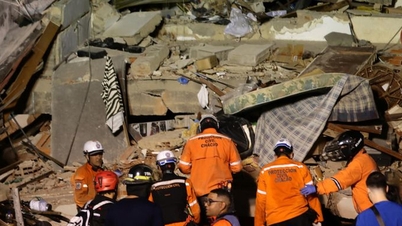
Lieutenant Colonel Nguyen Linh Thien, Head of the Policy Department of the City Military Command, recounted that one day at the end of April, residents of Phu Thuan commune reported to the authorities that they had seen pieces of military plastic sheeting beginning to emerge from the ground in Thanh Phu village.
“When the locals provided information, our team arrived immediately and found some black fragments of old military raincoats sticking out of the ground. One resident said that for a long time, there had been a mound of earth at this location that resembled a ‘wind grave,’ but because there was no tombstone or any sign of a grave, the locals didn’t think that a fallen soldier was buried there.”
"Based on our experience, we determined that this was the type of raincoat commonly used to wrap the bodies of fallen soldiers on the battlefield in the past," Lieutenant Colonel Thien recounted.
After completing the necessary procedures, the team collecting the remains of fallen soldiers from the Da Nang Military Command sifted through the soil. There was no information indicating where this hero was from, when he fought, or when he died.
The silence of time and the stillness of the land made all the verification work even more difficult.
“We found a penicillin vial containing a piece of paper, but because so much time had passed, the paper had crumbled. Bringing the fallen soldier's remains to be seen is a joy, but everything is still incomplete as we don't yet know his name.”
"In cases like this, when the body has decomposed, DNA identification is very difficult," Lieutenant Colonel Thien said.
Commands from the heart


These days, a frantic race against time is underway to search for, collect, and identify the remains of fallen soldiers throughout the villages of Da Nang city.
The City Military Command Headquarters served as the central hub for receiving, reporting, processing, and planning the 500-day and night campaign. From morning till night, the forces there paid attention to every detail reported from the localities; every piece of information could be a valuable clue leading to the discovery of the remains of fallen soldiers.
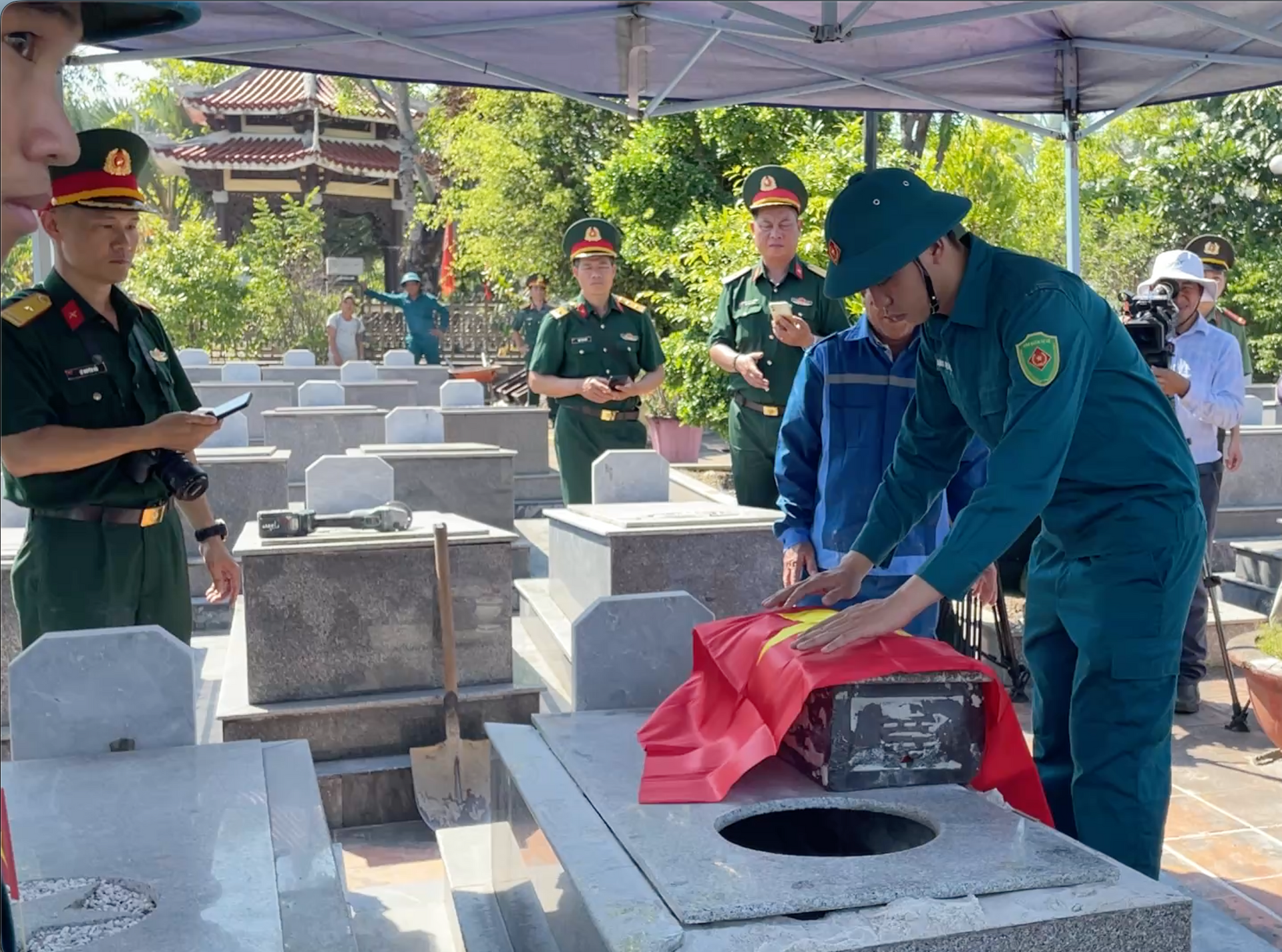
On May 28th, hundreds of local residents and government representatives gathered at Hoa Tien Martyrs' Cemetery to witness an unprecedented event: the excavation of the first graves to collect biological samples (bones, teeth, hair, etc.) for DNA testing.
After the ceremony and the respectful lighting of incense, those directly involved in the excavation were asked to take their positions.
The Hoa Tien Martyrs' Cemetery currently has over 1,000 graves, of which 290 are still unidentified. These graves are all marked with a national flag planted on top.
At nearly 10 a.m., when the signal was given from the war memorial, the soldiers and the excavation team solemnly advanced to the location of the first two graves.
The person who unearthed the grave was a local resident with experience in exhumation.
When they began the work, the two men assigned to exhume the remains approached the grave, held incense sticks, and whispered prayers, asking the spirits of the fallen soldiers for permission to disturb the grave. They knew it would disturb the eternal rest of the soldiers, but exhuming the graves was a necessary task to find their names, to bring them back to their homeland, their roots, their parents.
The Da Nang City Military Command stated that, prior to organizing the sample collection, the forces surveyed the entire system of martyrs' cemeteries in the area; completed the dossiers and grave diagrams; and prepared all necessary equipment, technical supplies, and personnel.
The cemetery area has been renovated, cleaned, and equipped with adequate work areas, sample storage areas, and necessary logistical facilities.
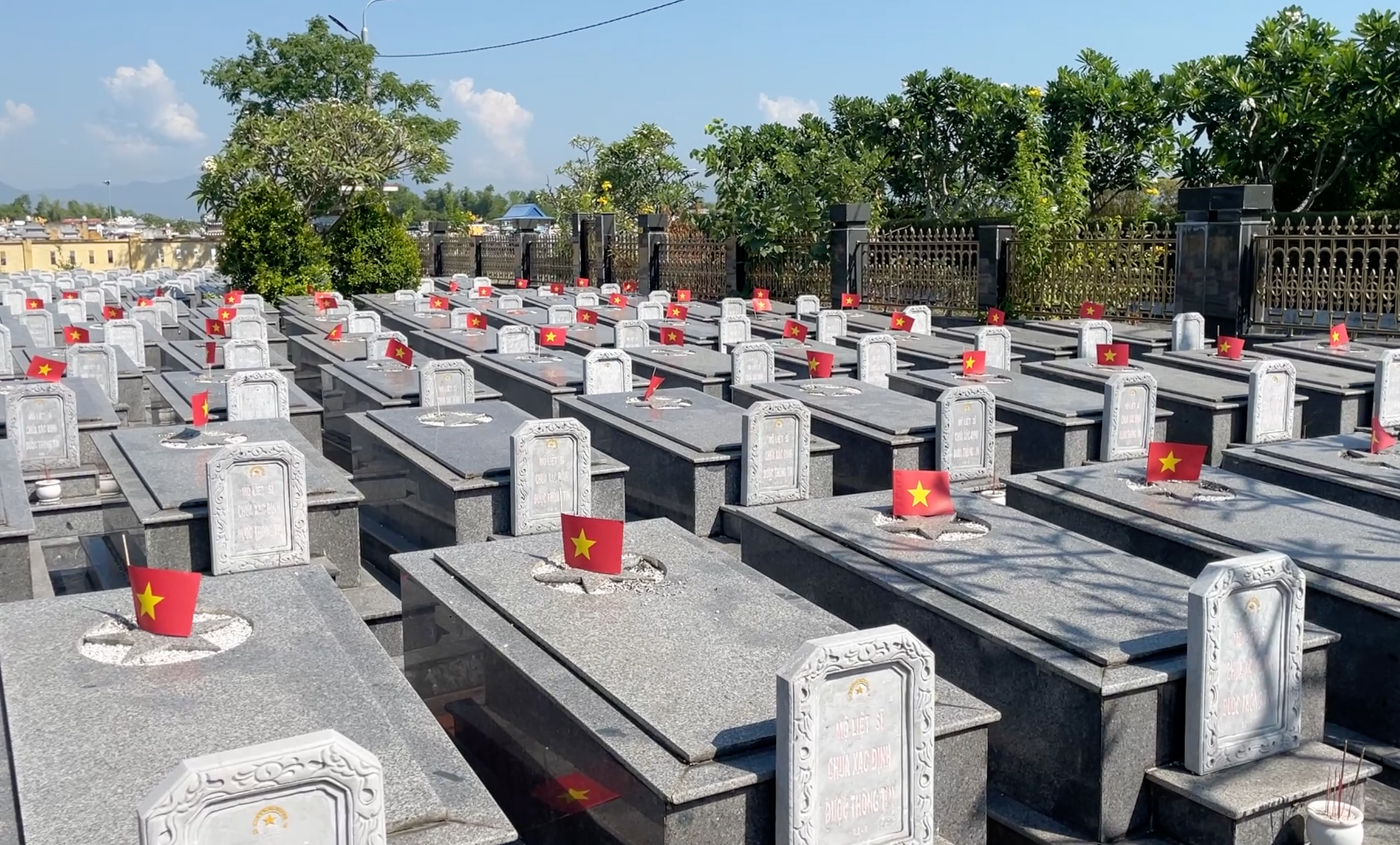
Previously, the Steering Committee had organized the collection of samples from two graves of martyrs whose information had not yet been identified.
However, upon excavating the first grave and opening the lid of the small coffin containing the remains, those present were struck with sorrow and grief: the remains had turned to dust and ashes, making DNA sampling impossible.
This handful of earth was returned to the old grave, back to the soil where he lies, and it is unknown when or how his name will be found.
At the second burial site, when the earthenware jar was unearthed and opened, medical personnel entered to observe and perform their work under the breathtaking gaze of hundreds of onlookers.
“The grave was deemed suitable for sampling, yielding 5 tooth samples and 2 bone samples for DNA testing. Simultaneously, the grave's records have been digitized and fully updated in the management database system,” – the announcement from an officer of the Da Nang City Military Command, broadcast over the loudspeaker, brought a sense of relief to everyone.
The 500-day campaign was a journey to recover the names, hometowns, and memories of those who fell for the independence and freedom of the Fatherland. Each successfully recovered remains meant a soldier returning to the embrace of his comrades and the people; a family gained hope, finally ending a decades-long wait.
In Da Nang, at least eight remains of fallen soldiers have been found in less than two months since the campaign began. Behind these numbers lies the involvement of the entire political system, the responsibility, the affection, and the gratitude towards those who dedicated their youth to the country.



But somewhere deep underground, there are still soldiers whose names have not been found, whose hometowns and relatives remain unknown.
The race against time therefore continues. Every piece of information from the people, every memory preserved in witnesses, every DNA sample collected could become a valuable clue, opening up the possibility of reunion after decades of separation.
More than anyone else, those running the campaign understand that the most complete tribute is to bring these heroes back to their names, their roots, and their own history.
Authorities stated that the process of collecting DNA samples from the graves of fallen soldiers in the cemetery followed an extremely strict, rigorous, and scientific procedure involving multiple agencies.
The collected DNA samples will be sent for analysis and synchronized with the Ministry of Public Security's data to identify the families of the fallen soldiers. Once the family information is clearer, the details of the soldiers' combat and sacrifice will be corrected if they are inaccurate.
Currently, 245 areas with 5,252 pieces of information on martyrs' graves have been identified for search and excavation.
In this campaign, the city aims to collect at least 390 remains of fallen soldiers; complete the sampling of all 26,003 unidentified graves of fallen soldiers before May 2027, contributing to restoring the names of the heroic martyrs and fulfilling the aspirations of their relatives nationwide.
Source: https://baodanang.vn/500-ngay-tim-lai-ten-liet-si-3339591.html
![[Photo] "Hanoi Lotus Festival" honors the lotus flower that has been associated with Vietnam for thousands of years.](https://vphoto.vietnam.vn/thumb/1200x675/vietnam/resource/IMAGE/2026/06/27/1782516943048_sen-ha-noi-2026-minh-duy-1-jpg.webp)