

To this day, the underground culvert in front of Camp J – where Comrade Tran Tu Binh participated in organizing the prison break – is still on display at the historical site, serving as a reminder of the solidarity and persistent struggle of the steadfast communist fighters. Tran Tu Binh was one of the first 11 generals of the Democratic Republic of Vietnam, promoted in 1948.
Turning point
Comrade Tran Tu Binh, whose real name was Pham Van Phu, was born and raised in Tieu Dong commune, Binh Luc district, Ha Nam province. From 1930, he participated in leading the struggle for the rights of 5,000 rubber plantation workers in Phu Rieng, Binh Phuoc, creating the historic "Red Phu Rieng." He was later arrested, sentenced to 10 years in prison, and exiled to Con Dao Island. In 1936, due to the influence of the Popular Front, he was released by the colonial government and placed under house arrest in his hometown of Ha Nam. He continued his clandestine activities and was appointed to the Northern Regional Party Committee.
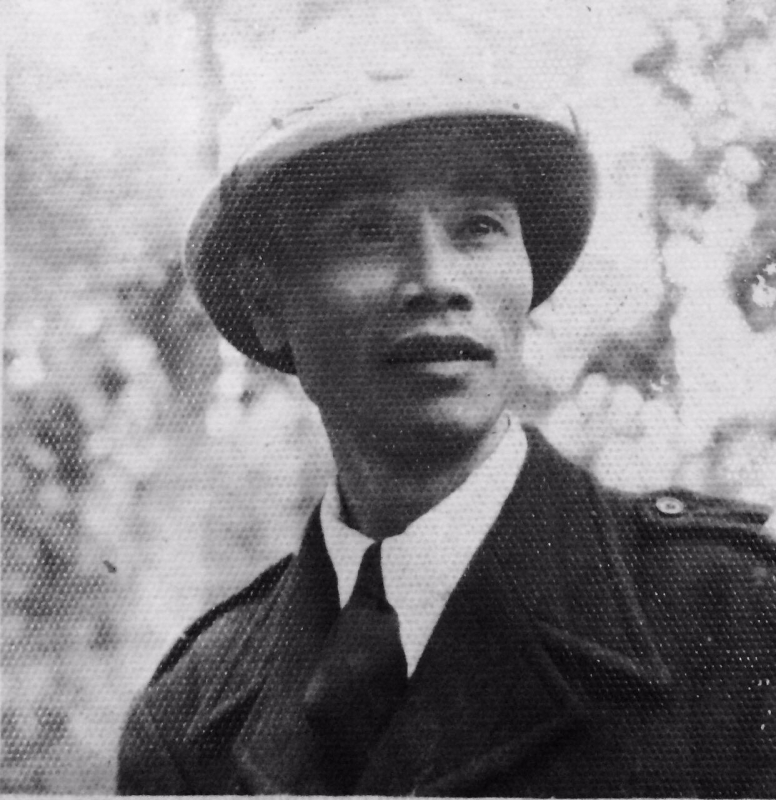
Comrade Tran Tu Binh.
On December 24, 1943, he was arrested again, then attempted an escape in Ha Nam but failed. In April 1944, he was transferred to Hoa Lo Prison ( Hanoi ). Despite being covered in bruises, in pain, dizzy, and disoriented, Comrade Binh remained remarkably alert and calm. He recognized familiar faces of comrades who had worked with him, including Comrade Tran Dang Ninh, who was also imprisoned there.
At Hoa Lo Prison, Comrade Binh was cared for by his fellow prisoners, who shared their food to help him regain his health. Thanks to the medicine that his comrades had saved and hidden, his health gradually improved. He was elected Head of the Activities Committee – a public organization secretly directed by party members to conduct transactions and openly fight against the enemy within the prison.
Comrade Binh seized every opportunity to share his newfound knowledge with his fellow prisoners. The long-held dream of escaping from prison became even more urgent. One evening in early March 1945, the lights in the prison suddenly went out, gunfire erupted, and footsteps pounded outside. The prison guard panicked: "The Japanese... the Japanese are attacking!" The prisoners exclaimed: "The Japanese and the French are fighting!" This was a turning point in the situation; the Central Committee's prediction of a day when Japan would oust France to monopolize Indochina had come true.
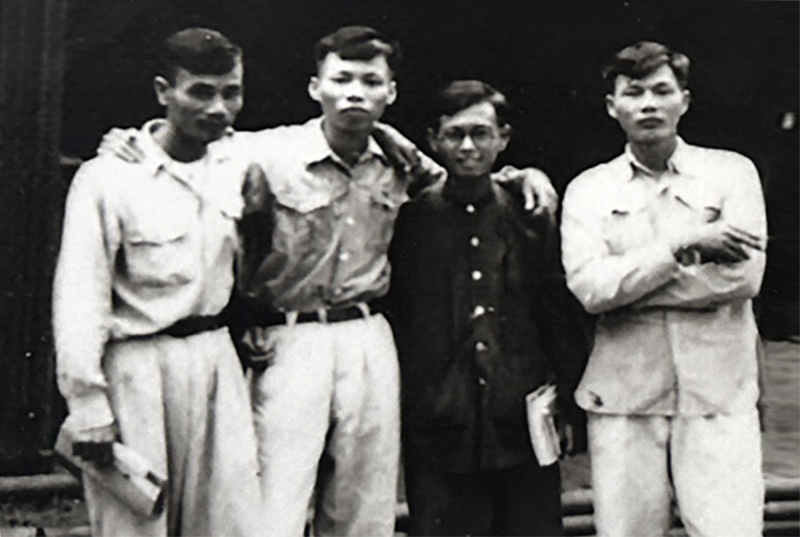
The comrades who participated in leading the August 1945 General Uprising (from left to right): Tran Tu Binh, Nguyen Khang, Tran Quang Huy, Le Liem.
The Japanese coup against the French, taking control of Hoa Lo Prison, but their actions were disorganized and lax. Regular routines like patrols, roll calls, and prisoner counts were absent. The chaotic situation, caused by the change of leadership, created an extremely favorable environment, making escape crucial. If they waited any longer, the Japanese would become more established and organized, leaving no opportunity. The prisoners racked their brains, listening intently and searching for a way out. Some tried to blend into the commoner section, while others climbed over the wall to escape. Several female prisoners managed to escape by changing clothes and blending in with visiting relatives… On the night of March 11th, after Comrade Tran Dang Ninh successfully escaped by climbing over the wall, Comrade Binh was overjoyed and relieved, but he continued to worry about the remaining comrades…
"While alive, remember this moment; when dead, commemorate it."
In his memoir "From Red Phu Rieng to Hanoi's Autumn," Major General Tran Tu Binh recounts in detail the spectacular escape at that "unprecedented" time: "The sun rose too quickly, I was so preoccupied with thoughts that I stayed up all night again! I jumped up, my mind still tense with escape plans… I contacted and inquired with other comrades, looking around everywhere… Suddenly, I noticed a square cement slab in the prison yard with an iron ring in the middle." A thought flashed through his mind: it could be the cover of an underground sewer, and the sewer would be somewhere within the prison grounds. That could be the best way out at that moment, although it wouldn't be easy.
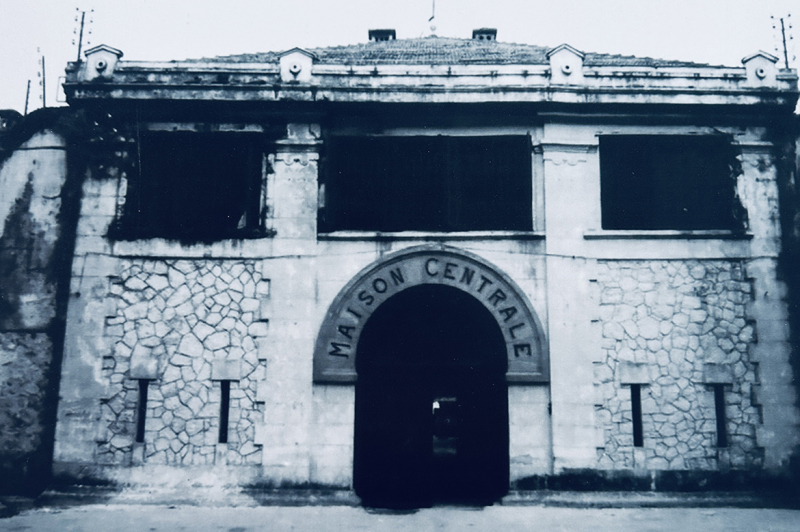
Hoa Lo Prison – the site of the historic escape in March 1945.
He immediately consulted with comrades Cử, Vân, and Hòa, and assigned them to scout the sewer system. That afternoon, the three comrades sneaked into the courtyard of Camp J, using shackles to pry open the sewer cover. Comrade Vân stood guard while the smaller comrades Hòa and Cử crawled down. After a while, upon hearing their report, "We can go now," Trần Tử Bình urgently formulated a detailed plan. He mentally calculated the list of comrades who would go in the first wave, including those with serious sentences. "There's a way out, let's get ready," "The sewer," "We'll go when the lights are on," Comrade Bình's escape plan was secretly passed on to his comrades so they could prepare in every way.
Around 4 PM, all 29 comrades who had been assigned to the first group managed to arrive at Camp J – a place surrounded by high walls, making it secluded and therefore unnoticed. It was already dark, and the lights were switched on. “It’s time,” Comrade Binh ordered the culvert to be opened, not forgetting to remind them: “Remember this moment if you live, commemorate this moment if you die.” The first group, directly commanded by Comrade Binh, consisted of four comrades: Hoa, Binh, Van, and Tuan. The culvert was narrow; they had to bend low to squeeze through. The inside was pitch black, foul-smelling, and full of all kinds of garbage. But no one paid attention to that; everyone was busy moving forward, sometimes having to crawl.
About 20 minutes later, they reached the sewer opening. Comrade Hoa mustered all his strength to lift the manhole cover and escape, followed by the others. The streets were deserted. Recognizing it as the sewer opening behind Hoa Lo Prison, near Me Linh flower garden, the group quickly followed suit, heading to the flower garden and jumping into the air raid shelter there. There was a puddle of water in the shelter; they scooped up the water to quickly wash themselves to remove the foul smell and changed into civilian clothes. The next groups also scattered out of the sewer, quickly finding their way out.
From March 11-16, 1945, more than 100 comrades successfully escaped through this underground tunnel. This was the second, and also the last, prison escape of Comrade Tran Tu Binh during the struggle against French colonialism. Afterwards, he participated in leading the General Uprising on August 19, 1945, in Hanoi and several provinces in the Northern Delta.
Speaking with a reporter from the People's Police Newspaper, Mr. Tran Viet Trung, son of former political prisoner Tran Tu Binh, shared that every year his family visits the Hoa Lo Prison historical site to commemorate his father and comrades, remembering the very proud event in the history of the tenacious struggle of Vietnamese political prisoners in imperialist prisons.
Eight decades have passed, and the witnesses of the historic March 1945 prison break are no longer alive. However, the ingenuity, resourcefulness, and creativity of the soldiers who participated in the escape still resonate, serving as an enduring testament to the patriotism and yearning for freedom of the Vietnamese people. According to Ms. Nguyen Thi Bich Thuy, Director of the Hoa Lo Prison Relic Management Board, the site continues to organize exchange programs, thematic exhibitions, and theatrical performances to recreate parts of the historic 1945 prison break, so that today's generations can better understand the value of peace and freedom.
Source: https://cand.com.vn/Phong-su-tu-lieu/80-nam-cuoc-vuot-nguc-hoa-lo-i766718/


















































































Comment (0)