

In recent days, information about an injectable drug, amivantamab, showing good responses in some cancer patients has attracted significant public attention. Many patients and their families are questioning whether this is a "miracle drug" that can cure cancer, who can use it, and what the treatment costs.
According to Dr. Trinh The Cuong, Department of Chemotherapy, E Hospital, people need to fully understand the scientific nature of this drug to avoid having unrealistic expectations or purchasing it without a professional prescription.
Which group of cancers is amivantamab used for?
Amivantamab is a dual-specific antibody that simultaneously acts on two signaling pathways, EGFR and MET – mechanisms involved in cancer cell growth. This is an achievement of modern medicine, not a dietary supplement or medication that can be used for all types of cancer.
In Vietnam, amivantamab is registered for marketing as a 350 mg/7 ml intravenous infusion vial. In the treatment of non-small cell lung cancer, the drug is indicated for certain patient groups with specific EGFR mutations, such as EGFR exon 20 insertion or EGFR exon 19 deletion/L858R, in specific treatment contexts.
This means that not all lung cancer patients can use amivantamab. Prescription should be based on gene mutation testing and a comprehensive assessment by an oncologist.
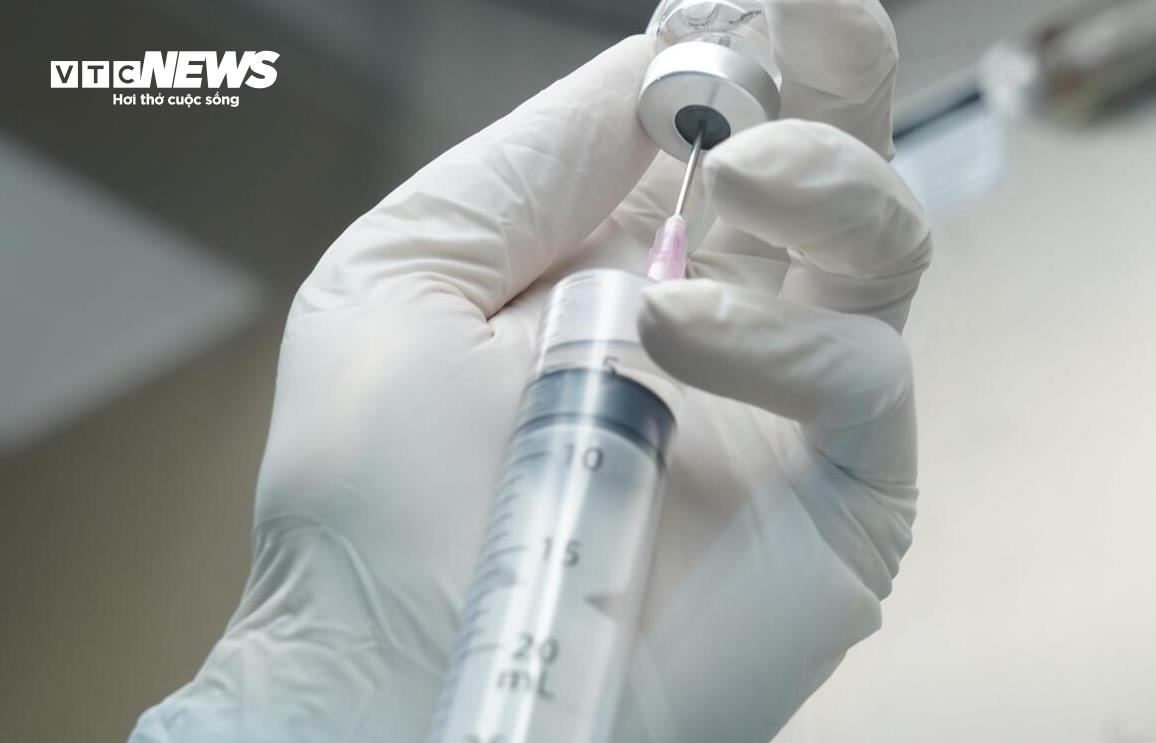
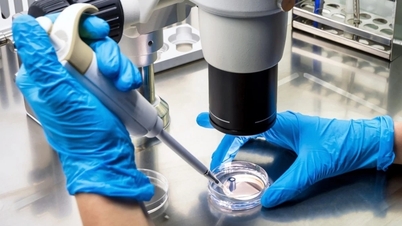
In the treatment of non-small cell lung cancer, amivantamab is prescribed for certain patient groups. (Illustrative image: Nhu Loan)
Which research has brought amivantamab to attention?
The recent surge in interest stems from the OrigAMI-4 study, recently published in the American Journal of Clinical Oncology.
This study evaluated the effectiveness of subcutaneous amivantamab in patients with recurrent or metastatic squamous cell carcinoma of the head and neck, unrelated to HPV, after failure with chemotherapy and immunotherapy. This is considered one of the most difficult patient groups to treat today.
Results from 102 patients showed an objective response rate of 42%. Of these, approximately 15% of patients achieved a complete response, meaning the tumor was no longer visible on imaging studies. Approximately 27% of patients achieved a partial response with significant tumor shrinkage.
The median progression-free survival time was 6.8 months.
According to experts, this is a very encouraging result given the limited treatment options available for this group of patients.
Cancer injections make tumors 'disappear' after a few weeks, what do doctors say?
The disappearance of a tumor does not mean the cancer is gone.
While the research results offer much hope, experts emphasize that patients need to understand the true meaning of these numbers.
First of all, the disappearance of a tumor on a scan does not mean the disease is completely cured. Microscopic cancer cells may still exist and continue to grow afterward.
Furthermore, the duration of disease control is limited. The median progression-free survival index of 6.8 months indicates that after this period, half of the patients in the study experienced disease recurrence.
Therefore, amivantamab is considered a drug that helps control the disease and prolong life, but it cannot yet be considered a complete cure for cancer.
Furthermore, the results of the OrigAMI-4 study only apply to non-HPV-related squamous cell head and neck cancer. There is no scientific basis to infer that the drug will have a similar effect on other cancers such as liver cancer, stomach cancer, breast cancer, or many other types of cancer.
How much does amivantamab cost?
The cost of treatment is one of the biggest barriers for patients.
Based on calculations using the OrigAMI-4 treatment protocol in the study, if converted to the equivalent of the 350 mg intravenous infusion currently available in Vietnam, with a declared price of approximately 34.5 million VND per vial, a patient weighing around 60 kg could spend nearly 1.4 billion VND on medication in just the first three months of treatment.
This expense does not include other costs such as follow-up tests, intravenous fluids, treatment of side effects, hospital fees, and travel expenses.
According to MSc. Dr. Trinh The Cuong, amivantamab is a significant advancement in modern medicine with positive clinical data. However, treatment effectiveness is only achieved when the drug is used for the right patient, according to the correct indications, and at the right time.
Patients should not self-medicate with unregulated drugs or expect them to be a cure for all types of cancer. Every treatment decision needs to be considered based on many factors, including the type of cancer, stage of the disease, tumor biological characteristics, affordability, and treatment goals.
For cancer patients, hope is always very important. However, hope needs to be built on a foundation of accurate, complete, and scientific medical information.
Source: https://vtcnews.vn/amivantamab-la-gi-dung-cho-nhom-benh-ung-thu-nao-ar1021689.html


![[Image] Shipbuilders exposed to steel and record-breaking heat.](https://vphoto.vietnam.vn/thumb/1200x675/vietnam/resource/IMAGE/2026/06/04/1780545781745_ndo_br_img-5402-4683-jpg.webp)













































![[Video] Sunset at Lap An Lagoon – Where the sun sets over the fishing nets](https://vphoto.vietnam.vn/thumb/1200x675/vietnam/resource/IMAGE/2026/05/31/1780192137701_beach-landscape-sea-water-nature-grass-745871-pxhere-com.jpeg)






































Comment (0)