There are many anecdotal claims about eggs, such as that egg yolks contain more protein and nutrients than egg whites. But how true is this?
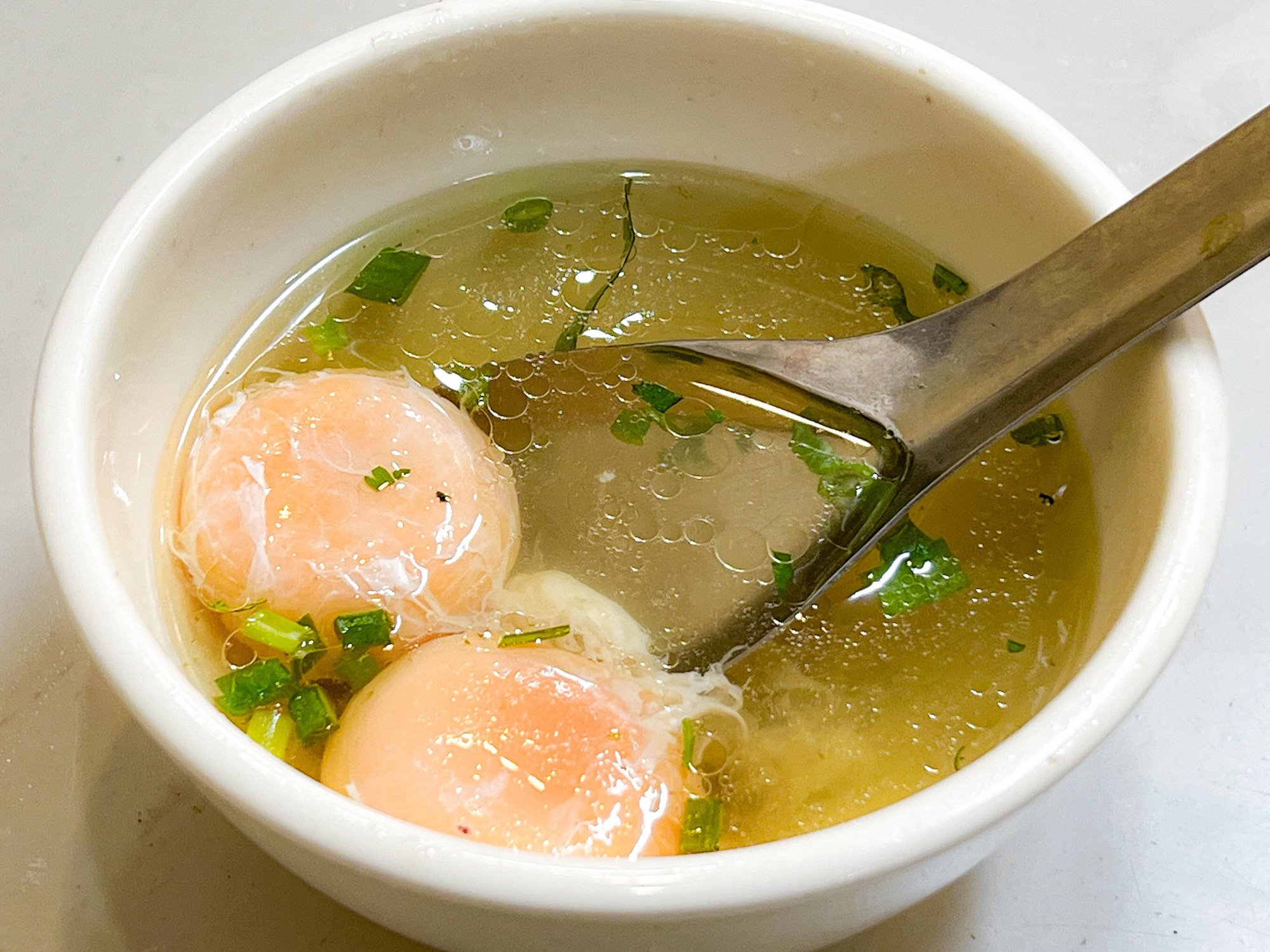
Egg yolks and egg whites have different nutritional values - Illustration: NAM TRAN
Nutritional value of eggs
Sharing her thoughts on this matter, Ms. Ngo Thi Ha Phuong, M.Sc. - Center for Nutrition Education and Communication - National Institute of Nutrition - said that eggs are a popular food in daily meals due to their nutritional value and convenience.
Eggs can be used in many dishes and are suitable for a wide range of people.
Besides, egg dishes are very quick to prepare; it only takes 10 minutes to have a delicious plate of eggs from whisking, frying, and serving, while boiling eggs takes 5-10 minutes to cook, depending on your preference.
In terms of nutritional value, eggs are one of the foods rich in protein, monounsaturated fatty acids, vitamin D, vitamin B12, biotin, riboflavin, selenium, and iodine.
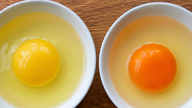


Egg yolks are one of the few natural food sources of vitamin D and lipid complexes that increase the bioavailability of the plant nutrients in the yolk, such as lutein and zeaxanthin.
Eggs are a source of pantothenic acid, phosphorus, vitamin A, and folate. It can be said that eggs are a food with high biological value, a rich source of protein, containing vitamin B12 and a range of micronutrients and bioactive compounds.
The protein in eggs is evenly distributed between the egg white and the egg yolk; while lipids, vitamins, and minerals are mainly concentrated in the egg yolk.
According to the Vietnamese food composition table, 100g of free-range chicken eggs provide 150kcal, containing 12.96g of protein, 10.33g of fat (lipid), and 1.25g of carbohydrates.
Some minerals worth noting include calcium, with 55mg in 100g of free-range chicken eggs (half the amount in 100ml of fresh milk), and iron at 2.7mg. An average free-range chicken egg (weighing around 50g) provides 75kcal, over 5g of fat, negligible amounts of carbohydrates, and 27.5g of calcium.
Which is better, egg yolk or egg white?
According to Ms. Phuong, the content of energy-providing substances and the content of minerals and vitamins in egg yolks and egg whites are different.
Specifically, egg yolks provide more energy than egg whites due to having half the water content and containing a higher amount of fat (29.8g per 100g) compared to egg whites (0.1g).
Egg yolks contain significantly higher levels of minerals such as calcium and iron compared to egg whites.



For example, the calcium content in the egg yolk is 134mg compared to 19mg in the egg white. The iron content is 7.0mg compared to 0.3mg.
In terms of protein, both egg yolks and egg whites contain high amounts of protein (equivalent to 13.6g and 10.3g respectively).
100g of free-range chicken egg yolks provide 327kcal, while 100g of egg whites only provide 46kcal. 100g of egg yolks contain as much as 960mcg of vitamin A…
Furthermore, when comparing chicken eggs and duck eggs, the nutritional content is nearly equivalent; duck eggs provide more energy than chicken eggs due to their higher protein, fat, and carbohydrate content.
Source: https://tuoitre.vn/an-long-do-hay-long-trang-trung-tot-hon-20250208115223526.htm
![[Photo] National Assembly Chairman Tran Thanh Man attends the Conference to announce the Master Plan for Hanoi Capital City with a 100-year vision.](https://vphoto.vietnam.vn/thumb/1200x675/vietnam/resource/IMAGE/2026/06/29/1782709639728_ndo_br_1-jpg.webp)
![[Image] A look back at the capital's preparations for the century-long master plan.](https://vphoto.vietnam.vn/thumb/1200x675/vietnam/resource/IMAGE/2026/06/29/1782750453122_quy-hoach-100-nam-minh-duy-1-2118-jpg.webp)


![[Photo] General Secretary and President To Lam works with the Party Committee of the Government on the work of preventing and combating storms, floods, extreme natural disasters and climate change.](https://vphoto.vietnam.vn/thumb/1200x675/vietnam/resource/IMAGE/2026/06/29/1782729441945_a1-bnd-0385-9454-jpg.webp)