Tet (Vietnamese New Year) with various types of sticky rice cakes.
In Chín Thượng village, Nguyễn Trãi ward, as Tet approaches, peach blossoms in the gardens are in full bloom, signaling the arrival of spring. As agricultural communities, the Sán Dìu people have skillfully created many delicious and unique dishes from their crops and livestock.
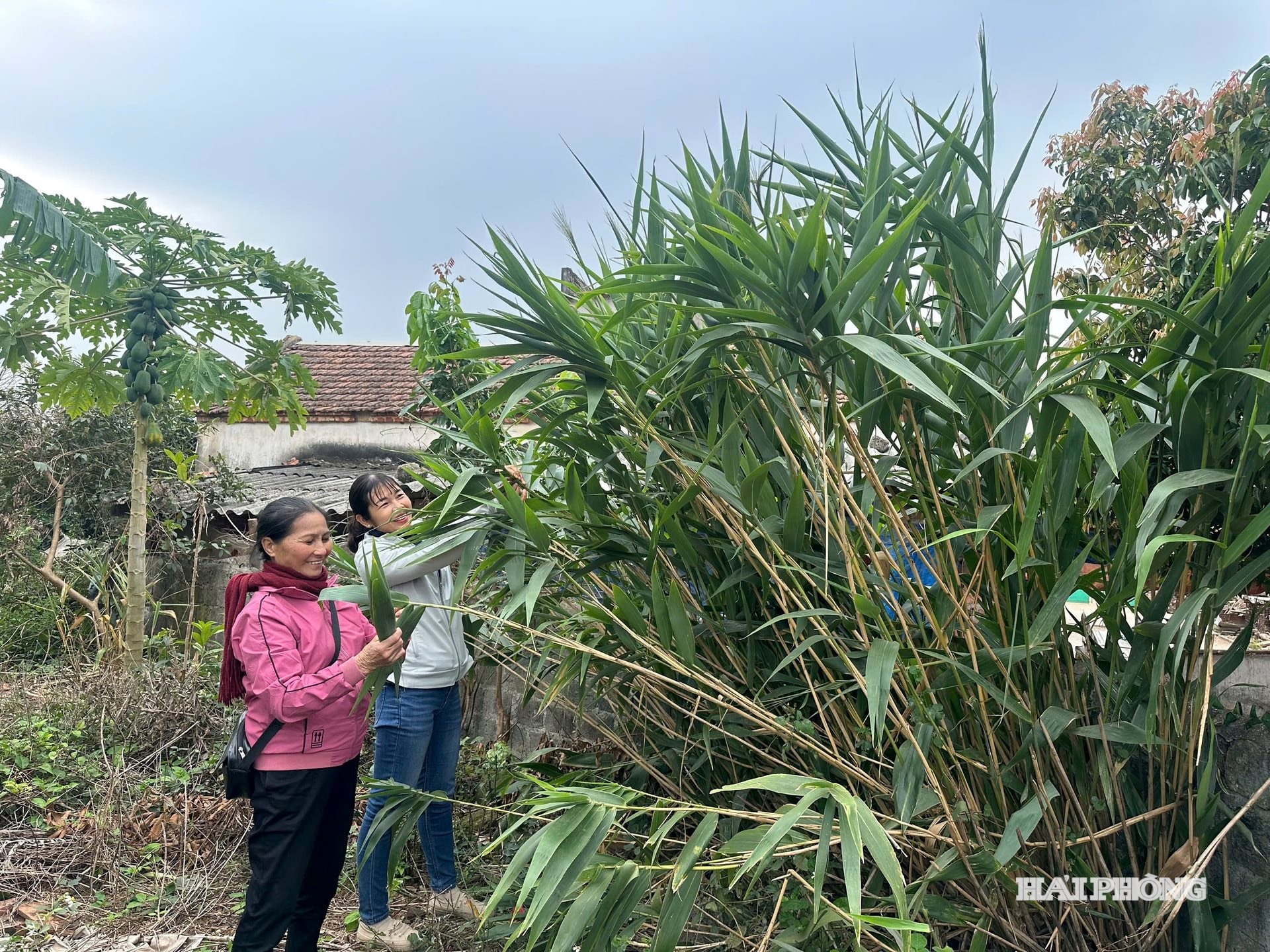
For the San Diu people, the Lunar New Year is the most important occasion, and every household busily prepares ingredients for making glutinous rice cakes (banh chung gu), sticky rice cakes (banh gio), and honey cakes (banh mat) to offer to their ancestors. Like other families, Mrs. Luu Thi Gai's family (78 years old) is busy preparing to wrap glutinous rice cakes. According to Mrs. Gai, the ingredients for glutinous rice cakes are similar to those for banh chung, but the leaves and wrapping method differ. The leaves used to wrap glutinous rice cakes are mainly chít leaves, with dong leaves only used for the outer wrapping. In the past, the San Diu people used to spend an entire morning in the forest gathering chít leaves, but now every household grows a few clumps right in their garden.
The leaves are picked, washed, dried, the ends are cut off, boiled until cooked, and then flattened. The bamboo strips used to wrap the glutinous rice cake must be thinly split bamboo strips joined together into long strands, which are then wrapped continuously from the beginning to the end of the cake. More than just a traditional cake for Tet (Lunar New Year), the glutinous rice cake is also a precious gift from the countryside to friends and relatives near and far.
This Tet holiday, in addition to the humpback sticky rice cake, Mrs. Gai's family also made a couple of kilograms of honey cake to offer to their ancestors and to eat at the feast. With the sweetness of sugar and the chewiness and aroma of sticky rice, the honey cake, along with the humpback sticky rice cake, contributes to the distinctive flavor of the San Diu people's Tet feast, making it hard for guests to forget after just one taste.
In addition, many San Diu families also make "banh bac dau" (silver-headed cake) made from glutinous rice that has been soaked thoroughly, then pounded into a fine paste using a stone mortar, and filtered multiple times. San Diu women are usually in charge of making these cakes, and this is also a criterion for judging their domestic skills during Tet (Lunar New Year). Beyond their culinary value, the Tet cakes of the San Diu people also reflect the unique regional culture and the vibrant spirit of their ethnic traditions.

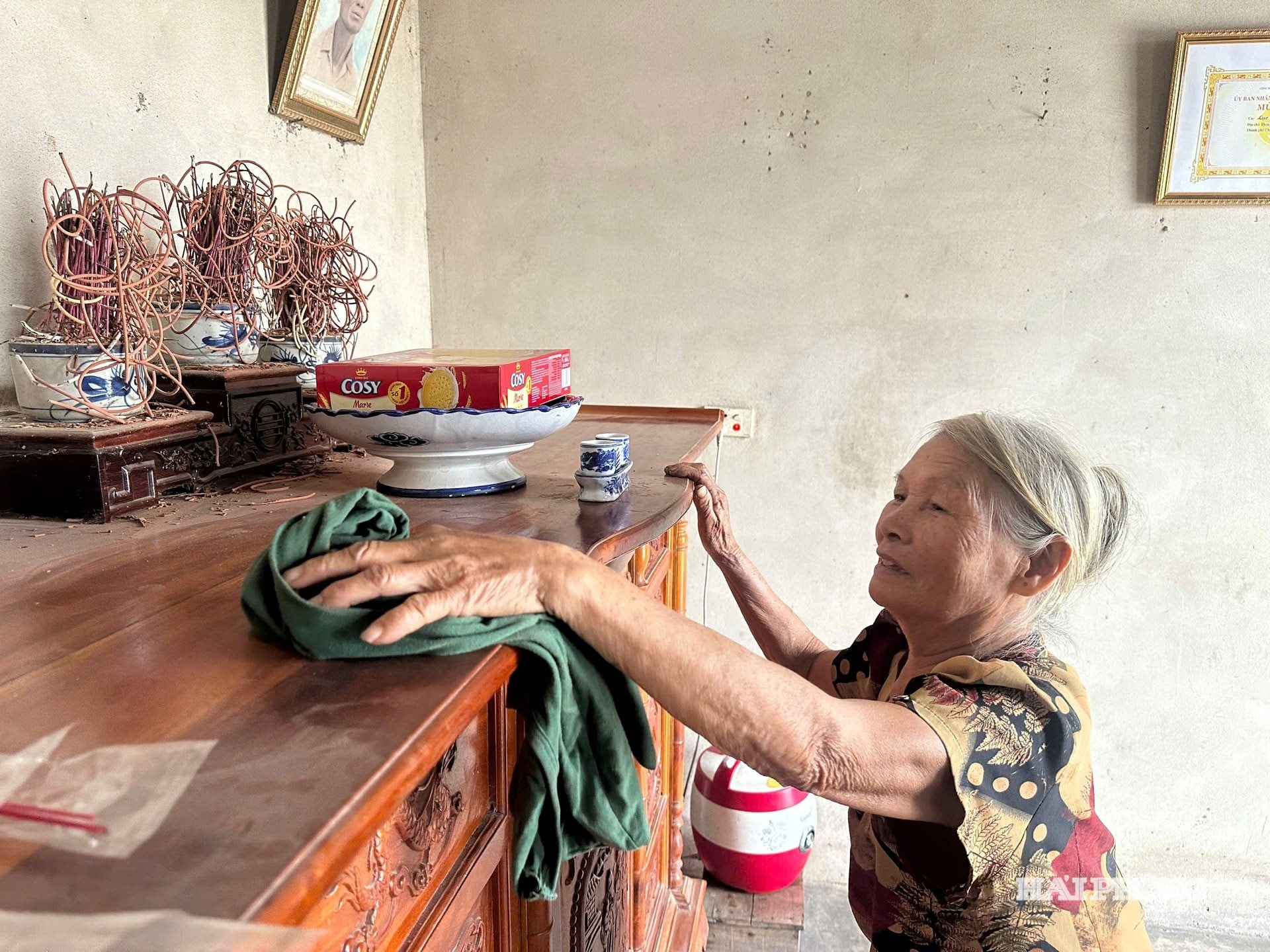
According to Mr. Truong Van Nam (81 years old) in Chin Thuong village, for the San Diu people, the second day of the Lunar New Year is considered the main Tet holiday. On the ancestral altar of each family, there are prepared pork and chicken along with five bowls of glutinous rice dumplings to offer to their ancestors. Each family and clan prepares a feast to invite guests, including close relatives, neighbors, and friends.
Around the Tet feast table, people eat and drink happily, discuss business plans for the coming days, and wish each other good luck and fortune. "Each dish is not only an offering but also a symbol of the traditional values that the San Diu people always preserve," Mr. Nam shared.
Preserving national identity
According to preliminary surveys, Nguyen Trai ward has approximately 470 households with over 1,720 people of the San Diu ethnic group, scattered across villages and residential areas, mainly in Chin Thuong and Chin Ha villages. Mr. Le Van Khoa, Vice Chairman of the People's Committee of Nguyen Trai ward, said: During the process of integration and development, coexistence, work, and study between the San Diu people and other ethnic groups has led to many changes, but the cultural characteristics and customs of the San Diu people during Tet (Lunar New Year) still retain their own unique identity. Traditionally, the San Diu people in Chi Linh (now Nguyen Trai ward) celebrated five major festivals each year: Thanh Minh, Doan Ngo, Trung Nguyen, Dong Chi, and Tet Nguyen Dan (Lunar New Year).
Another indispensable spiritual element during the San Diu New Year is the Soong Co singing tradition. From the second day of Tet (Lunar New Year), they often organize singing gatherings at the village square, temple, or cultural center. Dressed in new clothes, San Diu boys and girls affectionately exchange Soong Co songs. The melodies of Soong Co, when sung, carry the spirit of spring, love for their homeland, country, people, life, and labor…
Ms. Luu Thi Kien (60 years old) is considered the "passer-of" Soong Co folk singing in Nguyen Trai ward. Ms. Kien said: Soong Co originates from the simple, unpretentious life of working people, expressing their thoughts, feelings, and aspirations, and is improvised and passed down through folklore in many forms. Somewhere, the melodies of Soong Co songs resonate during the spring days, blending with the joy of prosperity and the happiness of family reunion.
The San Diu people also often organize many folk games and sporting activities during the early days of Spring, such as rattan ball throwing, coin tossing, and dice games... These are popular games during Tet (Lunar New Year) and festivals, and have been passed down from generation to generation.



The customs of the San Diu people celebrating the New Year have undergone many changes. Ancestor worship rituals during the New Year have become simpler and have faded away considerably. According to elderly San Diu people in Nguyen Trai ward, some traditional New Year customs have disappeared, such as pasting red paper on important places in the house to pray for good luck or keeping the hearth burning on New Year's Eve…
The older generation is deeply concerned about preserving the beautiful customs of Tet (Lunar New Year) day by day, passing them on to the younger generation as a reminder of their roots.
HONG ANHSource: https://baohaiphong.vn/an-tet-cung-nguoi-san-diu-535906.html