

Dig a pond to store water for the village.
Around 1835-1840, Mr. Le Van Minh and his wife, Tran Thi Nhan, along with his older sister and four younger brothers, left their hometown of Long Ho, Vinh Long province, to clear land and establish a settlement on the banks of the Rach Rap river in Ba Dieu area, Thanh Phu village. At that time, the area was quite wild and full of dangers. However, with perseverance and hard work, the family members managed to build a stable life in this new land.
Mr. Le Van Hien (1863-1934), the second son of Mr. and Mrs. Le Van Minh and Tran Thi Nhan, was born and raised in the land still bearing the marks of pioneering settlement. He married Mrs. Nguyen Thi Bien, from the same village of Thanh Phu. Thanks to their joint efforts, the couple built up a considerable estate, becoming a wealthy family in the region.
Besides taking care of his family's finances , Mr. Le Van Hien was also a respected, simple, and compassionate man who always cared about the livelihoods of his neighbors. He was trusted and elected as the village elder, the highest position in the village council at that time, and was known by the people as Mr. Ca Bay (Elder Bay).
The Ca Mau region has two seasons: rainy and dry. During the dry season, ponds and lakes often dry up, rivers and canals are affected by saltwater intrusion, and freshwater sources are extremely scarce. Out of compassion for the villagers, he dug a very deep and wide pond to store rainwater to supply the entire village. The villagers called it Ông Cả Bảy's pond.
Mrs. Le Ngoc Loan (83 years old), who calls Mr. Hien her great-grandfather, fondly recalled: “My mother told me that back then, my great-grandfather spent money to buy a hectare of land and hired people to dig a pond. My mother helped cook meals for the workers. There were many workers, making it a lively and bustling place. The pond was dug in a basin shape, and my great-grandfather even bought 50 sacks of black salt to put at the bottom, supposedly to reduce the acidity. The pond water was clear and tasted sweet like rainwater.”
According to the memory of musician Le Luong (nearly 90 years old), the great-grandson of Le Van Hien: “If you count from the inside out along National Highway 1, the pond is located on the left, less than a kilometer past the Ba Dieu sluice gate. Back then, people transported water by boat on the Rach Rap river. From the riverbank, past the garden land, and about 2 acres further, you reach the pond. According to the documents that are still preserved, the pond has an area of 1,000 m². The path from the garden to the pond was paved with blue stones by my grandfather. The path down to the pond was also carefully paved with stones to prevent erosion and to make it easy for people to get water. The pond is very deep; it never dries up during the dry season, and the water is as fresh as rainwater.”
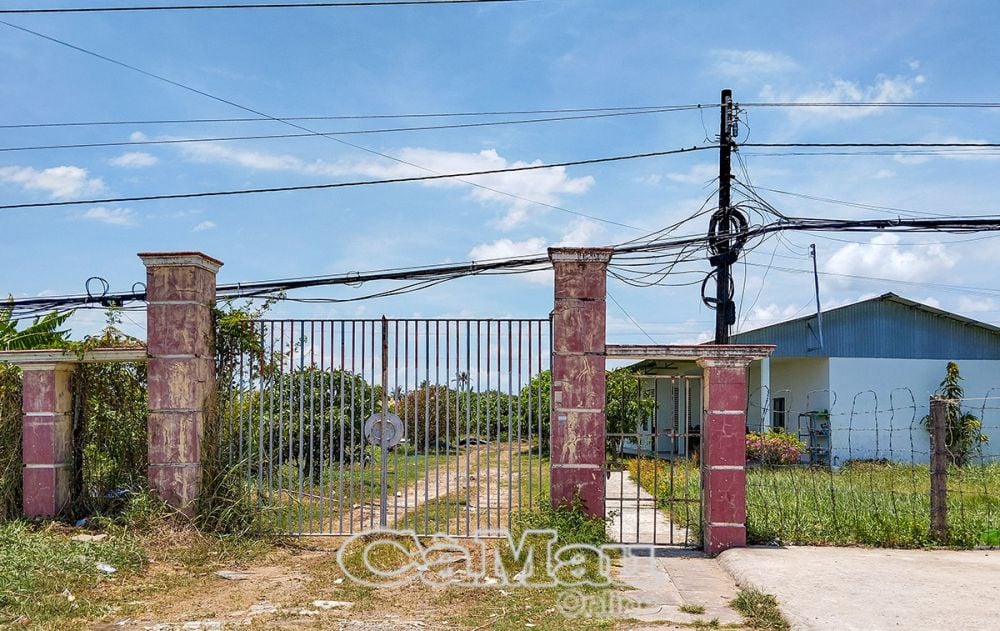
The location of Ông Cả Bảy's pond is on National Highway 1, about 3 km from the center of Cà Mau City. Due to the pace of urbanization, this area has now been transferred and filled in.
In the memories of many, during the impoverished war years, people from the Nha Phan, Rau Dua, and Phu Tan areas (located 5-7 kilometers to over 20 kilometers from the pond)... also came to this pond to fetch water for their use (although near the Ba Dieu canal there was another pond dug by the village, called the Village Pond, but the water was not as fresh).
"Back then, when I led the performing arts troupe to perform in the Rau Dua area, the local families who let the troupe stay at their houses would come all the way to this pond to fetch water for daily use," recalled musician Le Luong.
Elderly residents of Ba Dieu hamlet also confirmed that there used to be two large ponds here: one was the village pond, dug by the villagers; the other was created by Mr. Ca Bay himself, using his own money and labor. Perhaps the village pond existed first, but the water wasn't fresh enough, so Mr. Ca Bay dug another pond (applying folk methods to make the water fresh) for the villagers to use.
Thus, the pond not only had practical significance but also played a vital role during the resistance wars against the French and Americans to save the country. It is said that even after the country was unified, people still used the water from this pond. Only when well drilling became widespread and later when the piped water system was connected did Ông Cả Bảy's pond cease its historical role.
A mark on the community and lineage.
Besides digging ponds to store water for the people, Mr. Le Van Hien also mobilized and organized the construction of roads, repairs, and bridges for the people's transportation. During years of famine and crop failure, he helped many families with rice, seeds, and farming tools to overcome hardship. He was also famous for his skill in diagnosing illnesses, prescribing medicine, and especially treating broken bones and dislocations. During the harvest season or when farming was not in full swing, he always treated the sick with dedication. Those who were too poor were even provided with food and lodging, and after recovering, he gave them money to return to their hometowns.
Mr. Hien is the father of the revolutionary activist Le Khac Xuong, former Secretary of the Bac Lieu Provincial Party Committee (now Ca Mau, Bac Lieu), whom Ca Mau Newspaper mentioned in the article "Communist Pagoda" in Thanh Phu village - A relic of a bygone era (Dat Mui publication, published March 28, 2025).
Within his family lineage, Mr. Hien also left behind a commendable legacy: the construction of a stone tomb for his parents, Mr. Le Van Minh and Mrs. Tran Thi Nhan, the first members of his family to settle and establish themselves in the Ca Mau region. This act not only demonstrates filial piety but also serves to preserve historical traces, reminding descendants of the contributions of their ancestors.
According to architect Mai Le Minh, the great-grandson of Mr. Hien, the Le family originally came from Quang Ngai, descendants of the famous general Le Van Duyet. Due to historical events, some members of the family migrated to the South, and one branch settled in Ca Mau (as mentioned). The stone tomb of Mr. Le Van Minh was built in the style of the tombs of Nguyen Dynasty officials.
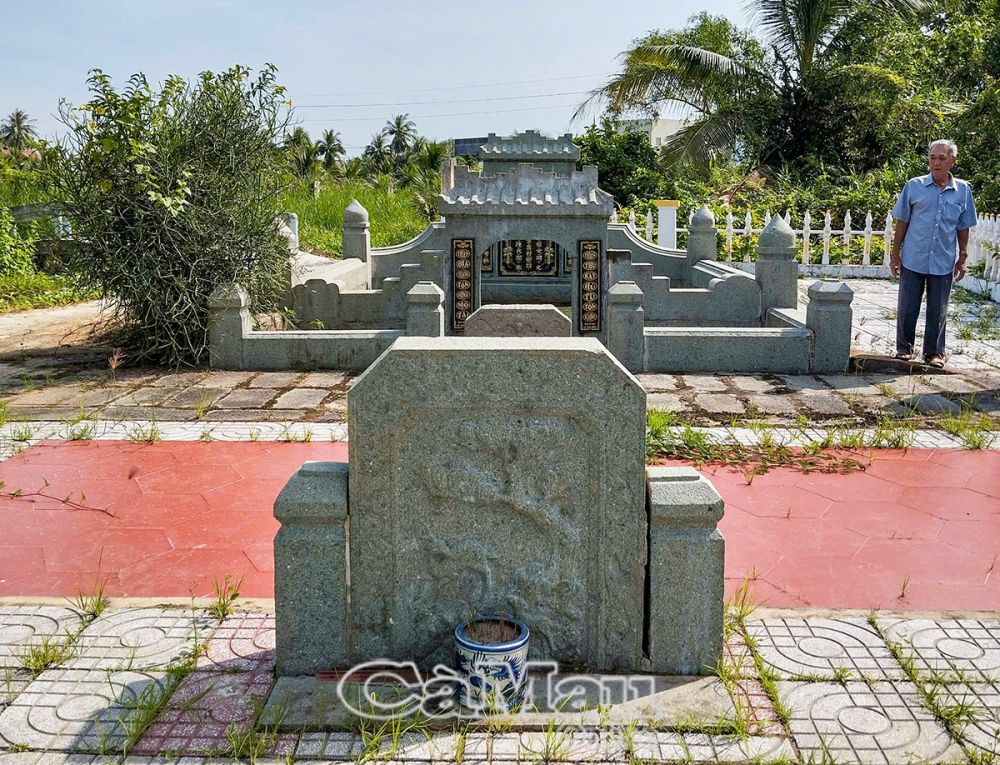
The tomb of Mr. Le Van Minh, located in Ba Dieu hamlet, Ly Van Lam commune, Ca Mau city (the large tomb in the back), was built by Mr. Le Van Hien using large stone blocks, with an architectural style according to the tomb standards of Nguyen Dynasty officials (his descendants have renovated it and added Vietnamese couplets).
Today, with the pace of urbanization, both Ông Cả Bảy's pond and the village pond have been filled in, but the deeds and acts of kindness of Mr. Lê Văn Hiền towards the villagers and the community leave in the hearts of his descendants a sense of pride and a lesson about compassion and a life of solidarity.
As an architect, Mr. Minh was particularly interested in the blue stones used for building tombs, paving roads, laying temple foundations, and reinforcing ponds—a material that couldn't be readily available in the lowlands of Ca Mau. He said he heard that the stones were transported by boats from Dong Nai to sell (some also say they were brought in from Central Vietnam).
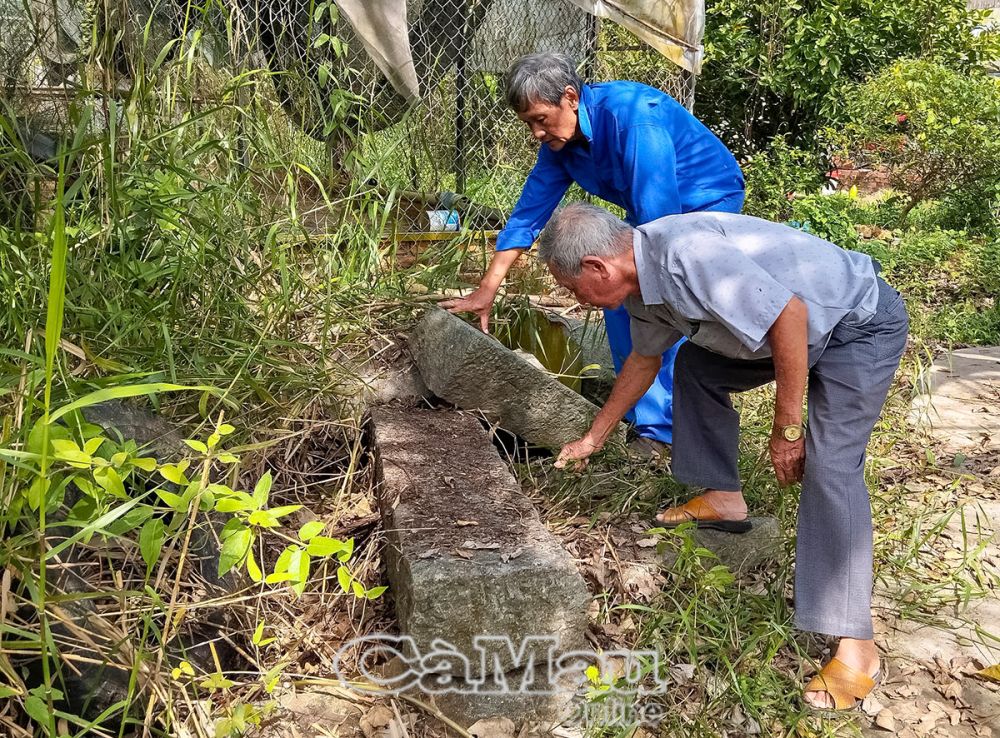
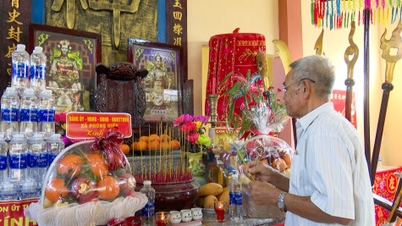
Architect Mai Le Minh, the great-grandson of Mr. Le Van Hien (the person inside), showed us the remaining stones that Mr. Hien used to build the temple. These are also historical and cultural relics from the time of land reclamation and settlement.
Although the origin of this material is not yet clearly determined, it is considered historical evidence, a testament to our ancestors' journey in expanding the southern lands, and further research will surely reveal many interesting and fascinating things.
Huyen Anh
Source: https://baocamau.vn/ao-ong-ca-bay-a38292.html
![[Photo] Prime Minister Pham Minh Chinh receives the Chinese Ambassador to Vietnam](https://vphoto.vietnam.vn/thumb/1200x675/vietnam/resource/IMAGE/2026/04/05/1775397481797_ndo_br_dsc-5512-jpg.webp)

















































Comment (0)