

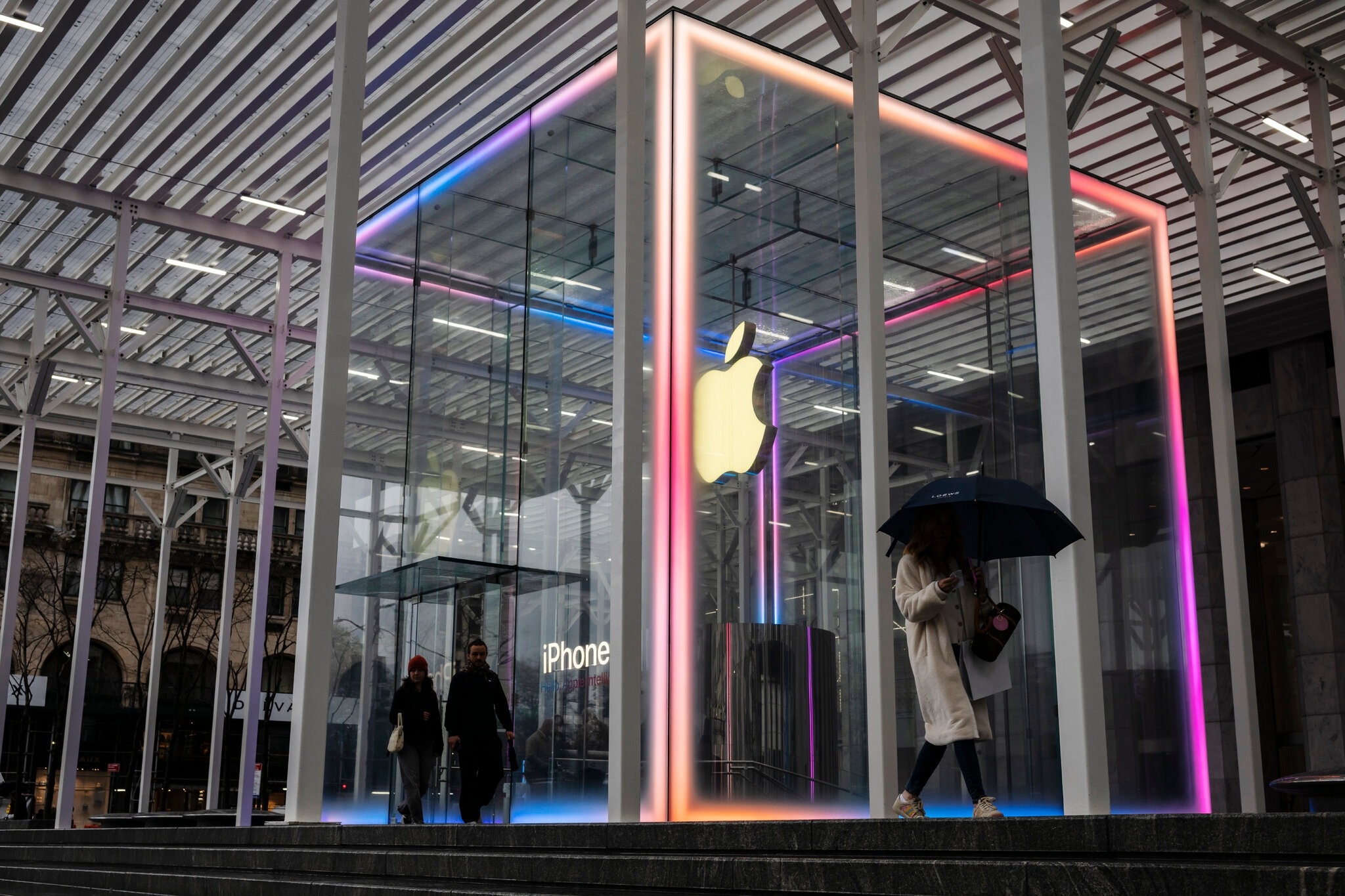
On the evening of April 12th (Vietnam time), US President Donald Trump announced exemptions for many electronic devices from tariffs. Previously, the tariff and retaliatory tax policies imposed on many countries, particularly the 125% tariff on goods manufactured in China, had caused turmoil in the technology industry.
If tariffs take effect, companies like Apple will face pressure to raise product prices. Meanwhile, the new policy helps devices like iPhones, iPads, Macs, Apple Watches, and AirTags avoid heavy tariffs when imported into the US.
According to analysts, the Trump administration's tax exemption helped Apple avoid its biggest crisis since the pandemic, although this may only be temporary.
Apple leaders breathe a sigh of relief.
Currently, companies are still subject to a 20% tariff on Chinese goods related to fentanyl. While Trump may announce separate tariffs for each item, the temporary exemption still marks a victory for Apple and the consumer electronics industry, which relies heavily on assembly plants in China.
“This is a big relief for Apple. Tariffs can cause inflation in material costs,” said analyst Amit Daryanani from Evercore ISI .
Before the exemption was granted, Apple had been coping with tariffs by increasing iPhone imports from India, a country with lower reciprocal tariffs than China. Company leaders argued this was a solution to avoid tariffs and increase prices in the short term.
India is expected to produce more than 30 million iPhones annually. According to Bloomberg , this number is enough to meet most of the demand in the US. Currently, Apple sells around 220-230 million iPhones annually, with about one-third of sales coming from the US.
However, shifting the supply chain to India is not a simple matter, especially as Apple approaches the production stage of the iPhone 17 – a device expected to be assembled primarily in China.
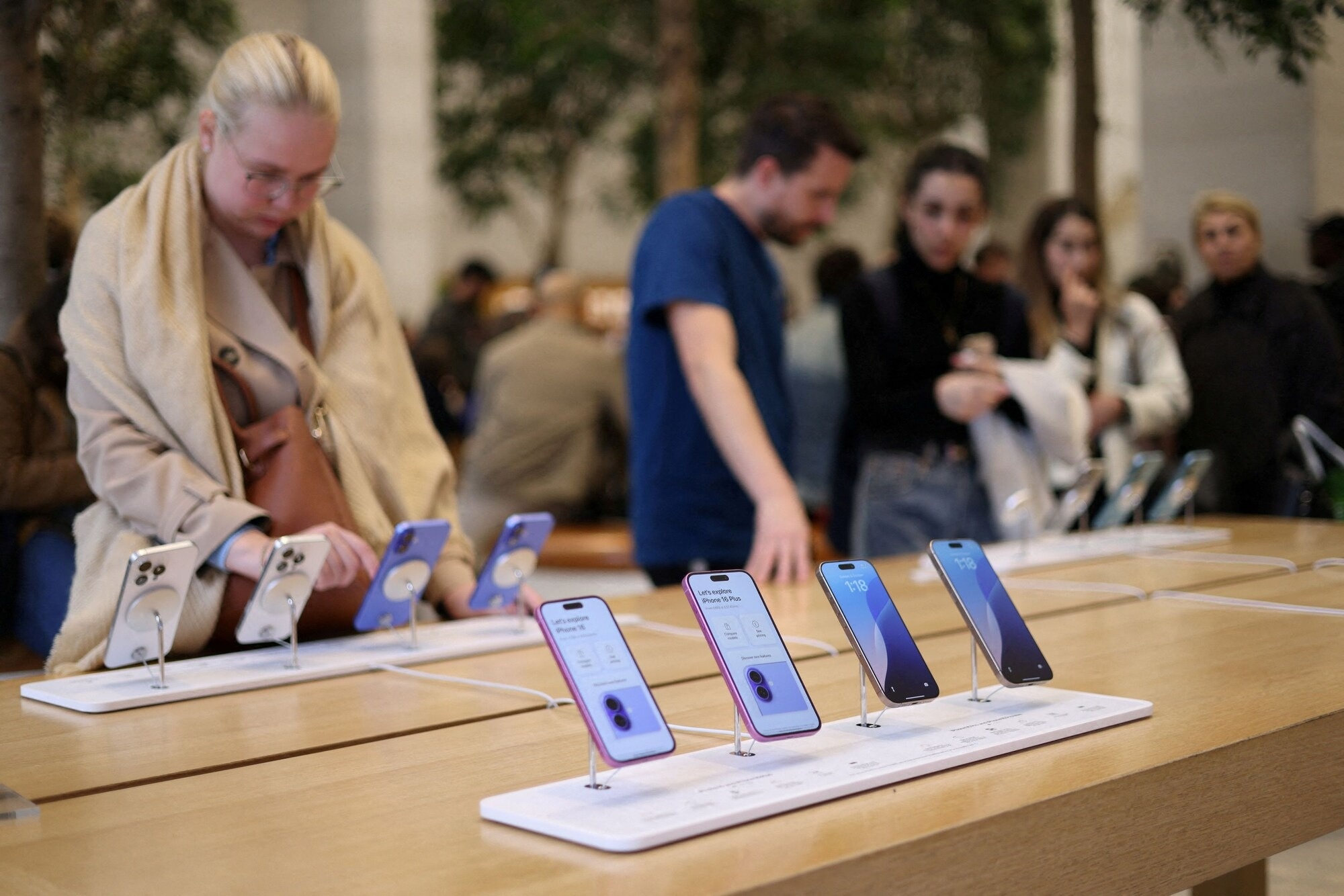 |
The iPhone 16 lineup is displayed in an Apple store. Photo: Reuters . |
According to Bloomberg , fears about the impact of tariffs on the iPhone 17 launch plan are gripping Apple's operations, finance, and marketing departments.
If tariffs remain in place, Apple will only have a few months to shift additional iPhone 17 assembly production to India or another country. The company also faces several difficult choices, including raising product prices to maintain profit margins.
This also poses a challenge for the marketing department, as they must convince consumers that the higher price is justified.
Of course, Trump's policies could still change in the near future, posing challenges for Apple and many other tech companies. However, Apple's leadership can breathe a sigh of relief, at least for now.
What other strategies does Tim Cook have?
This isn't the first time Trump has exempted tech products from tariffs. During his first term, the president exempted some Apple devices imported from China, worth approximately $200 billion , from tariffs. At that time, Cook persuaded the administration not to impose tariffs on iPhones, AirPods, and Apple Watches.
Tim Cook is one of the tech leaders actively trying to curry favor with Mr. Trump. According to the New York Times , the Apple CEO donated $1 million to the president's inauguration in January. He also visited the White House and announced Apple's $500 billion investment in the US over the next four years.
This was also the strategy Cook chose during Trump's first term. To relieve pressure from the administration, Cook built a personal relationship with the president.
However, it remains unclear whether Trump will prioritize Apple at this stage, especially given the larger scale and stricter the tariffs. Wall Street analysts estimate that iPhones could become $1,000-$1,600 more expensive if the tariffs take effect.
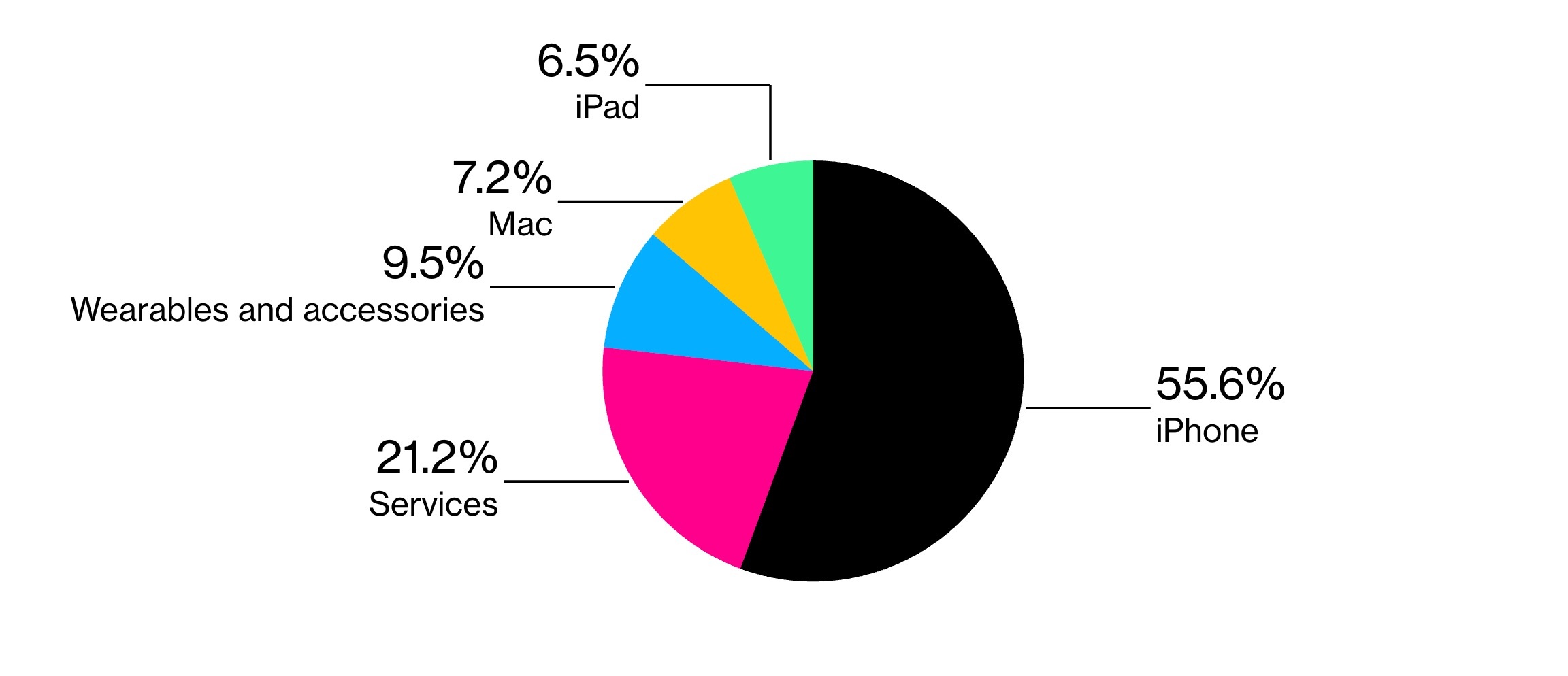 |
Revenue contribution ratios of Apple's business units. Photo: Bloomberg . |
White House press secretary Caroline Leavitt said that President Trump still wants many technology products and components to be manufactured domestically.
However, for the past 14 years, both CEO Tim Cook and the late CEO Steve Jobs have argued that the US lacks the processes, recruitment capabilities, and supply chain stability to assemble more than 200 million iPhones per year.
"The likelihood of me participating in the Masters golf tournament this weekend is higher than the likelihood of Apple manufacturing iPhones in the U.S. in the next few years. The complexities and challenges make that seem impossible," emphasized analyst Dan Ives at Wedbush Securities.
In 2011, former President Barack Obama asked Steve Jobs about the possibility of manufacturing iPhones in the US instead of China. By 2016, President Trump also pressured Apple to change its stance. However, Cook firmly maintained that the US lacked the skilled workforce to compete.
"In the U.S., you can hold a meeting with machining engineers, but I'm not sure the number of attendees could fill the room. In China, a conference could fill several football stadiums," Cook shared at an event in late 2017.
The importance of China
Analysts remain optimistic about Apple's ability to persuade Trump to grant more exemptions. Since the president announced the tariffs, Apple has been one of the tech companies most heavily impacted.
Another concern stems from potential retaliation from China if Apple moves its supply chain too quickly. The country, with its massive population, accounts for 17% of Apple's revenue and has dozens of retail stores.
According to Bloomberg , China has conducted several anti-competitive investigations against American companies. In recent years, China has also banned iPhones and certain other products from being used in government agencies. This move comes after the US imposed sanctions on the technology giant Huawei.
The iPhone remains Apple's biggest revenue contributor (55.6%), with approximately 87% manufactured in China, according to Morgan Stanley estimates. Additionally, about four-fifths of iPads and 60% of Mac computers are assembled in the country.
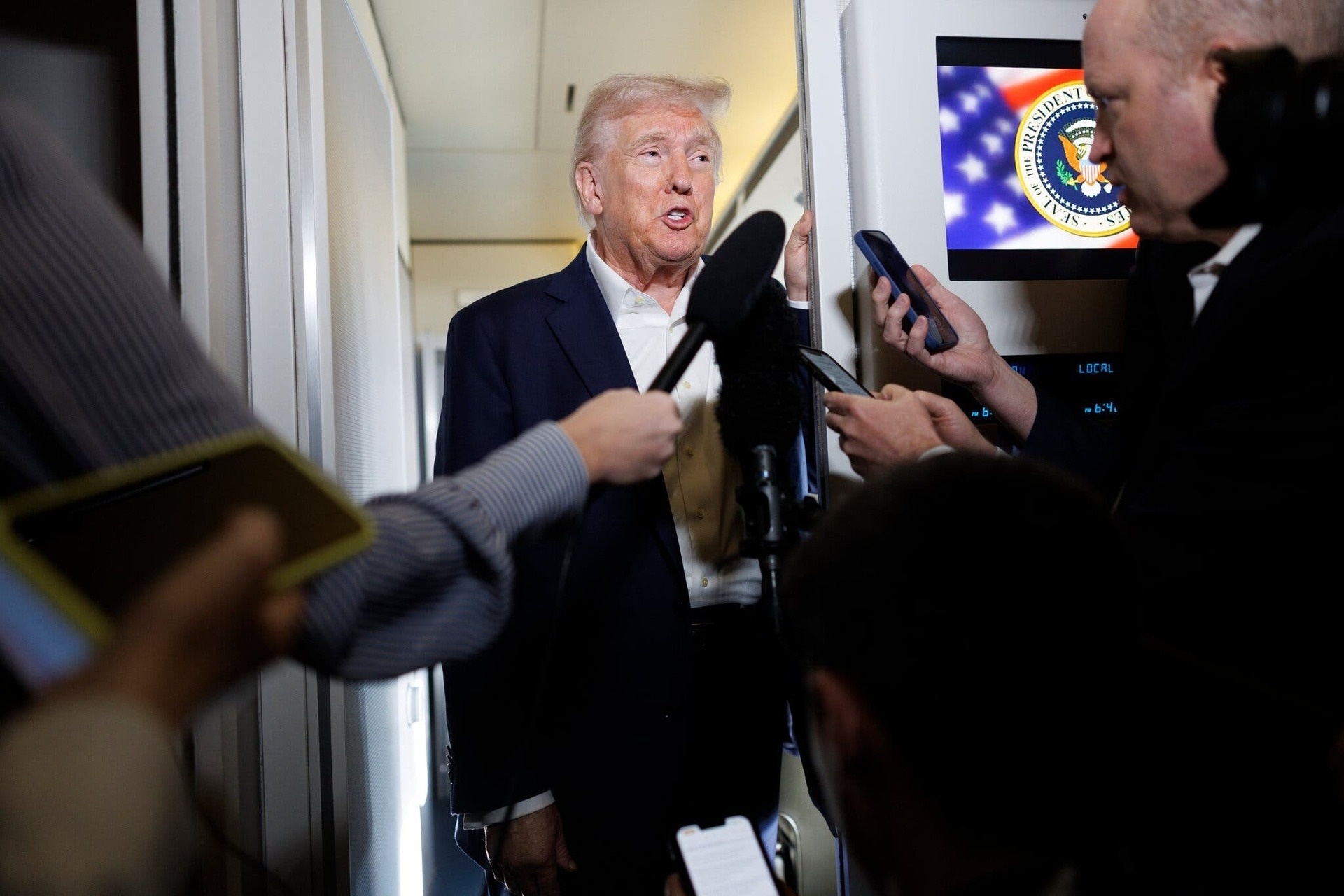 |
President Trump speaks aboard Air Force One on April 11. Photo: New York Times . |
These products account for approximately 75% of Apple's revenue. Meanwhile, other devices such as the Apple Watch and AirPods are mostly manufactured in Vietnam, while Mac computer assembly has expanded to Malaysia and Thailand.
In the US, iPads account for approximately 38% of Apple's sales, while Macs, Apple Watch, and AirPods together account for about 50%, according to estimates by Morgan Stanley.
Analysts believe that completely abandoning the Chinese supply chain is impossible for Apple. Although Trump frequently mentions manufacturing iPhones in the US, the biggest obstacles lie in attracting talent and labor costs.
Apple has built its supply chain in China for decades. Since the tariffs were announced on April 2nd, lobbyists from Apple and several other tech companies have been pushing the White House to order an exemption.
Apple isn't alone; several other companies have also emphasized that moving assembly operations to the U.S. wouldn't offer many benefits. They argue that the U.S. should focus on high-value jobs and encourage investment in sectors like semiconductor manufacturing.
Source: https://znews.vn/apple-tam-thoat-khoi-khung-hoang-post1545498.html



![[Photo] General Secretary and President visit the China-ASEAN AI Application Cooperation Center](https://vphoto.vietnam.vn/thumb/1200x675/vietnam/resource/IMAGE/2026/04/17/1776404277677_vna-potal-tong-bi-thu-chu-tich-nuoc-tham-trung-tam-hop-tac-ung-dung-ai-trung-quoc-asean-8706616-2286-jpg.webp)
















![[Photo] National Assembly Chairman Tran Thanh Man attends the policy seminar to promote Vietnam-Türkiye cooperation.](https://vphoto.vietnam.vn/thumb/1200x675/vietnam/resource/IMAGE/2026/04/16/1776351415367_vna-potal-chu-tich-quoc-hoi-tran-thanh-man-du-toa-dam-chinh-sach-thuc-day-hop-tac-viet-nam-tho-nhi-ky-8705791-jpg.webp)























































Comment (0)