


 |
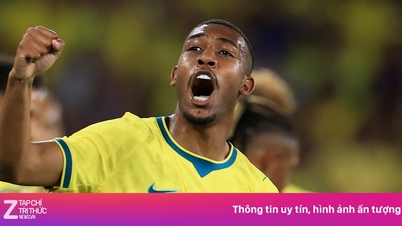
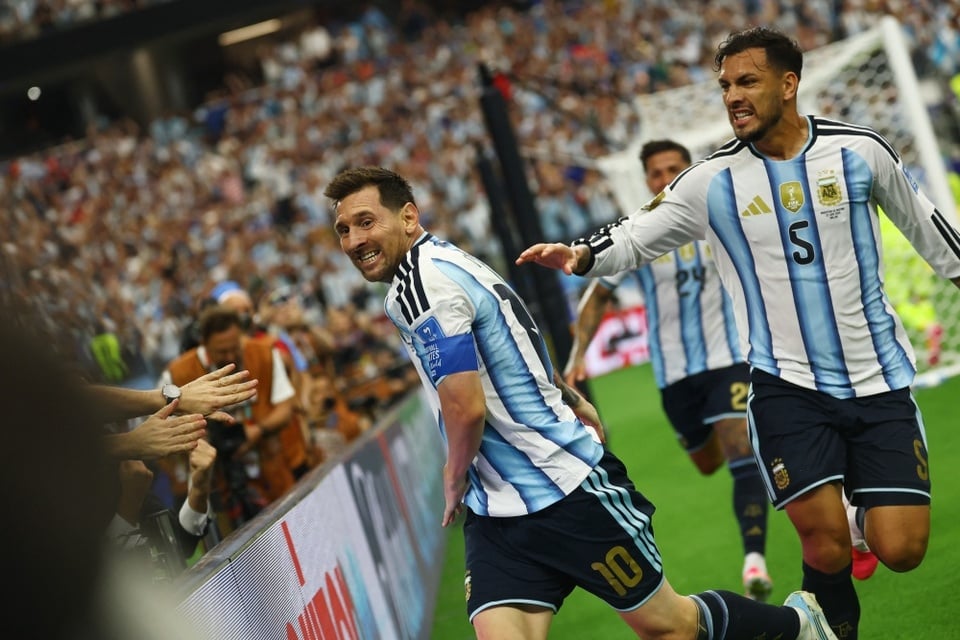
Messi scored a brace against Austria, but Argentina needs to consider resting him in the next match. |
Messi scored again. Messi set another record. Messi made the whole world talk about him after Argentina's victory over Austria on June 23rd. But perhaps it's time for Argentina to ask a more realistic question: what's the point of letting Messi play in every group stage match?
The record is not as important as the trophy.
Messi is 38 years old and will turn 39 on June 24th. At that age, each World Cup match is not just 90 minutes of football. It's also about physical strain, recovery time, collisions, and the risk of injury.
For an average player, that would be worrying. For Messi, it's even more worrying, because he's not an easily replaceable link in the Argentina squad.
Against Austria, Messi scored a brace to help Argentina win 2-0. He also broke the World Cup goalscoring record. It was a historic moment. But individual history shouldn't become a bigger priority than the collective goal.
What's the point of Messi setting a few more records if Argentina doesn't win the World Cup?
That's the important question.
For Messi, the records are already too numerous. He doesn't need another number to prove his greatness. At club level, with the national team, in terms of individual titles or legacy in the hearts of fans, Messi is already in a position that very few players can reach. What matters most right now is not how many more goals he scores in the group stage, but whether he is fit enough to appear in the decisive matches.
The more Argentina wins thanks to Messi, the more they should fear losing him.
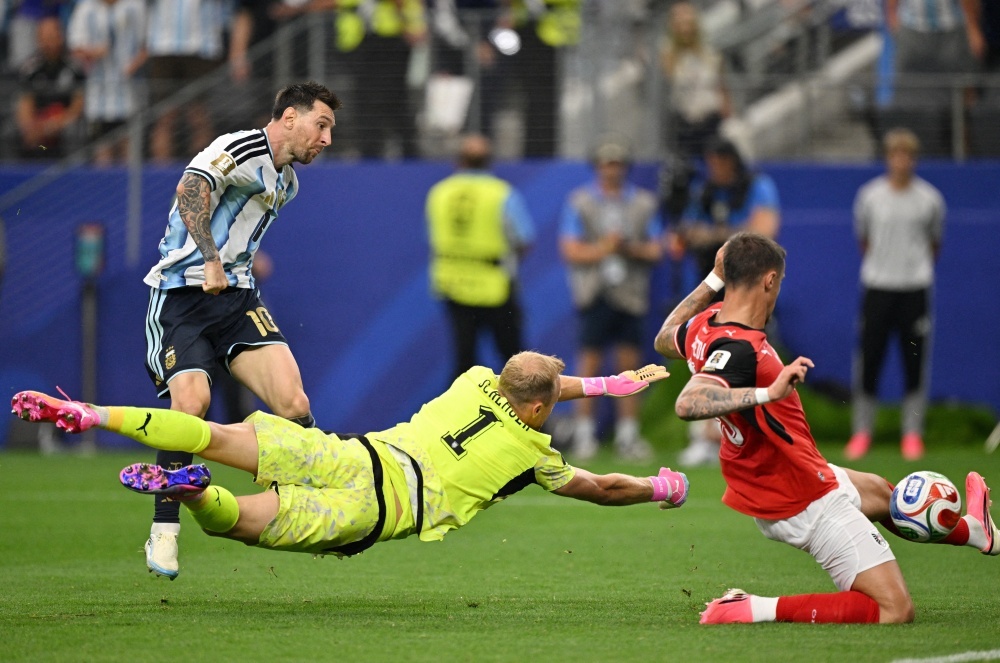 |
After the match against Austria, there was much talk about the brace, the record, the familiar left-footed goal. But a team aiming for the final cannot rely solely on emotion. They need to strategize. They need to protect their most important players. And they need to understand that the World Cup doesn't award the trophy to the team with the most record-breaking players in the group stage.
The World Cup awards the trophy to the team that is still standing at the end.


Therefore, if Argentina already has a significant advantage in the group, the most logical option is to rest Messi in the next match. Not because he's not good enough anymore. On the contrary, it's precisely because he's so important that he needs to be preserved.
Don't let the World Cup lose Messi.
Messi is no longer at an age where he can play consistently without any hesitation. That's a simple truth, even though many fans don't want to hear it.
He can still decide the game. He can still make the crowd erupt with just one touch of the ball. He's still the player his teammates turn to when the game is deadlocked. But the body of a player nearing 39 years old cannot be treated as if he were only 29.
Argentina needs Messi more in the knockout round than they need him to play another group stage match.
Another goal against the next opponent might improve the statistics. But if it comes at the risk of overload, collisions, or injuries, it's not worth the price. No team should gamble their life on a match where they can rotate their squad.
The lesson from Neymar in 2014 is still relevant.
Brazil lost Neymar after the quarter-final match against Colombia. In the semi-finals, they lost 1-7 to Germany in a haunting night. Of course, that defeat wasn't solely due to Neymar's absence. But no one can deny that the absence of their number one star deprived Brazil of their greatest asset, both professionally and mentally.
Argentina cannot afford to fall into the same situation.
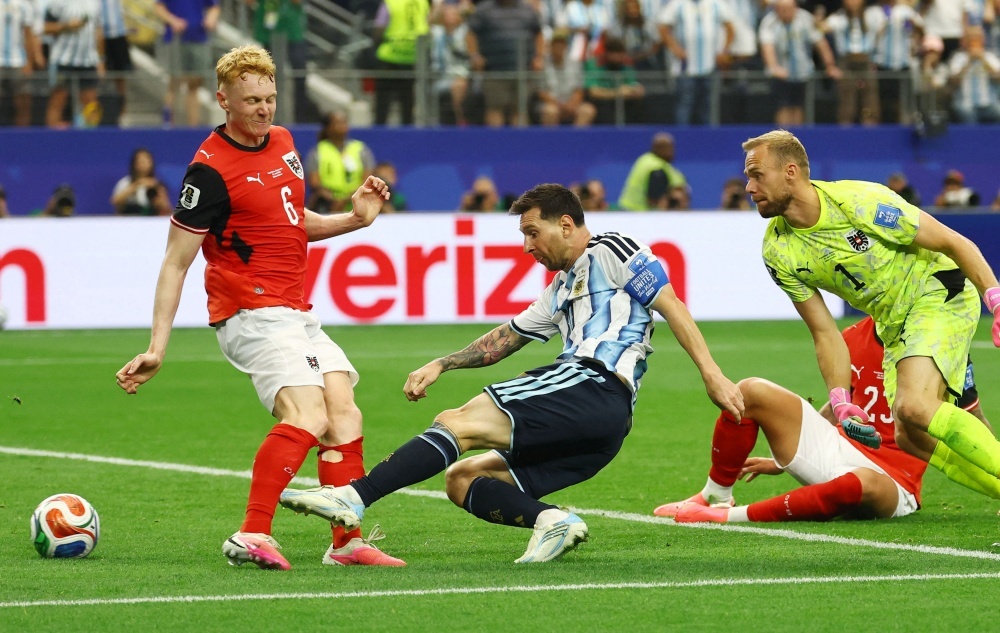 |
Argentina needs to protect Messi if they want to reach the World Cup final. |
Messi's current form with Argentina is similar to Neymar's with Brazil in 2014 in one respect: he's not just the best player. He's the emotional center of the team. When Messi is present, his teammates believe that things can still be turned around. When Messi receives the ball, opponents have to change their defensive approach. When Messi enters the penalty area, the whole game seems to slow down.
That's something that can't be replaced by a backup plan.
Argentina may have many good players. But they don't have a second Messi. And because they don't have a second Messi, they have to protect Messi even more carefully.
Football can be incredibly cruel at times. A team might prepare for years, win convincingly in the group stage, and then lose everything because of an ill-timed injury. With Messi, that risk is even more terrifying. It doesn't need to be a serious injury. Just a minor muscle problem, prolonged fatigue, or even a cold before a knockout match could cost Argentina their biggest advantage.



Therefore, praising Messi after the win against Austria is not enough. What Argentina needs to do after that victory is to stay level-headed.
Give Messi a rest if possible.
Let him recover, observe the game from the bench, and prepare for the period when Argentina truly needs him. Let other players take on more responsibility. A team aiming for the championship cannot expect a 38-year-old to carry the team through every game.
Messi has done so much for Argentina. Now it's Argentina's turn to do the right thing for Messi.
Records are beautiful. But the World Cup shouldn't be a statistical race for Messi. It should be a journey to defend Argentina's dream of winning the championship.
And for that dream to live on until the very end, the most important thing right now isn't for Messi to score more goals. The most important thing is that Messi is still fit enough to enter the biggest matches.
Source: https://znews.vn/argentina-khong-can-vat-kiet-messi-post1662259.html



![[Photo] "Hanoi Lotus Festival" honors the lotus flower that has been associated with Vietnam for thousands of years.](https://vphoto.vietnam.vn/thumb/1200x675/vietnam/resource/IMAGE/2026/06/27/1782516943048_sen-ha-noi-2026-minh-duy-1-jpg.webp)