|
| Speakers in the panel discussion on ASEAN initiatives in conflict prevention. |
A series of groundbreaking events
The concept of "three forums," as mentioned by international observers, essentially refers to three major strategic agendas, taking place simultaneously and consecutively within the overall framework of AFF 2026. Instead of simply holding traditional plenary sessions, Vietnam has created a multi-layered structure, expanding diplomatic space to new dimensions including:
Multichannel Political -Diplomatic Forum Branch: Focusing on the Southeast Asian Political Parties Roundtable (the first of its kind) combined with high-level dialogues between heads of state to shape security and self-reliance architecture.
Future Economic and Technology Forum Branch: Focuses on plenary sessions and roundtables on Artificial Intelligence (AI) governance, financial technology (Fintech) applications, and just energy transition.
The Local and Sub-regional Development Forum branch focuses on the ASEAN Cities Leaders' Meeting (towards Smart Cities) and the Mekong Sub-region Roundtable.
The direct presence of heads of state from four strategically neighboring countries, including Lao Prime Minister Sonexay Siphandone, Cambodian Prime Minister Hun Manet, Thai Prime Minister Anutin Charnvirakul, and Timor-Leste Prime Minister Kay Rala Xanana Gusmão, along with over 600 international delegates, right here in Hanoi, is the clearest evidence of the host country's appeal and ability to unite people.
Vietnam's geopolitical position
From "participation" to "agenda-building," this AFF conference is a strong statement about Vietnam's thought leadership capabilities. ASEAN Secretary-General Kao Kim Hourn, in his assessment of the event, objectively stated:
“The ASEAN Future Forum is an important initiative of Vietnam aimed at promoting ASEAN diplomacy at the regional and global levels. Vietnam is playing a constructive role in reshaping the bloc’s strategic messaging, ensuring ASEAN’s strong voice on global issues.”
 |
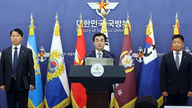
| Delegates attending the first plenary session of the Third ASEAN Future Forum |
This assessment reflects a pivotal shift in Vietnamese diplomacy. Previously, countries in the "latecomer" group (CLMV) typically played a role in implementation or contributed to minor initiatives. However, Vietnam's maintenance and upgrading of the AFF into the region's largest annual dialogue brand (2024-2026) demonstrates that Vietnam has moved up to a new level: a leading and game-setting nation.
The multi-channel Political-Diplomatic Forum branch is a breakthrough with the "Southeast Asian Political Parties Dialogue". The Philippine Ambassador to Vietnam, Francisco Noel R. Fernandez III, and experts from the International Institute for Strategic Studies (IISS) assessed Vietnam's first-ever inclusion of the "Political Parties Dialogue" mechanism within the AFF framework as a groundbreaking diplomatic step.
In the political structure of Southeast Asia, the institutions of the countries are extremely diverse (from multi-party and single-party systems to monarchies). The fact that a country led by the Communist Party like Vietnam can create an open and safe space for dialogue and receive the unanimous support of all major political parties in the region is a diplomatic feat. This demonstrates the absolute political trust that neighboring countries place in Vietnam, viewing Vietnam as a neutral "guarantee" of stability.
The Future Economic and Technology Forum branch demonstrated Vietnam's irreplaceable economic position as a key link in the high-value supply chain. Within the framework of economic discussions, technology applications, and AI governance at the forum, major financial institutions such as the World Bank (WB), the International Monetary Fund (IMF), and the Asian Development Bank (ADB) presented numerous scientific data proving Vietnam's strong economic standing.
Amidst the global economic challenges of 2026, including supply chain restructuring and inflation, the ADB's updated economic report, released on the sidelines of the forum, forecasts Vietnam's GDP growth in 2026 to reach between 6.2% and 6.5%. This growth rate places Vietnam among the leading countries in Southeast Asia, a bright spot in the context of global volatility.
Macroeconomic stability is the foundation upon which Vietnam can confidently host discussions on the "New Development Model" at AFF 2026. Vietnam no longer appears as a country in need of assistance, but rather as an economy sharing successful lessons in resilience against global shocks.
The global economy, including ASEAN countries, has shifted its focus towards high technology and AI governance. At this forum, Vietnam initiated one of the sessions attracting many major global technology corporations: “Applications and Governance of Artificial Intelligence (AI) in ASEAN.” The International Organization for Technology Assessment and Statistics (IOT) indicates that Vietnam is witnessing a strong boom in digital infrastructure.
The interest shown by international investors at the forum demonstrates their view of Vietnam as a new generation "technology hub" for the region. The discussions on AI governance in Hanoi affirm Vietnam's commitment not only to keeping pace with technological trends but also to contributing to building a secure legal framework for the entire bloc.
The Local and Sub-regional Development Forum branch demonstrates Vietnam's strategic balancing role and its central role in connecting the sub-region. Vietnam's role has been that of a "bridge" for reconciliation and conflict prevention. The overarching theme of AFF 2026 is "Shaping a Shared Future Together: Peace, Prosperity, and People-Centered." At the plenary session on "Conflict Prevention," international scholars from the Stockholm International Peace Research Institute (SIPRI) highly praised Vietnam's "Bamboo Diplomacy" approach.
In the context of increasingly fierce strategic competition among major powers in the Asia-Pacific region, Vietnam has demonstrated a unique position: maintaining comprehensive strategic partnerships with all major powers without taking sides, while simultaneously being an active and responsible member of ASEAN. This position allows Vietnam to act as a mediator, promoting multilateral dialogue based on international law (especially UNCLOS 1982).



Scholars from the Economic Research Institute of ASEAN and East Asia (ERIA) believe that, through organizing the Mekong Subregion Roundtable on June 8th and 9th, Vietnam is striving to narrow the development gap within the bloc and integrate the Mekong Subregion into the ASEAN center.
Historically, cooperation in the Mekong Subregion has been fragmented by numerous intertwined mechanisms (Mekong-Lancang, Mekong-US, etc.). By bringing the Mekong issue to the official agenda of the AFF, Vietnam has successfully "ASEANized" the Mekong issue, linking water resource security and sustainable development of the river with the shared destiny of the entire ASEAN Community. This has received strong support from mainland member states such as Laos, Cambodia, and Thailand.
The series of three consecutive forums held in Hanoi during June 2026 is not merely a diplomatic event of protocol. Judging from the actual economic growth figures, the scale of delegates attending, and the statements of world leaders, this is a strong affirmation of Vietnam's new position.
Vietnam in 2026 is positioned as a strategically autonomous nation, a dynamic economy undergoing strong digital transformation, and an indispensable link in the peacebuilding and security-economic structure of the Asia-Pacific region. The success of the ASEAN Future Forum 2026 marked a significant milestone, elevating Vietnam's international prestige to new heights and preparing it for a promising period of future development.
Source: https://huengaynay.vn/the-gioi/asean-vi-the-cua-viet-nam-166622.html




























































![[INFOGRAPHICS] Can Tho implements the Strategy for Ethnic Affairs until 2030, with a vision to 2045](https://vphoto.vietnam.vn/thumb/402x226/vietnam/resource/IMAGE/2026/06/28/1782658308447_1782658217.webp)