




The 2026 FIFA World Cup officially kicked off, marking an unprecedented milestone in global football history.
This is the largest final tournament ever, with the number of participating teams reaching 48 for the first time, and it is also co-hosted by the three North American nations: the United States, Canada, and Mexico.

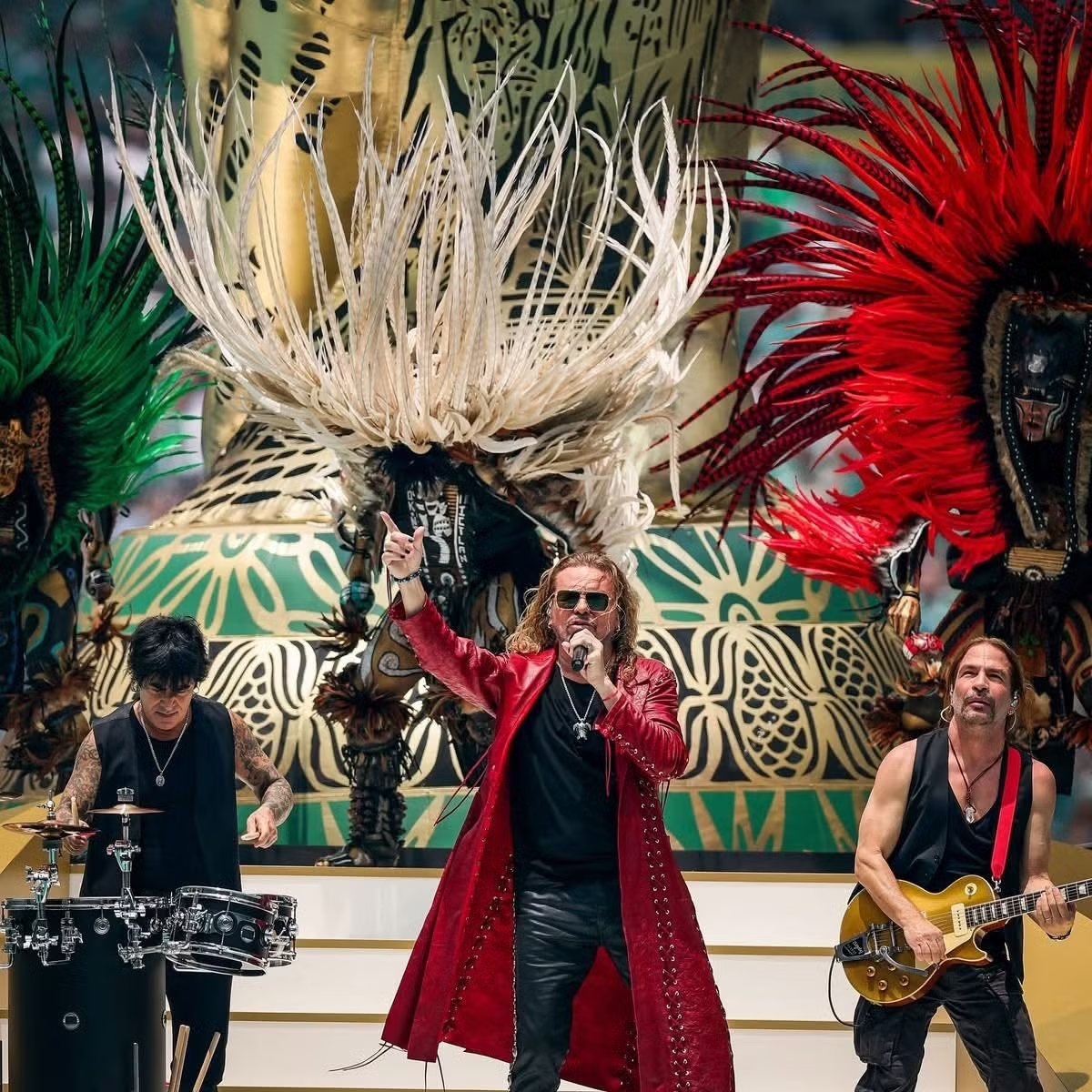

The 2026 World Cup will feature three special mascots, representing unity, national cultural identity, and a passion for football. These symbols will not only excite fans but also connect the three host nations.
FIFA has announced the trio of mascots that will accompany the 2026 World Cup: Maple, a moose representing Canada; Zayu, a leopard representing Mexico; and Clutch, a bald eagle representing the United States. This is the first World Cup to have three distinct mascots.
According to FIFA's website, Maple is a character who combines endless stories and a fiery, unstoppable style.
Nevertheless, Maple's large horns will certainly make opponents think twice before challenging her in the penalty area.
Meanwhile, Clutch is presented as a character like all great midfielders, capable of uniting people wherever they are. This description has led many to draw parallels with former football legend Roy Keane.
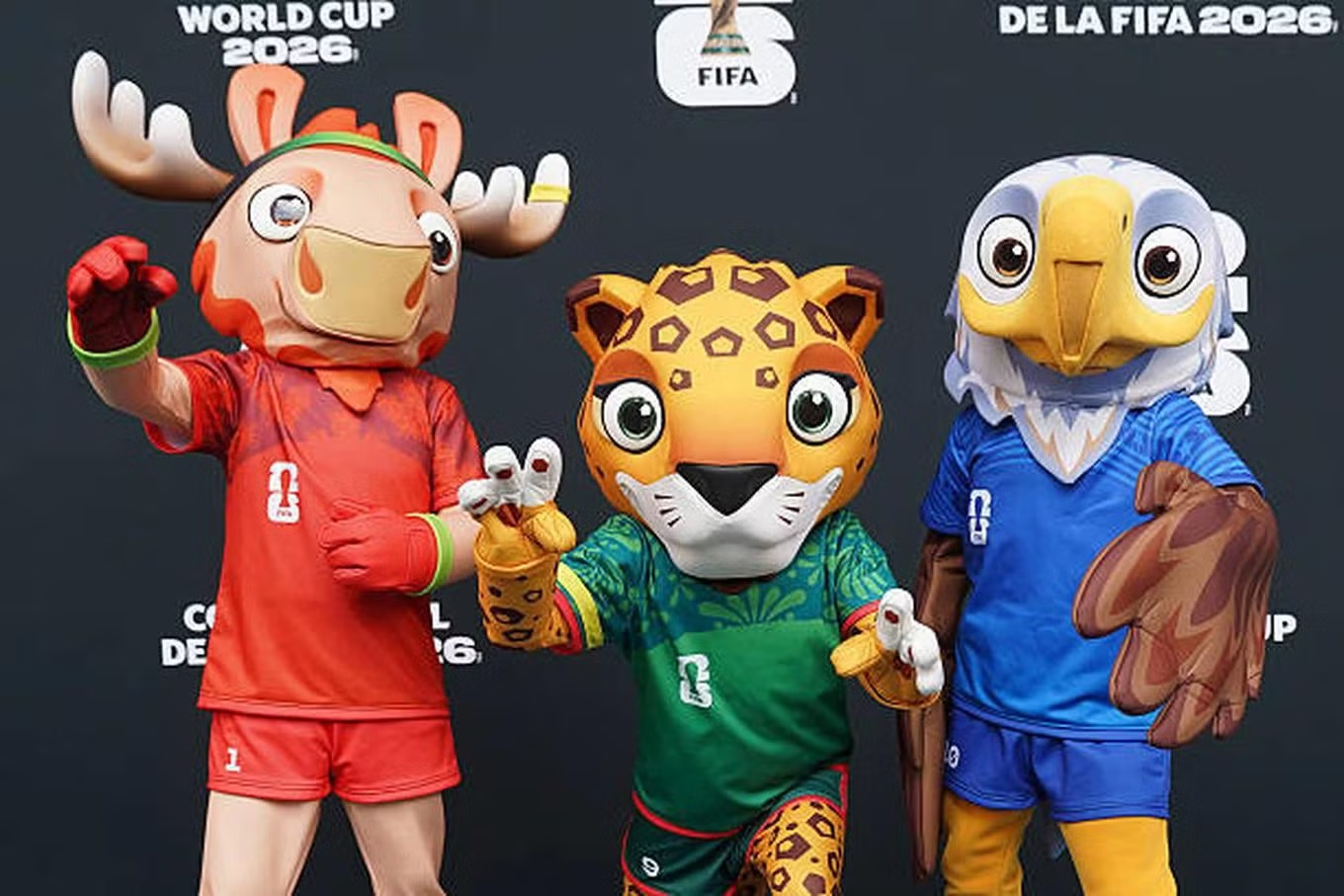



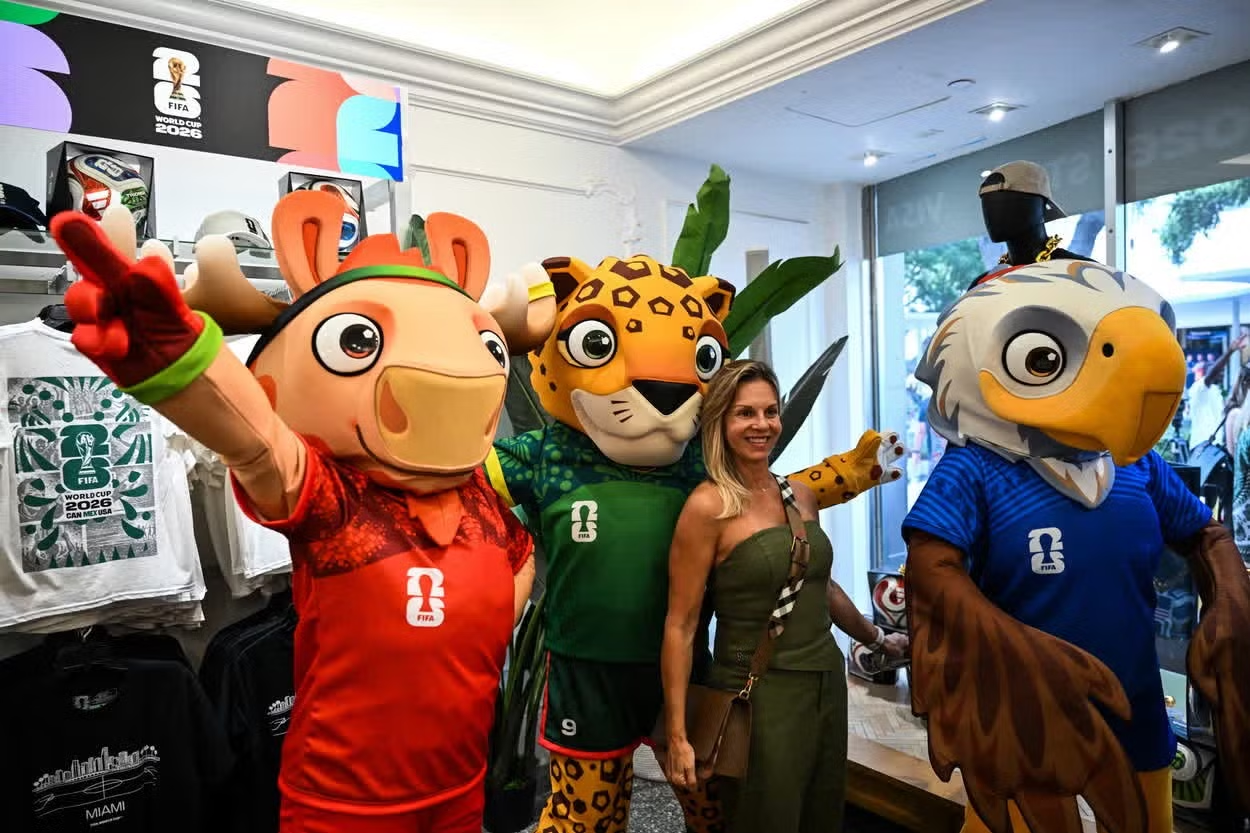
According to FIFA, the trio of mascots were carefully developed to reflect the unique culture, heritage, and spirit of each nation, while collectively symbolizing unity, diversity, and a shared passion for the beautiful game .
FIFA also announced that Maple, Zayu, and Clutch will become the first playable mascots of a FIFA tournament in the FIFA Heroes video game, a new title officially licensed by FIFA.
After 60 years, The Guardian suggests that the World Cup mascot has lost some of the appeal it once had, which peaked in the 1970s and 1980s.
At the 2026 World Cup, fans will once again witness the familiar formula that has been applied for the past 32 years: anthropomorphic animal mascots with a strong commercial focus.
Meanwhile, Maple from Canada, Zayu the leopard from Mexico, and Clutch the bald eagle from the United States received mixed reviews, with some even criticizing them as being nothing more than designs removed from an animated sequel.
Prior to the official tournament, Mexico also sparked controversy over an unofficial mascot. The country used the image of the axolotl – an amphibian endemic to Mexico – to promote the tournament. However, this species faces a serious threat of extinction due to urbanization and environmental pollution.
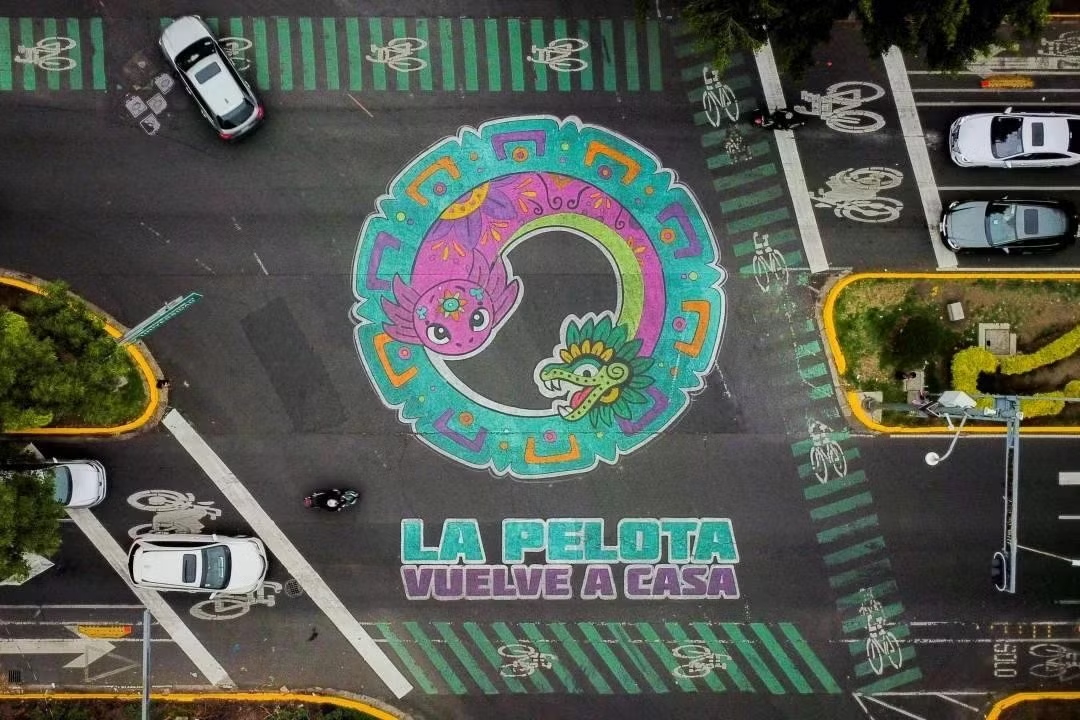
According to scientists , they have not recorded any wild axolotls in the past two years. Environmental experts argue that the promotion of this animal's image is overshadowing the alarming state of conservation.



Source: https://tienphong.vn/ba-linh-vat-world-cup-2026-bi-che-post1850807.tpo
![[Photo] "Hanoi Lotus Festival" honors the lotus flower that has been associated with Vietnam for thousands of years.](https://vphoto.vietnam.vn/thumb/1200x675/vietnam/resource/IMAGE/2026/06/27/1782516943048_sen-ha-noi-2026-minh-duy-1-jpg.webp)