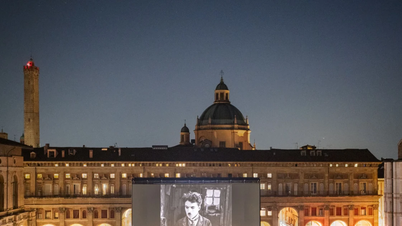
On June 20th, Bologna transformed into an open-air film museum as a nine-day festival dedicated to restored, rediscovered , and forgotten films – including those made more than a century ago – officially opened in the northern Italian city.
Celebrating its 40th anniversary, Il Cinema Ritrovato has evolved into an influential international cinematic gathering, attracting a new generation of film lovers.
Last year's festival, which included a revival of Charlie Chaplin's 1925 film "The Gold Rush," attracted a record 140,000 people. They flocked to the Renaissance-era Piazza Maggiore and other locations in Bologna's Old Town to enjoy classic films.
Gian Luca Farinelli, co-founder of the festival and currently one of the four executives, compared the experience to “a stroll through the ruins of the past.”
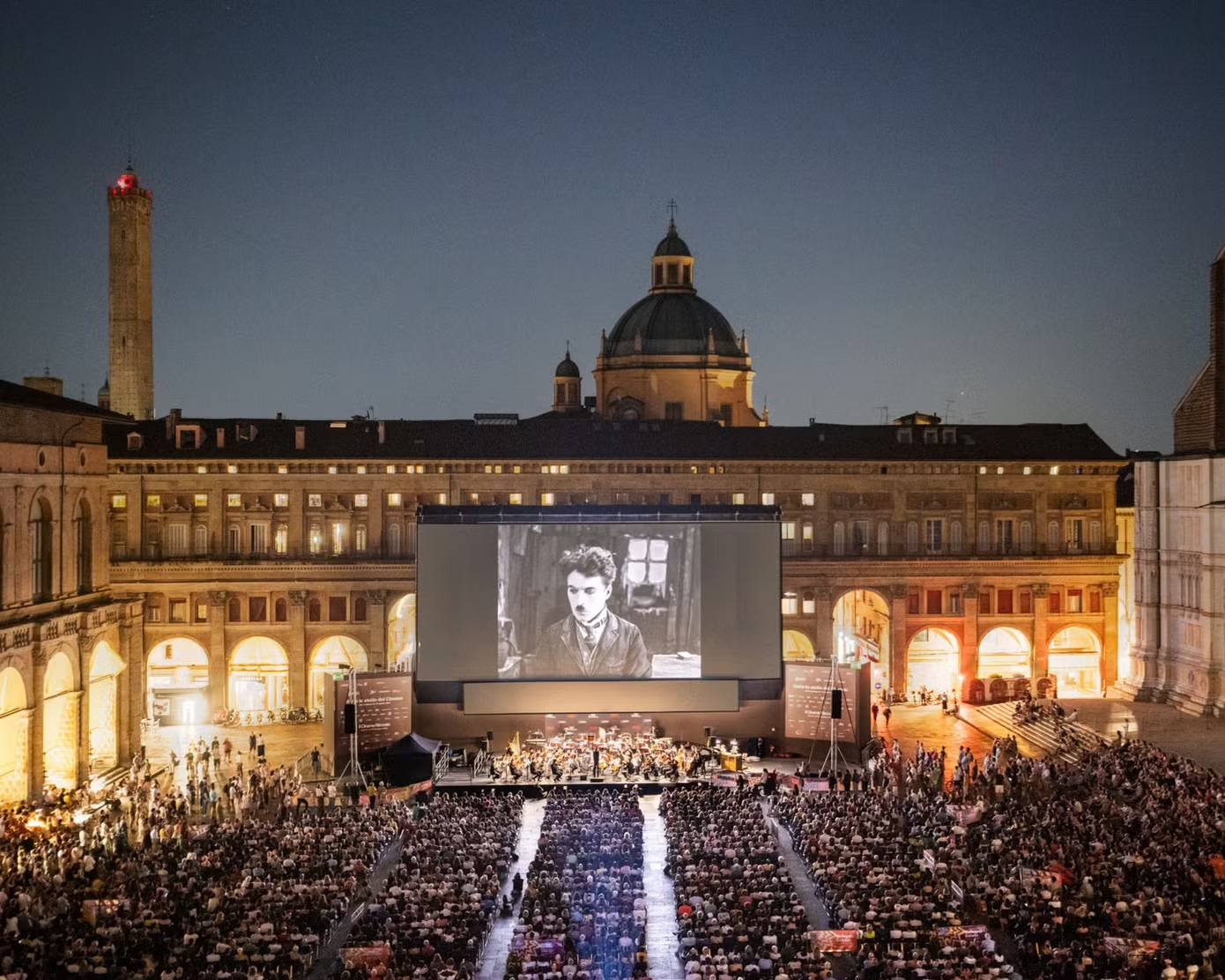
The organizers expect a similar number of attendees this year. However, the festival is not always on this scale. Mr. Farinelli conceived the idea for the festival at the age of 19 with his friends in the film club, after being introduced to the Cineteca di Bologna. This is a film library established in 1963, which today houses a film restoration laboratory considered one of the world's leading facilities.
The regular presence of many international film directors such as Martin Scorsese, Francis Ford Coppola, Wes Anderson, and Italian director Alice Rohrwacher also contributes to raising the festival's prestige.



When exploring Cineteca's archives, they "began discovering a lot of things we hadn't known before," Farinelli said. "We wanted to find an audience to showcase these gems."
They found that audience just before Christmas 1986, when the first festival, in collaboration with another film festival, was held at Cineteca's Lumière theater.
Enno Patalas, a German film historian and pioneer in film restoration, brought two cinematic masterpieces to the event: “Metropolis” (1927) and “M” (1931), both directed by Fritz Lang.
“From the beginning, we recognized this as a specialized field,” said Farinelli, who has been director of Cineteca since 2000. “We also quickly realized there was a gap in Italy – almost no one was really specializing in film restoration. That’s why we established the laboratory at Cineteca.”
For classic movie enthusiasts
Despite its steady growth each year, Il Cinema Ritrovato remained primarily for classic film enthusiasts until 1995, when the event was moved to the summer. “This helped our work gain wider recognition,” said Farinelli.
In recent years, attendance has skyrocketed. “Another remarkable thing is that we’ve seen a surge in young audiences,” said Farinelli. “For them, cinema of the past is a surprising discovery. It’s true they’re familiar with streaming platforms and countless TV series, but when they come to Bologna, they realize cinema has a very long history. They also rediscover the joy of watching films together in the square, with many others.”
Over 500 films were screened at the festival celebrating its 40th anniversary, ranging from silent films and highlights of 1980s Hollywood to restored movies.



“This year, we’ll be showcasing many films that have hardly ever been mentioned, so it will feel like seeing them for the first time,” said Farinelli. “When you organize a film festival, you can only hope that it will continue to grow.”
But what's truly unique about Il Cinema Ritrovato is that the festival has grown while still retaining its original principles – that is, to delve into cinema, showcasing not just the films themselves, but also the connections, richness, and contradictions within cinematic history.”
Source: https://tienphong.vn/lien-hoan-phim-bi-lang-quen-oy-post1854748.tpo



![[Photo] "Hanoi Lotus Festival" honors the lotus flower that has been associated with Vietnam for thousands of years.](https://vphoto.vietnam.vn/thumb/1200x675/vietnam/resource/IMAGE/2026/06/27/1782516943048_sen-ha-noi-2026-minh-duy-1-jpg.webp)