

Training linked to practice.
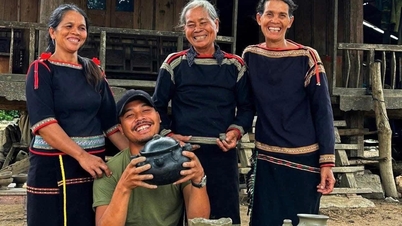
In early October, a vocational training course on crop cultivation and animal husbandry in Dai Son commune was in full swing. Thirty trainees from the Nung, Cao Lan, and Tay ethnic groups attentively watched as instructors from the Phuong Lan Vocational Training Center guided them on the techniques of using pesticides and preventing diseases in livestock. Ms. Hoang Thi Can, a Nung woman from Moi village, shared: “Previously, due to a lack of knowledge, the yield of my family's two plots of rice and other crops was unstable. After the course, I learned how to mix pesticides correctly according to the ratio for each growth stage, and how to proactively prevent diseases in chickens and pigs.”
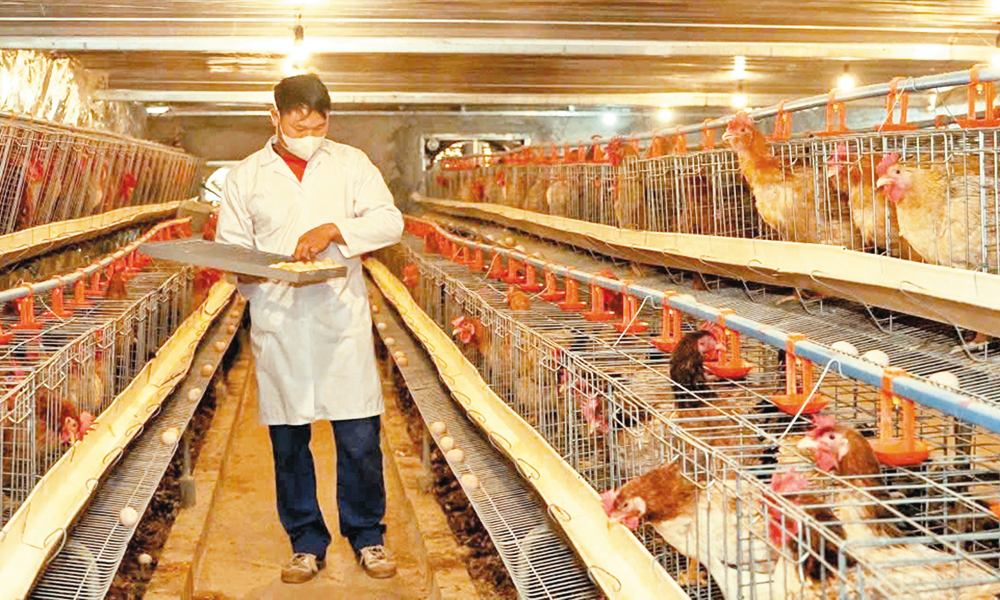 |
Mr. Vi Van Gioi, from Van Son commune, has a stable income thanks to his model of raising specialty chickens. |
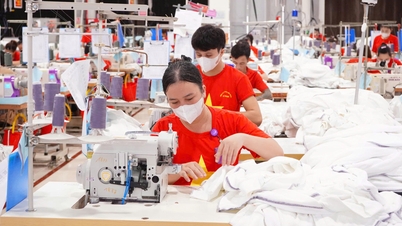
Not only in Dai Son, but also in many highland communes such as Son Hai, Duong Huu, and Dong Ky, vocational training classes in farming, veterinary medicine, sewing, and agricultural machinery repair are regularly offered. After completing the program, trainees can work at cooperatives, businesses, or immediately apply their knowledge to develop their family's economy .
According to the Department of Ethnic Minorities and Religions, during the 2021-2025 period, the total central and local government budget allocated to Project 1 – Addressing land shortages for housing, production, and clean water, and supporting vocational retraining – reached 149 billion VND. Vocational training alone has helped over 3,400 households receive support for learning new skills and developing their livelihoods. As a result, the poverty rate among ethnic minorities decreased by an average of 2.4% per year, from 11.93% in 2021 to 4.65% in 2024. In particularly disadvantaged communes, the reduction reached 4.2% per year, significantly contributing to the realization of the goal of multidimensional and sustainable poverty reduction.
"Hands-on guidance" to create sustainable livelihoods.
According to statistics, the province currently has over 327,000 ethnic minority people, accounting for nearly 9% of the population, concentrated in 32 communes in ethnic minority and mountainous areas. Director of the Department of Ethnic Minorities and Religion, Dao Duy Trong, affirmed: “We always prioritize vocational training that is linked to practical needs. We prioritize skills that can be applied immediately on-site, such as farming, livestock breeding, household repairs, garment making, and agricultural product processing.” Classes are conducted right in the villages, saving people time and travel. In addition to basic theoretical lessons, practical training directly on crops and livestock is conducted in a hands-on, easy-to-understand manner. In An Lac commune, where 81.5% of the population are ethnic minorities, the local government holds public meetings to select the right participants, with community supervision. Meanwhile, in Tay Yen Tu commune, after consulting with the local people, the authorities chose agricultural machinery repair as the profession for the training course, and as a result, the classes are always well-attended.
Besides participating in free vocational training courses, people are also "empowered" by preferential credit policies and support in promoting their products at fairs and exhibitions. Thanks to this, many households have boldly changed their mindset and built new economic models oriented towards commodity production, generating profits of 250-300 million VND per year. “Before, I thought I would have to leave my hometown to find a new job in the city or industrial zone, hoping to escape poverty. But since receiving proper vocational training, I have built a farm raising six-toed chickens – a specialty of the ethnic minority people. After nearly 10 years of development, Van Son commune has now established a cooperative for raising specialty chickens; the six-toed chicken eggs have a brand name and are sold successfully in the market,” shared Mr. Vi Van Gioi.
Vocational training is not just a social welfare policy; it has become a key to unlocking development opportunities for thousands of households in mountainous areas. From simple classes in villages, knowledge has been sown, empowering the people to change their production mindset, increase their income, and contribute to achieving the goal of "leaving no one behind" in the journey of building new rural areas in ethnic minority regions.
Source: https://baobacninhtv.vn/bac-ninh-trao-sinh-ke-cho-dong-bao-dan-toc-thieu-so-postid429288.bbg




![[Photo] “Red Journey” 2026: Vietnamese Youth Continue Building the Bridge of Friendship Between Vietnam and China](https://vphoto.vietnam.vn/thumb/1200x675/vietnam/resource/IMAGE/2026/04/20/1776629730866_4055880775670638308-9618-4200-jpg.webp)








































































Comment (0)