

One day, cultural spaces will gradually narrow.

The cultural identity of ethnic minorities in Hanoi is facing significant pressure. Without fundamental solutions, the risk of its erosion will become increasingly apparent.
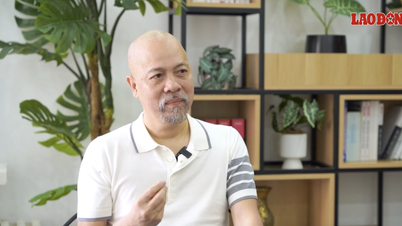
According to Dr. Nguyen Anh Cuong (Head of the Community Tourism Management Department, Faculty of Tourism Management and International Languages, Hanoi University of Culture), the worrying aspect is not only the change in lifestyle, but more importantly, the shrinking environment for practicing culture. The clearest manifestation of this is the decreasing use of the spoken and written languages of ethnic minorities.
In school, children primarily learn and communicate in the standard Vietnamese language. As they grow older, the scope of using their mother tongue in daily life continues to shrink. Even within families, the gradual shift of grandparents, parents, and children to speaking the standard Vietnamese language causes the ethnic language to lose its place.
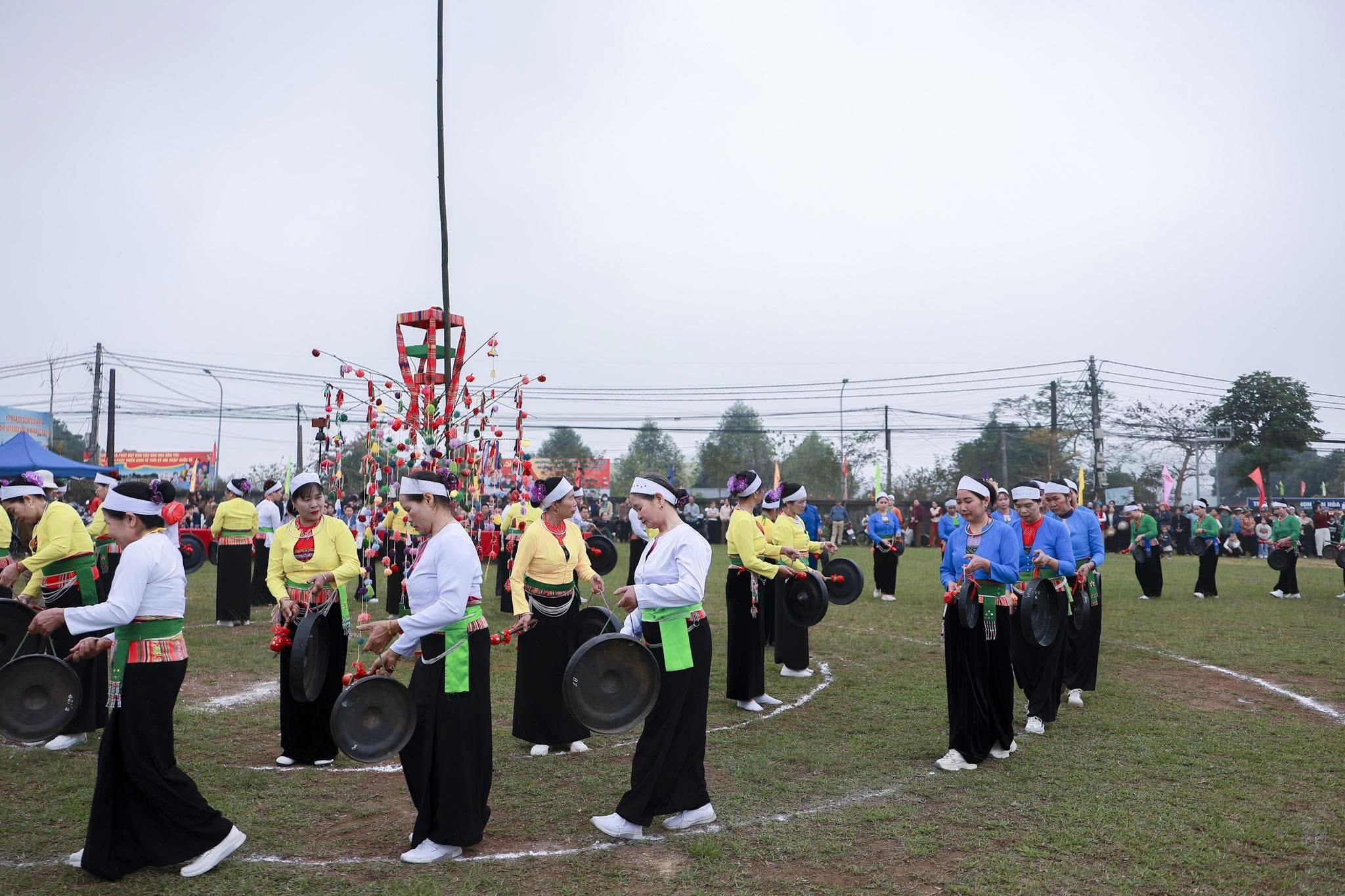
According to Dr. Nguyen Anh Cuong, this is a worrying development because language is the most concentrated expression of each ethnic group's cultural identity. When a language is no longer used regularly, the transmission of culture between generations is also interrupted. This situation is not unique to Hanoi, but in the context of the capital's rapid integration, strong interaction, and ever-changing modern life, the pressure on ethnic minority cultures is becoming increasingly evident.
Not only languages, but many traditional crafts are also being eroded by market pressures. Dr. Nguyen Anh Cuong cited weaving – a craft associated with many ethnic minority communities – to illustrate a very specific difficulty: Handicraft products require a lot of effort and high costs to produce, but when brought to market, they have to compete with cheap industrial goods. When the market is unstable, people find it difficult to make a living from the craft, and traditional crafts are difficult to preserve in the long term.
At the same time, some beautiful customs are also simplified or altered as living environments become more intertwined and spaces for cultural practice become increasingly limited.
To ensure longevity, culture must be allowed to thrive.

From a research perspective, Dr. Nguyen Anh Cuong argues that preserving the culture of ethnic minorities cannot be understood merely as preserving or restoring it, but more importantly, it means creating conditions for those values to continue to be present in contemporary life.
Regarding language, it is necessary to expand the teaching and learning of ethnic minority languages and scripts in areas with a large number of ethnic minority students; at the same time, create more opportunities for their use through extracurricular activities, clubs, and community events. Preserving the mother tongue cannot rely solely on schools, but must begin in the family, through daily communication between generations. In areas with a large ethnic minority population, if local officials understand and use the language in communication, it is a way of showing respect and contributing to maintaining the vitality of that language.
According to Dr. Nguyen Anh Cuong, the key to traditional crafts is solving the problem of product distribution. Only when people can make a living from the craft, there is a market for their products, and there are mechanisms to support brand building and sales connections, will the craft have a chance to survive sustainably. When livelihoods are linked to the craft, the cultural values embodied in each product are also preserved naturally.
Therefore, he argued that developing community-based tourism linked to ethnic culture is a direction that needs to be emphasized, because when people directly perform, introduce, and transmit their cultural values, they are also the most effective subjects in preserving them.
From a state management perspective, Bui Duy Quang, Deputy Director of the Hanoi Department of Ethnic Minorities and Religions, stated that in the long term, conservation efforts cannot stop at simply "preserving," but must aim for "sustainable preservation" through in-depth and continuous solutions, instead of just following trends.

According to Mr. Bui Duy Quang, in the coming time, the Hanoi Department of Ethnic Minorities and Religions will promote digital transformation, build databases, and digitize the cultural values of ethnic minorities for long-term storage and preservation; while linking preservation with livelihood development for ethnic minorities. Currently, the unit is advising the Hanoi People's Committee on the development of a Project on preserving the culture of ethnic minorities in conjunction with tourism development for the period 2025-2030, expected to be submitted in August. The goal is for culture to not only remain in memory, but to become a resource contributing to economic development and increasing people's income.
Therefore, preserving the culture of ethnic minorities cannot simply stop at preservation, but must create a "living space" within families, communities, and livelihoods. Only when culture is still spoken, practiced, and nurtured in daily life will its identity not fade into memory, but truly become a sustainable resource for the development of the capital city.
Source: https://hanoimoi.vn/tao-dat-song-cho-van-hoa-dan-toc-thieu-so-745788.html





![[Photo] National Assembly Chairman Tran Thanh Man successfully concludes his participation in IPU-152](https://vphoto.vietnam.vn/thumb/1200x675/vietnam/resource/IMAGE/2026/04/18/1776502638199_vna-potal-chu-tich-quoc-hoi-ket-thuc-tot-dep-chuong-trinh-tham-du-ipu-152-8709975-jpg.webp)


![[Podcast] News April 18th: Prosecution recommended for fake milk production ring that profited over 39.5 billion VND.](https://vphoto.vietnam.vn/thumb/402x226/vietnam/resource/IMAGE/2026/04/18/1776529373899_hnm-1cdn-vn-2026-04-18-7f25856c3e-_suagia-1776297813538-1776319789174-1776392501457-17763925017911244622126.jpeg)






































































Comment (0)