Editor's Note: Ho Chi Minh City (HCMC) is facing a historic turning point. The Politburo 's issuance of the Resolution on Building and Developing HCMC in the New Era (Resolution 09-NQ/TW, issued on May 19, 2026) not only affirms its mission as the economic locomotive of the country, but also provides direction for a legal framework: a special urban law for HCMC.
Practical experience clearly shows that structural bottlenecks and a restrictive institutional framework have hampered Ho Chi Minh City's growth potential. To realize its aspiration of becoming a global city on par with the world by 2075, the central government has given Ho Chi Minh City the "sword" of thorough decentralization and delegation of power, a controlled testing mechanism (sandbox), and new growth poles of international stature.
Institutional reforms pave the way, implementation capabilities follow. The Saigon Giai Phong newspaper is launching a series of four articles: "Ho Chi Minh City in the New Era: Breakthrough Institutions, Substantive Actions," aiming to directly dissect bottlenecks, analyze core growth engines, and affirm the determination to act of this special city.
Resolution 09-NQ/TW of the Politburo was born from the aspirations for progress and the pressing realities of Ho Chi Minh City. Taking the satisfaction, well-being, and happiness of the people as the measure of leadership effectiveness, Resolution 09-NQ/TW has received high consensus from all sectors of society, creating momentum for Ho Chi Minh City to break through and realize its strategic goals.
Unblocking bottlenecks
Following a heavy rain shower in the early afternoon of June, numerous major roads in Ho Chi Minh City were flooded, causing severe traffic congestion. On National Highway 13, the deteriorated drainage system resulted in deep flooding, with cars and motorbikes crammed together. Not only during heavy rains, but National Highway 13 (the section from Binh Phuoc intersection to Binh Trieu bridge) and Dinh Bo Linh and Xo Viet Nghe Tinh roads (from Binh Trieu bridge to Dien Bien Phu road) frequently experience traffic jams during morning and afternoon rush hours.
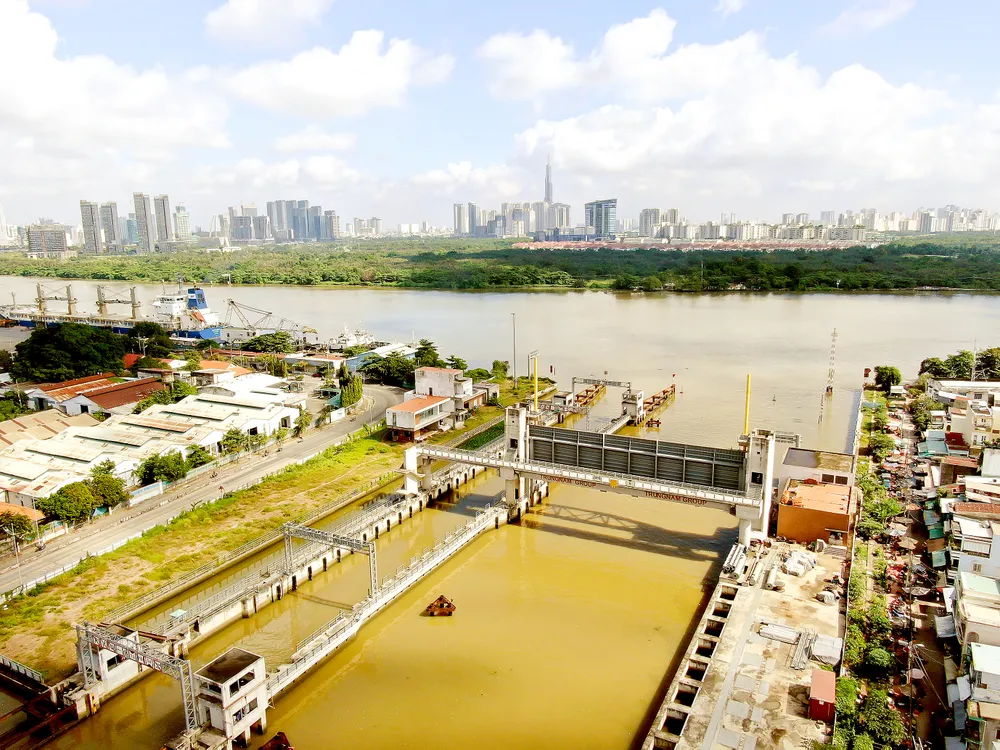
Flooding and traffic congestion are two of the four persistent problems facing Ho Chi Minh City that General Secretary and President To Lam pointed out and demanded be addressed. The city has focused its efforts on resolving these issues, but many projects remain unfinished due to obstacles related to land clearance and lengthy investment procedures, indicating increasing development pressure on the city, while the current institutional framework has revealed certain limitations. Experts believe that the biggest bottleneck for Ho Chi Minh City today lies not in resources or development aspirations, but in the self-determination and flexibility of its urban governance apparatus.
Dr. Do Thanh Trung, lecturer at the Faculty of Administrative and State Law (Ho Chi Minh City University of Law), believes that issues related to infrastructure, planning, urban finance, population management, innovation, international competitiveness, and regional development coordination require a more dynamic, flexible, and effective city government in the new era.
According to the Chairman of the Ho Chi Minh City People's Committee, Nguyen Van Duoc, Ho Chi Minh City has always received great support, guidance, and attention from the Central Government. In particular, special mechanisms such as Resolution 98, Resolution 260, Resolution 188… have created an important "launching pad" for the city's development.
However, due to their pilot nature and time-limited duration, these mechanisms have not yet created a stable, long-term policy foundation to reassure the business community to invest and expand their operations. The Politburo's issuance of Resolution No. 09-NQ/TW opens up a great opportunity for Ho Chi Minh City to make a stronger breakthrough, aiming for double-digit growth and rapid, sustainable development.
In addition, the Central Government has authorized the drafting of a Law on Special Urban Areas. The Chairman of the People's Committee of Ho Chi Minh City stated that the legalization of special mechanisms and policies will create a stable, transparent, and long-term legal framework; thereby strengthening confidence and encouraging businesses to expand investment, contributing to the rapid and sustainable development goals of Ho Chi Minh City as well as the whole country.

Speaking at the conference on studying, understanding, and implementing Resolution 09-NQ/TW of the Politburo on building and developing Ho Chi Minh City in the new era, Ho Chi Minh City Party Secretary Tran Luu Quang stated that the Central Committee has entrusted Ho Chi Minh City with a great responsibility, and Ho Chi Minh City accepts this responsibility to build and develop the city in the new era with the motto "Ho Chi Minh City for the whole country, the whole country for Ho Chi Minh City". Therefore, every cadre and Party member must fully understand their responsibility, transform the spirit of the resolution into concrete actions, and put the resolution into practice.
Ho Chi Minh City must take the lead, set an example, and be a pioneer in institution building, development quality, and governance standards; continuing to maintain its role as the engine of growth, a key innovation hub, and an important center for integration for the whole country.
A measure of people's quality of life.
Resolution 09-NQ/TW of the Politburo sets long-term goals and visions for the development of Ho Chi Minh City. Specifically, aiming for 2075, Ho Chi Minh City will be a global, smart, modern, comprehensively developed city, on par with developed cities worldwide, with green and sustainable growth, a high quality of life, and good adaptation to climate change. The resolution also clearly defines specific targets for each stage. These include a minimum per capita GRDP of US$75,000 by 2045 and a minimum per capita GRDP of US$100,000 by 2075…
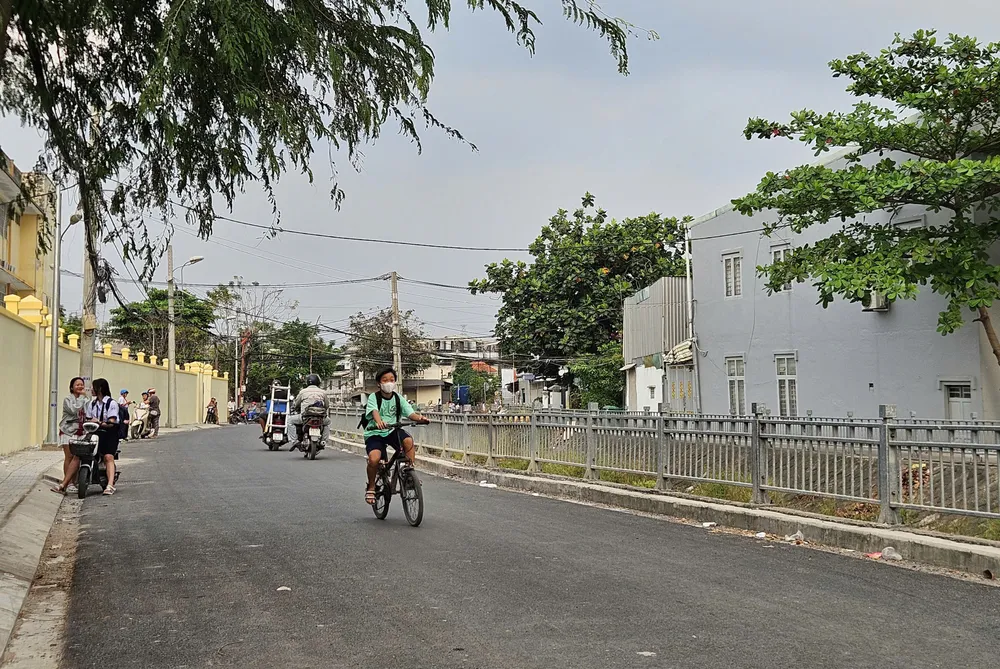
According to experts, behind those figures lies the need for a comprehensive transformation of the urban development model from extensive to intensive growth, based on science and technology, innovation, the digital economy, and quality governance. More importantly, growth must go hand in hand with the ability to address essential needs of the population, such as more convenient transportation, a better living environment, more social housing, and more efficient public services.
According to Dr. Tran Du Lich, Ho Chi Minh City's double-digit growth target is achievable if the city is granted full autonomy in investment, finance, and urban governance. The most important thing is not to "ask for more mechanisms," but to build a sufficiently dynamic governance model to mobilize and allocate resources effectively.
Resolution 09-NQ/TW also sets out the task of improving management capacity, evaluating officials through work results, and effectively utilizing the workforce; building a salary, remuneration, and incentive system for talented individuals that is appropriate to the city's development conditions. From another perspective, Mr. Dinh Hong Ky, Vice Chairman of the Ho Chi Minh City Business Association, believes that this is an opportunity to design a new governance model for a "megacity" with global competitiveness. Once appropriate mechanisms are in place, the important thing is to transform those mechanisms into driving forces for development and practical value.
From the perspective of local authorities, businesses, and experts, the biggest common ground is the expectation of an effective, dynamic, and proactive urban governance system that ultimately prioritizes the quality of life for its citizens. When the "Party's will" meets the "people's will" in the aspiration for development and the demand for innovation, it is also the moment when Ho Chi Minh City gains further impetus to enter a new phase of development, with a larger economic scale and an increasingly better quality of life for its people.
* Mr. NGUYEN THE DUY, Vice Chairman of the Board of Directors, Deputy General Director of Becamex Industrial Investment and Development Group:
Grant appropriate autonomy mechanisms to businesses.
Resolution 09-NQ/TW outlines many major directions and objectives. It emphasizes the economic role of the State and the need to improve efficiency in key sectors. State-owned enterprises are not only business entities but also tools for the State to develop common areas for the locality, such as business, economy, infrastructure, logistics, industrial parks, healthcare, education, and key projects...

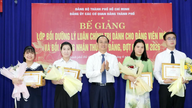
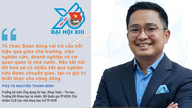
Therefore, the city needs to effectively leverage the role of strategic state-owned enterprises, entrusting them with the pioneering mission of undertaking core areas. To achieve this, enterprises need to be granted appropriate autonomy mechanisms, coupled with accountability, capital preservation, and transparent post-audit mechanisms. If this is achieved, enterprises can mobilize additional social resources for large projects, reduce budgetary pressure, and create more value for the community.
* Dr. Tran Hai Linh, Member of the Central Committee of the Vietnam Fatherland Front, President of the Vietnam-Korea Business and Investment Association (VKBIA):
A breakthrough in policies to attract and utilize talent, including overseas Vietnamese.
I expect that the concretization of Resolution 09-NQ/TW will create stronger breakthroughs in policies to attract and utilize talent, especially overseas Vietnamese resources. To achieve the goals and tasks set out in the resolution, the city needs to build a mechanism that is flexible and internationally competitive enough to attract overseas Vietnamese experts, intellectuals, and entrepreneurs in strategic fields such as high technology, artificial intelligence, international finance, digital transformation, green economy, and cultural industries.
The city needs to create "development spaces" where overseas Vietnamese can both invest and directly participate in research, technology transfer, human resource training, and building an innovation ecosystem.
Source: https://www.sggp.org.vn/bai-1-co-hoi-lon-de-but-pha-post856489.html
![[Image] Ho Chi Minh City: Ma Lang area, Chicken-Rice Market about to change its appearance](https://vphoto.vietnam.vn/thumb/1200x675/vietnam/resource/IMAGE/2026/06/25/1782377698627_ndo_br_m1-jpg.webp)



![[Photo] General Secretary and President To Lam receives Palestinian Ambassador Saadi Salama](https://vphoto.vietnam.vn/thumb/1200x675/vietnam/resource/IMAGE/2026/06/25/1782365384740_a1-bnd-9423-8322-jpg.webp)
![[Image] Schools organize meetings and introduce teaching models to students admitted to grade 10.](https://vphoto.vietnam.vn/thumb/1200x675/vietnam/resource/IMAGE/2026/06/25/1782368077271_ndo_br_z7970052192242-1ec8daeb77a6eed1a4e9f58c564ddd3e-jpg.webp)