

Representatives from the District 1 People's Committee stated that the district is developing a plan for night-time economic development, oriented towards integrated ecological urban development. This aims to meet the diverse needs of tourists, create business opportunities for enterprises, generate jobs, increase budget revenue, and stimulate tourism. However, the specific solutions for achieving these goals remain unclear. The district proposed several issues, such as requiring the city to allow free parking on roads designated for night-time economic development; and suggesting that the city allow short-term use of prime state-owned vacant land for parking lots, food courts, etc.
Representatives from the Department of Tourism stated that District 1 is the leading source of revenue in Ho Chi Minh City, with tourism contributing significantly. To develop the night-time economy, relevant authorities need to coordinate and address several issues. For example, the night-time economy should be oriented towards rivers and inland waterways; many businesses want to exploit these opportunities, so the Department of Transport and Public Works needs to coordinate and provide guidance, increasing connections between river bus and electric vehicle routes. The police force needs to strengthen coordination to ensure security and order. Some museums and historical sites should also open for night-time activities...
During the meeting, the leaders of the Ho Chi Minh City People's Committee frankly pointed out several aspects of the project that require deeper consideration. City leaders argued that the night-time economy in District 1 needs a modern business model and approach, not just "setting up roadside drinking tables." They stated that "drinking beer haphazardly on the sidewalks of District 1 is unacceptable, tarnishing the city's image; that's not the night-time economy." District 1's location is very special. Tourists visiting Ho Chi Minh City primarily come to District 1 and utilize all services there, from food and accommodation to sightseeing. Therefore, if District 1 is disorganized, it will negatively impact the city's image.
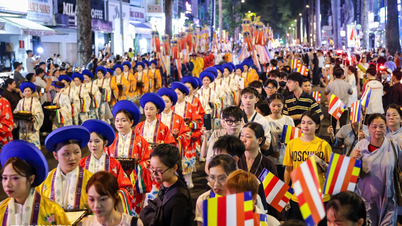
City leaders suggested that when developing the plan, the idea of nighttime economy being limited to street food and drinking should be abandoned. The nighttime economy must be modern, create a cultural space, and reflect the city's identity. While the model includes food and drink, the approach must be intelligent, avoiding spontaneous and conventional methods. Therefore, when developing the nighttime economy plan, it is necessary to invite cultural and economic experts, businesses, and relevant departments and agencies to participate from the outset to jointly address obstacles and build a model that truly reflects the unique character of Ho Chi Minh City in particular and Vietnam in general.
That's a widely supported view. In reality, over the past period, although some localities have experimented with night-time economy, pedestrian streets, food streets, etc., the results haven't met expectations. If the "night-time economy" is merely about eating and drinking at night, it's not only messy and chaotic, but the revenue isn't substantial and the number of beneficiaries is limited. To make the night-time economy both effective and spread cultural and spiritual values, a well-structured plan is needed, setting criteria and targets, identifying target customer groups, establishing regulations, attracting investors, and encouraging organizations and individuals in the area to contribute ideas. Only then can the night-time economy truly develop.















































































Comment (0)