

Always "hot" for over 30 years
"Extremely high," "almost reaching the absolute limit," "over 29 points/3 subjects," "over 9 points/subject"... these are phrases frequently used by many newspapers when reporting on annual admissions for certain majors with high cutoff scores, including journalism. For example, in 2024, the University of Social Sciences and Humanities (USSH), Vietnam National University, Hanoi, had 3 majors (out of 31) with cutoff scores in the C00 subject group above 29 points (on a 30-point scale), including journalism. In 2022, journalism was also one of the 4 majors with cutoff scores in the C00 subject group that nearly reached the "ceiling" of the university (29.9 points/30).
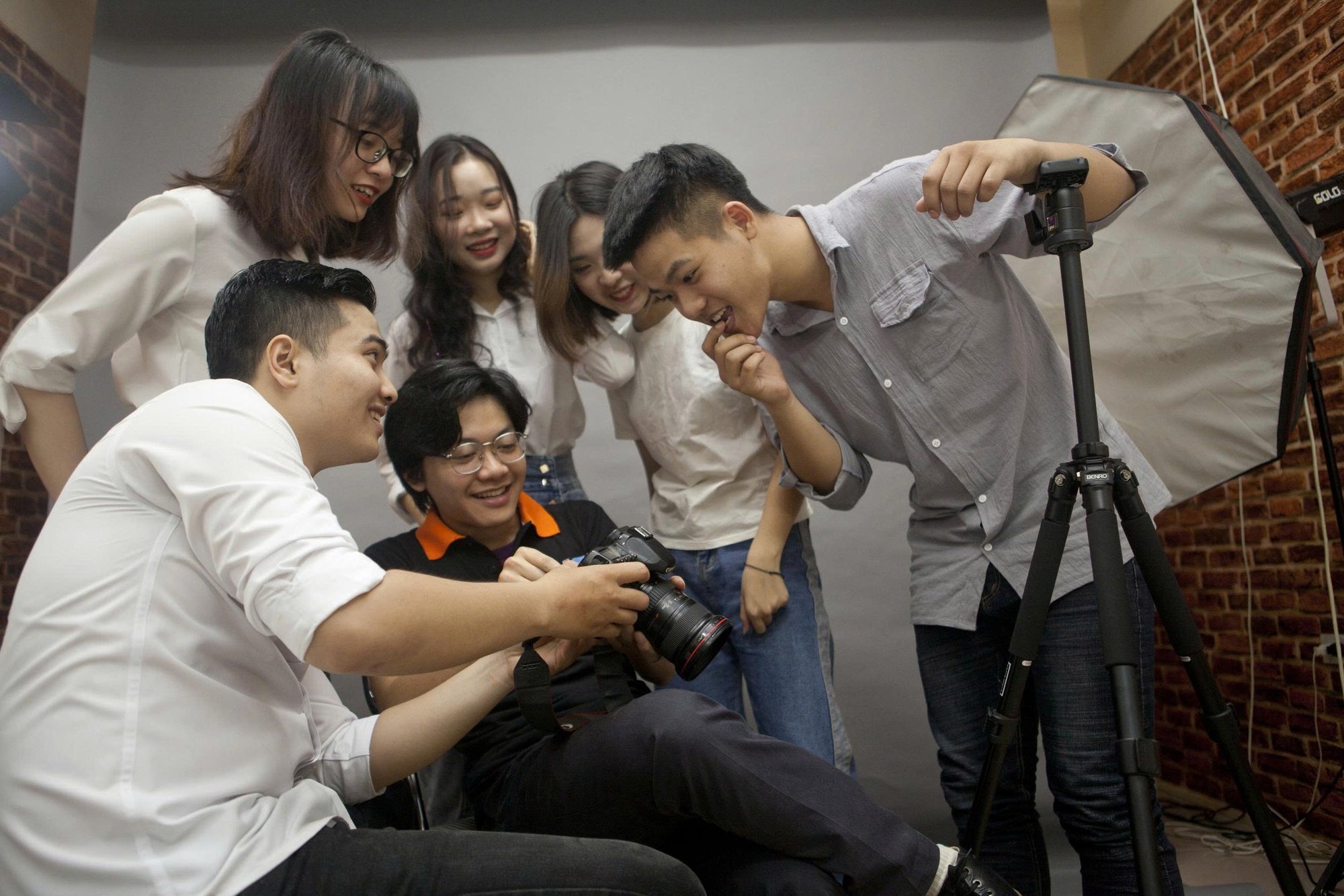
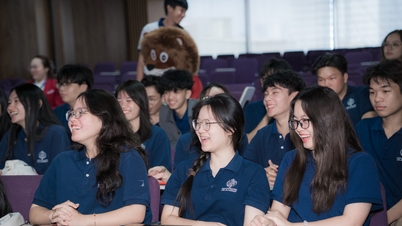
Students of the SJC Institute of Journalism and Communication, Faculty of Social Sciences and Humanities, Vietnam National University, Hanoi
Photo: Phan Kieu
Not only with the C00 combination, but also with other combinations, journalism is among the highest-scoring majors at universities that offer this major (usually those training in the social sciences and humanities). In 2024, the cutoff score for the television journalism major in the D78 combination (literature, social sciences, English) at the Academy of Journalism and Communication was 37.21/40 (an average of 9.31 points/subject) - one of the highest scores in the entire social sciences and humanities sector in 2024.
Journalism, as a newly formed university-level training program, emerged after the country's opening-up period. Regular university admissions for high school graduates began in 1991. This followed the government's recognition of the Central Propaganda School (now the Academy of Journalism and Communication) as a university, and the Ministry of Education and Training's permission for Hanoi University (now Vietnam National University, Hanoi) to open a journalism program. The journalism department at Ho Chi Minh City University (now Vietnam National University, Ho Chi Minh City) was also established a year later. From those early years, journalism consistently ranked among the most attractive fields within the social sciences and humanities.
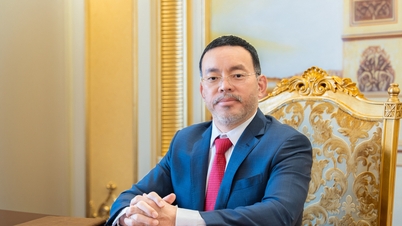
Associate Professor Dinh Thi Thu Hang, Director of the Institute of Journalism and Communication (AJC), Academy of Journalism and Communication, said: "In our recent series of university admissions counseling programs for 2025, a large number of parents and students are still very interested in journalism and communication majors. This shows that this is still a field with great appeal to candidates."
Hidden corners
According to Thanh Nien Newspaper's investigation, there are currently 9 institutions (hereinafter referred to as universities) nationwide that offer full-time undergraduate journalism programs: the Academy of Journalism and Communication, 2 universities of social sciences and humanities (belonging to 2 national universities), 2 universities of science at Hue University and Thai Nguyen University, the University of Education - Da Nang University, Can Tho University, the University of Culture, and the Academy of Posts and Telecommunications Technology. Most of these universities have only been involved in journalism training for about 15 years. Initially, these new universities cautiously recruited 50-60 students, gradually increasing their enrollment numbers. Therefore, the number of students admitted to journalism programs has steadily increased, while the labor market is trending towards contraction.
In 2024, the total enrollment quota for journalism majors at the nine aforementioned universities was 1,269. This year, the Military Academy of Arts has added a civilian journalism program, with an expected enrollment of 25 students. Combined with the increased enrollment quotas at several other universities, the total enrollment quota for journalism majors in 2025 is estimated to be around 1,350.
The three pillars we focus on in our training are foundational knowledge, working methods and thinking skills, and the ability to keep up with technological trends. This is how we help students go the distance in a career in journalism.
Dr. Phan Van Kien, Director of the SJC Institute, Faculty of Social Sciences and Humanities, Vietnam National University, Hanoi
This reveals some hidden aspects in journalism admissions. For example, Vinh University, which had offered a journalism program since 2013, had to cease enrollment in 2021. Several other universities, while still persistently enrolling students, have low admission scores, ranging from 14 to 16-17 points. Some universities, for various reasons, have not (or are not allowed to) offer journalism programs but still use the keyword "journalism," recruiting for literature programs but adding a journalism specialization: Duy Tan University, Quy Nhon University, Khanh Hoa University… Duy Tan University calls its specialization "journalism literature" (the government stipulates that private universities are not allowed to offer journalism programs). However, enrollment effectiveness is also low. Universities facing difficulties in recruiting for journalism programs, especially those offering "journalism literature," are often located far from major cities, or already struggle with enrollment in most other fields of study.
Even top-tier universities face significant challenges. "Currently, there are three prominent factors strongly impacting the journalism job market. The most pressing issue is the merger and consolidation of media organizations, leading to an unprecedented number of journalists becoming unemployed. Secondly, the widespread use of social media. Thirdly, the development of science and technology, especially the emergence of AI, has raised doubts about the future of journalists," shared Dr. Phan Van Kien, Director of the Institute of Journalism and Communication Training (SJC), Faculty of Social Sciences and Humanities, Vietnam National University, Hanoi.
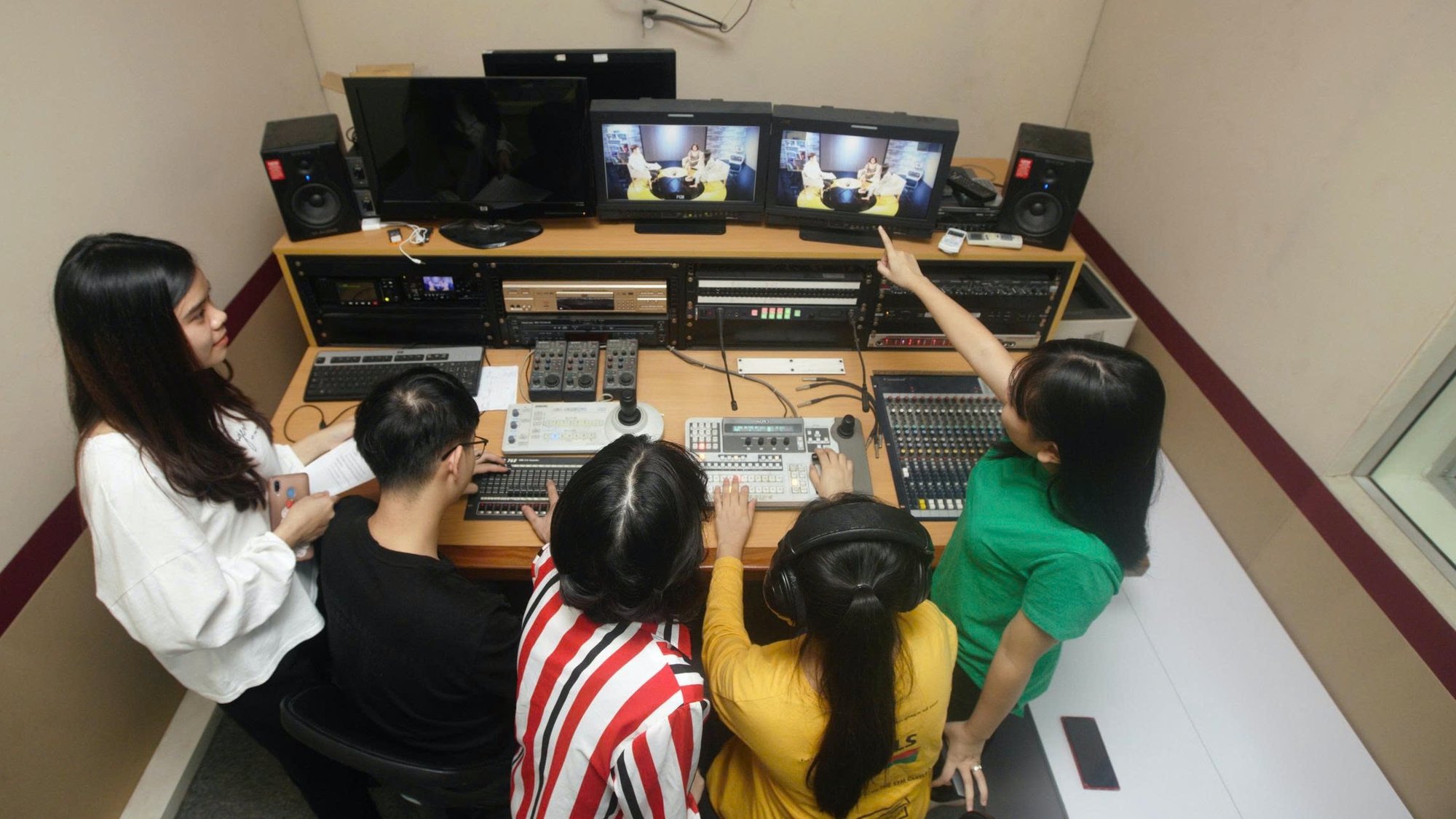
The career prospects and job opportunities for journalism and communication graduates remain very broad due to the development of the current digital landscape.
Photo: Phan Kien
From training "multitasking journalists" to "multi-platform journalists"
According to Dr. Phan Van Kien, the SJC Institute has been preparing for the aforementioned factors for at least 10 years. First, the institute determined that, given its inherent characteristics, the scale of journalism training should not be arbitrarily expanded but should be limited to a certain number of students. Even when the journalism job market was at its peak (many newspapers were emerging but only a few schools were training journalists), the SJC Institute only enrolled about 200-250 journalism students annually. Later, recognizing the development trend of the media industry, the institute reduced the journalism enrollment quota. For the past few years, the journalism quota has remained at around 160, while the media program has around 200.
At the same time, the institute's training program is also designed with a branching approach in terms of output standards. Graduates in journalism do not necessarily have to become journalists but can work in other fields such as media relations, hosting, content creation, consulting, etc. With the development of science and technology, the institute aims not only to train "multitasking journalists" but also "multi-platform journalists". In 2023, when ChatGPT appeared, recognizing the increasingly prominent presence of AI in all aspects of life, the SJC Institute introduced digital media technology as a subject for all students (journalism, media). Students at the institute use AI to complete assignments and to learn practical journalism.
Associate Professor Dinh Thi Thu Hang, Director of the AJC Institute, also believes: "Although we are in the process of reforming, reorganizing, and streamlining the system, the prospects for development and job opportunities for journalism and communication students after graduation remain very wide open due to the development of the current digital technology landscape. The strong shift from traditional media to digital media is opening up a vast career path for journalism and communication students. They can not only become reporters and editors, but also content creators, corporate communications specialists, managers of platforms such as YouTube/TikTok channels, brand consultants, and even founders of creative media startups."
Journalists need not only professional skills but also technological expertise and the ability to use AI tools. Therefore, a well-structured training strategy is needed, encompassing everything from enhancing technological knowledge and data analysis skills to professional ethics in the digital environment. Universities need to update their journalism curricula, integrating AI and big data knowledge.
Associate Professor Dinh Thi Thu Hang, Director of the AJC Institute, Academy of Journalism and Communication
Source: https://thanhnien.vn/bao-chi-nganh-hoc-chua-bao-gio-het-hap-dan-185250619013000063.htm

























































































Comment (0)