


Solid foundation
Thanks to the province's attention, education in Quang Ninh in general, and general education in particular, has made encouraging progress in recent years. The entire province continues to strengthen the school network, meeting the conditions for teaching and learning, and ensuring the minimum conditions for implementing the 2018 General Education Program.
Following the restructuring of the public education system, the province currently has 203 public schools; including 52 primary schools, 76 combined primary and lower secondary schools, 40 lower secondary schools, 26 upper secondary schools, 8 combined lower secondary and upper secondary schools, and 1 combined primary, lower secondary, and upper secondary school. Private education includes 25 schools, comprising 23 upper secondary schools, 1 primary school, and 1 lower secondary school.
The quality of general education has undergone significant changes over the past year. By the end of 2025, 100% of primary school students will attend school for two sessions per day; maintaining the standard of universal primary and lower secondary education at level 3 (the highest level). The number and quality of students participating in the national high school student excellence competition will continue to increase, especially in the 2025-2026 school year. Quang Ninh province had 82 students winning awards out of a total of 110 contestants, achieving nearly 75% success rate. This included 2 first prizes (in Chinese language), 16 second prizes, 35 third prizes, and 29 consolation prizes.
The provincial Department of Education and Training has also actively advised on building a team of teachers and educational management staff that is sufficient in number, balanced in structure, meets training standards, possesses good moral character, and has solid professional skills to implement the 2018 General Education Program. Currently, the percentage of teachers in the province meeting training standards is 98% (an increase of 3.4% compared to 2024).
In addition, the sector has proactively advised on investment and procurement of teaching equipment and school facilities, consolidating the school network to meet teaching and learning conditions in the province, especially ensuring the minimum conditions for implementing the 2018 General Education Program.

The initiative to make English a second language in schools has been actively implemented, aiming to create an English-speaking ecosystem within the school. Some schools have proactively used English/bilingualism for school names, names of functional rooms, and class names; decorated the school/classrooms with English slogans; and organized extracurricular activities and clubs that utilize English.
Regarding national defense and security education, it has been implemented comprehensively and synchronously in accordance with the directives of the Ministry of Education and Training . 100% of secondary schools have integrated national defense and security education into their curriculum as prescribed.
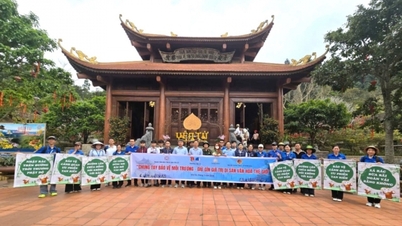
In addition to teaching according to the curriculum, educational institutions also organize visits for students to museums, traditional houses, units of the People's Armed Forces, martyrs' cemeteries, revolutionary historical sites in localities, listen to historical witnesses tell stories, and participate in cultural and artistic activities... helping to cultivate patriotism and pride in the glorious traditions of the nation and of Uncle Ho's soldiers.
To create even more breakthroughs
The action plan for implementing Resolution No. 71-NQ/TW of the Provincial Party Committee's Standing Committee has clearly defined specific goals for the province's general education. The province will expand equitable access and improve the quality of general education. It will build and strengthen the school network to meet the learning needs of students from all backgrounds and regions.
The goal by 2030 is to have 96% or more of general education schools meeting national standards. 100% of general education schools will be eligible to teach two sessions per day. The quality of universal primary and lower secondary education will be consolidated and improved to level 3, and illiteracy will be eradicated to level 2; at least 95% of people of school age will have completed upper secondary education or equivalent.
Specifically, the focus is on enhancing the technological, artificial intelligence, and English language skills of high school students. The education index's contribution to the Human Development Index (HD1) should reach 0.82 or higher, with the education inequality index reduced to below 10%.
In light of the new context, in 2026 and the following years, following the province's directives, to continue creating breakthroughs and innovating general education, the sector will direct schools to ensure "learning goes hand in hand with practice," "theory is linked to reality," and "schools are linked to society." This includes increasing the time allocated to science, technology, information technology, and arts; and integrating digital skills and artificial intelligence.
In addition, we will promote self-learning and creative experiences, ensure honest evaluation, and strictly enforce regulations on tutoring and supplementary classes. We will strengthen foreign language teaching, striving to make English a second language; raise the standards of teachers and students; apply AI in foreign language teaching and learning; teach some subjects in English where conditions permit; and teach Chinese in border areas.
In addition, we will promote STEM, scientific research, and cooperation with educational institutions, scientific organizations, and businesses both domestically and internationally; striving to have at least two students win regional or international awards by 2030.
The entire sector will strengthen education on ethics, lifestyle, and life skills; disseminate legal education; prevent social evils, drug abuse, and crime; ensure school security and safety; and prevent accidents and injuries for students and trainees. In particular, it will effectively organize the implementation of two-session-per-day teaching and learning. It will also maintain and improve the quality of universal education and literacy programs.
Thanks to systematic investment, the province's general education system has consistently achieved many positive results. These achievements are not only reflected in the statistics on universal education or the number of students excelling at national and international competitions, but also in the modern, civilized, and friendly learning environment. Certainly, with practical solutions, the province's general education system will continue to undergo comprehensive reform, meeting the requirements for human resource development in the province in the new era.
Source: https://baoquangninh.vn/bao-dam-hoc-di-doi-voi-hanh-3394142.html
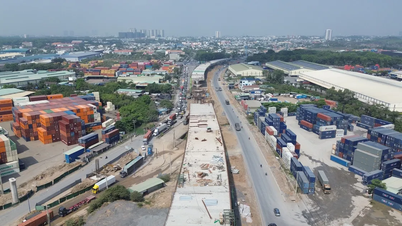
![[Image] Nguyen Tat Thanh Street is expected to be widened, reducing traffic congestion.](https://vphoto.vietnam.vn/thumb/1200x675/vietnam/resource/IMAGE/2026/03/24/1774326200262_ndo_br_3-6869-jpg.webp)
















































Comment (0)