Officially opened in January 2014, despite being a privately-run museum with limited resources and operational experience, the Ao Dai Museum has been making a practical contribution to the preservation and promotion of the historical and cultural value of the Vietnamese Ao Dai. Currently, the museum houses and displays approximately 1,300 artifacts, including many valuable items associated with the lives and careers of individuals who made significant contributions to the building and protection of the nation in various fields.
According to Ms. Huynh Ngoc Van, Director of the Ao Dai Museum, most non-governmental museums are established from the dedication and resources of individuals or businesses. However, besides the advantage of being proactive, these institutions often face difficulties in attracting specialized personnel, investing in research, preserving artifacts, and innovating their activities. Especially in the context of the public having increasingly more choices to access knowledge and entertainment, maintaining attractiveness to visitors is a challenging problem.

|
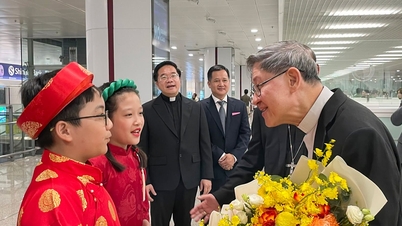
International visitors experience the beauty of the Ao Dai (Vietnamese traditional dress) culture at the Ao Dai Museum. Photo: THANH HIEP |
In recent years, the public no longer visits museums simply to view artifacts. They desire to participate, interact, and experience the cultural values behind each artifact. This requires museums to shift from a purely exhibition model to an open cultural space where heritage is told through diverse and engaging forms, closer to contemporary life.
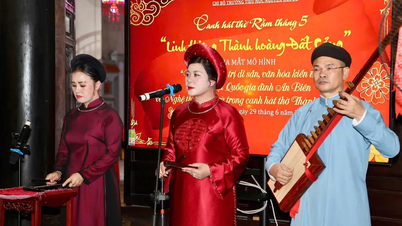
At the Ao Dai Museum, in addition to collecting and preserving, many thematic activities are regularly organized, such as seminars and workshops on the history of the Ao Dai, traditional tailoring, and national cultural values. The museum also develops many experiential programs for students and tourists, such as painting Ao Dai, making handicrafts, and learning about traditional musical instruments. Notably, mobile collections are brought to schools and many localities, combining the introduction of intangible cultural heritage forms, while strengthening international exchange activities. These activities contribute to connecting researchers, artisans, universities, and the cultural community, thereby expanding the space for academic exchange and spreading heritage values. This approach helps increase public appeal, transforming the Ao Dai from an exhibit into a vibrant cultural symbol, carrying a message about Vietnam to the world .
As a local resident who has participated in guiding tourists, performing traditional folk music, and introducing traditional crafts at the museum, Mr. Tran Van Tam (Long Phuoc ward) believes that the community's support has contributed to the unique vitality of the Ao Dai Museum. Through everyday stories, folk music melodies, and traditional crafts introduced by the locals themselves, tourists have a greater opportunity to deeply appreciate the cultural values being preserved and passed down in this land.
Innovative efforts have helped the Ao Dai Museum make its mark on the cultural and tourism life of Ho Chi Minh City. In 2023, the museum was selected for the list of "Ho Chi Minh City - 100 Interesting Things"; in 2024, it was ranked among the Top 10 most attractive tourist destinations in the city and Top 50 attractive tourist destinations in Ho Chi Minh City along with 13 provinces and cities in the Mekong Delta. In 2025, the institution was awarded a Certificate of Merit by the Vietnam Cultural Heritage Association for its positive contributions to the protection and promotion of cultural heritage values.
Source: https://www.qdnd.vn/van-hoa/doi-song/bao-tang-no-luc-giu-chan-cong-chung-1045247












![[Image] National conference summarizing one year of operation of the overall organizational model of the political system, the three-tiered government model.](https://vphoto.vietnam.vn/thumb/1200x675/vietnam/resource/IMAGE/2026/07/01/1782882811691_ndo_br_1-jpg.webp)