

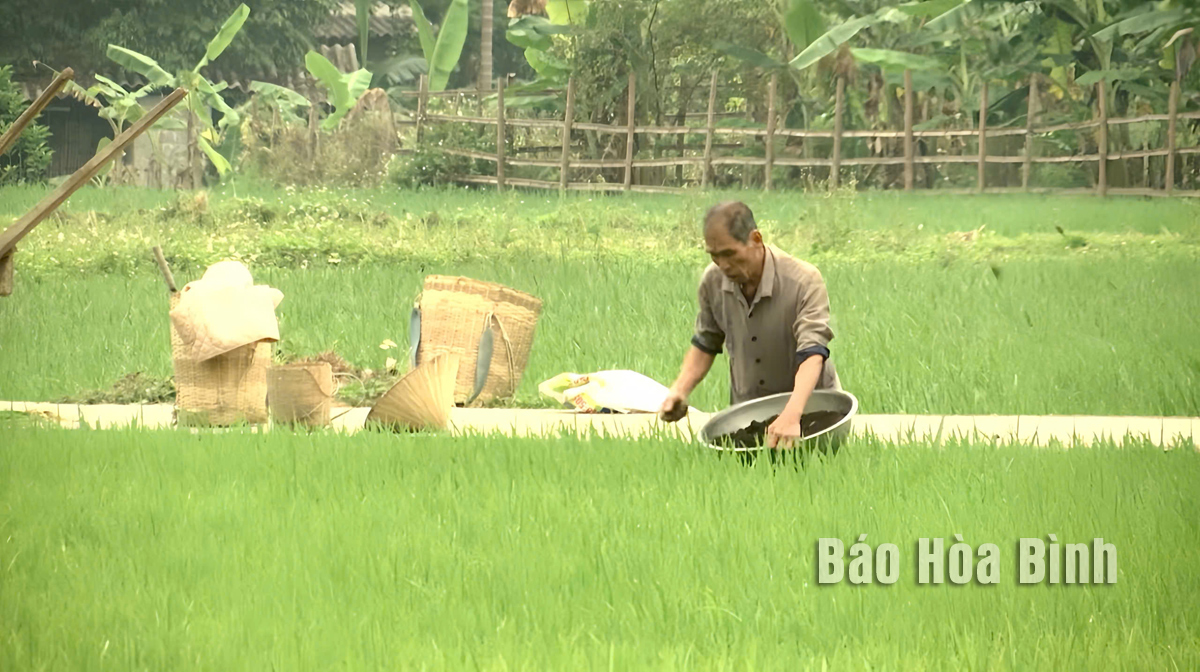
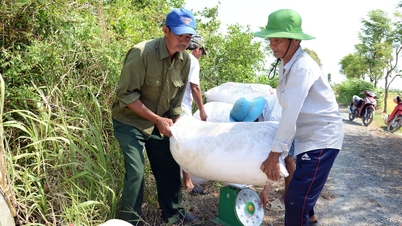
Farmers in Mai Ha commune (Mai Chau district) are intensifying care and fertilization to increase the resistance of their spring rice crop.
According to the National Center for Hydro-Meteorological Forecasting, the weather will remain complex, with widespread rain in April and less intense heat than the multi-year average. Therefore, there is a risk of affecting the growth and development of rice plants, as well as the prevalence of some major pests and diseases such as: rice blast, planthopper infestations, rats, small leaf-rolling caterpillars, bacterial blight, bacterial leaf streak, etc., which tend to increase in density and severity, affecting rice yield and quality if timely control measures are not implemented.
During inspections in Luong Son district, functional units discovered that the main pests and diseases causing damage to spring rice crops included: rats, stem borers, thrips, and planthoppers... causing scattered damage. Ms. Nguyen Thi Minh, Head of the Agriculture and Environment Department of Luong Son district, said: To ensure the yield and quality of the spring rice crop, the district has directed communes and towns to closely monitor the pest and disease situation, regularly inspect fields, and keep track of the emergence and development of pests and diseases, especially brown planthoppers, leaf rollers, blast disease, and bacterial leaf blight... Technical staff have been assigned to coordinate and closely monitor the planting schedule and the condition of each rice crop. The district is also stepping up propaganda and guidance for farmers on the use of pesticides to control pests and diseases in rice...
Throughout the province, according to statistics from the Sub-Department of Plant Protection and Quarantine, rats continued to damage an area of 85 hectares, distributed in Hoa Binh city and the districts of Lac Son, Lac Thuy, and Luong Son (an increase compared to the previous period); rice stem borer affected 5 hectares in Luong Son district; root rot affected 5 hectares, a decrease compared to the previous period; and rice blast disease affected nearly 13 hectares in Lac Son district. Other pests such as planthoppers, small leaf rollers, thrips, etc., caused minor damage scattered in various localities.
To proactively manage production and minimize damage caused by pests and diseases, the Plant Protection and Quarantine Sub-Department has issued Official Letter No. 156/TTBVTV on proactively managing some major pests and diseases on rice crops in the spring of 2025. Accordingly, specialized agencies at the district level are actively directing local authorities and guiding farmers to closely monitor fields, understand the development and trends of rice blast, bacterial leaf blight, and brown spot diseases. They are classifying pest ages, determining peak maturation times for each area, identifying egg density, hatching rate, and parasitism rate to forecast future pest density trends, providing a basis for effective control. Simultaneously, they are classifying each rice variety and field, identifying the area of rice affected by pests and diseases requiring control to minimize damage.
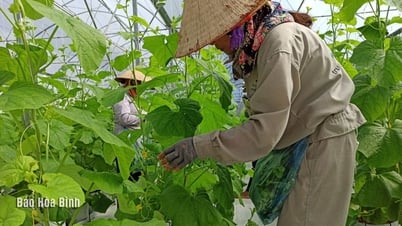
Ms. Vu Thi Anh Dao, Deputy Head of the Provincial Plant Protection and Quarantine Sub-Department, stated: Local authorities should instruct their professional staff to guide farmers in taking advantage of favorable weather conditions to promptly care for, weed, and fertilize rice fields according to proper technical procedures. Adequate and balanced fertilization with nitrogen, phosphorus, and potassium will help rice grow and develop well, increase resistance, overcome root rot, and limit late-season pests and diseases. Rats are currently the biggest pest affecting rice crops in many areas; therefore, farmers should be guided to clean up bushes and weeds around embankments and ditches to limit hiding places and breeding grounds for rats. Mobilize rice fields to conduct mass rat extermination, using one of the pesticides listed in the Vietnamese approved list for control. Prioritize the use of pesticides that are less harmful to the environment and follow the instructions on the packaging...
Thu Hang
Source: https://baohoabinh.com.vn/12/200063/Bao-ve-lua-xuan-truoc-sau-benh,-dich-hai.htm


![[Image] Nguyen Tat Thanh Street is expected to be widened, reducing traffic congestion.](https://vphoto.vietnam.vn/thumb/1200x675/vietnam/resource/IMAGE/2026/03/24/1774326200262_ndo_br_3-6869-jpg.webp)














































































Comment (0)