


This spirit is reflected throughout important resolutions and conclusions such as Resolution 68-NQ/TW on the development of the private economy , or Conclusion No. 18-KL/TW, dated April 2, 2026, concluding the second meeting of the 14th Central Committee of the Communist Party of Vietnam, which requires continuing to improve institutions, enhance the effectiveness and efficiency of national governance, and unlock all resources for development.
These consistent orientations not only affirm the central role of institutions but also highlight the urgent need to shift strongly from a management-oriented mindset to a development-oriented one, placing businesses and citizens at the center of service, and considering administrative reform as a direct lever for growth.
New vitality from the numbers that "speak for themselves"
Adhering closely to the Party's guidelines, the Government has concretized them through a series of decisive policies. The Vietnamese economy is witnessing strong movements not only in dry statistical figures but also in a new management mindset: decisive, transparent, and using effectiveness as the measure of action.
The first four months of 2026 show positive signs. According to the Ministry of Finance, the number of newly established and reactivated businesses increased by 33.9% in the first four months; the total registered capital added to the economy increased by 84.6%. Notably, on average, nearly 30,000 businesses entered the market each month, with nearly 1.9 trillion VND injected into production and business. This clearly reflects the improvement in market confidence – a core element in economic operation.
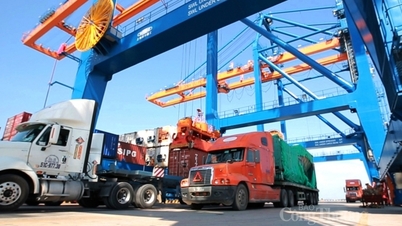
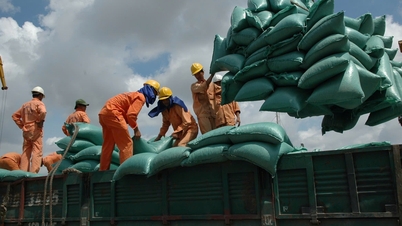
From a trade perspective, despite a trade deficit of approximately $7.11 billion, the import structure shows that nearly 92% consists of machinery, equipment, and raw materials for production. This is an important indicator showing that the economy is "importing for production," preparing for a new growth cycle, rather than relying on consumption.
These results are not accidental but a direct consequence of efforts to improve the investment environment, demonstrating the restoration of confidence and the effectiveness of policies to stimulate demand and remove legal barriers.
The "total offensive" against institutional barriers
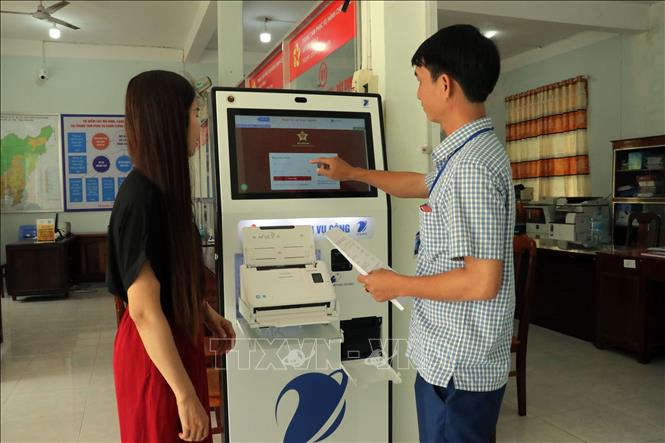
To concretize the Party's major policies, the Government has implemented reforms at an unprecedented pace. A "revolution" in administrative reform is being pushed to its peak in order to realize the aspiration of "double-digit" growth for the period 2026-2030.
In a short period, the Government has issued eight resolutions on reducing and simplifying administrative procedures and business conditions, covering almost all areas of state management. The initial results are clear: 184 administrative procedures and 890 outdated business conditions have been abolished. The implementation process is expected to reduce the time and compliance costs for affected parties by more than 50% compared to 2024. These figures show that reform is no longer just a slogan, but has become a reality.
When procedures are simplified, business conditions are reduced, and compliance costs decrease, expected profits increase and confidence is strengthened. Capital will then naturally flow to the production and business sector, instead of being "locked up" in speculative channels.
Notably, the Prime Minister's requirement that "laws must be accompanied by guiding decrees" directly addressed the long-standing policy delays and bottlenecks – the gap between law promulgation and implementation guidelines. Furthermore, accountability was individualized and linked to the head of each agency; implementation results were made public, creating pressure for substantive reform throughout the system.
This approach clearly reflects the spirit of governance reform in line with the Party's direction: transparency, measurability, and specific sanctions. This is the essence of a proactive state, one that does not deeply interfere in the market, but rather creates an environment for the market to operate more efficiently.
"Flip the right switch" for growth targets.

One of the recurring requirements in the Party's documents and resolutions is to strongly promote the private economic sector. In fact, the investment capital demand for the period 2026-2030 is projected to reach approximately 38.5 million billion VND; of which 80% will come from the non-state sector.
This confirms that the state cannot "mobilize" capital through administrative orders, but must create a transparent and stable institutional environment for capital to flow naturally.
When procedures are streamlined, compliance costs decrease, legal risks are controlled, and expected profits increase. Social resources will then shift towards production and business, instead of being dispersed through speculative channels. This is the essence of a developmental state, a principle repeatedly emphasized in the Party's resolutions.
Despite positive initial results, the biggest challenge remains implementation. The risk of a "top-down" approach, or the emergence of new, more sophisticated barriers, could undermine the effectiveness of reforms. Therefore, the requirement is not just to continue cutting back, but to move towards a comprehensive restructuring of the administrative procedures system, linked to digital transformation, transparency, and enhanced accountability.
In the context of a volatile global economy, achieving double-digit growth is a major challenge. However, practice is showing that when institutional reforms are properly positioned as a strategic breakthrough in line with the Party's guidelines, they become the "switch" that activates growth.
When barriers are removed, trust is strengthened, and resources are unlocked, the economy will not only grow in scale but also transform qualitatively towards greater transparency, efficiency, and sustainability.
Institutional reform, therefore, is not just a short-term solution, but an inevitable path to realizing development aspirations in the new era. The remaining challenge is maintaining discipline in implementation and consistency in action, so that the reform process is not interrupted.
Source: https://baotintuc.vn/kinh-te/bat-cong-tac-tang-truong-tu-cai-cach-the-che-20260504095625788.htm



















































































![[INFOGRAPHICS] 25 targets and groups of targets that Can Tho City strives for by 2030](https://vphoto.vietnam.vn/thumb/402x226/vietnam/resource/IMAGE/2026/05/25/1779688983034_1779688951.webp)













Comment (0)