

According to Decree 357/2025/ND-CP on the construction and management of information systems and databases on housing and the real estate market, effective from March 1, 2026, each real estate product – individual houses, apartments, construction works, etc. – will be assigned an electronic identification code.
"The birth certificate" of a property.
The electronic real estate identification code is a string of characters (including numbers and letters) with a maximum length of 40 characters. This code is generated to be uniquely assigned to each house and each product within a project, ensuring no duplication.
The structure of this code is scientifically designed, including the following components: Land parcel identifier code - project/construction information code - location identifier code (if any) - real estate product type code. This data system will be managed uniformly nationwide by the Ministry of Construction , while provincial People's Committees are responsible for collecting and updating data locally.
Mr. Tran Khanh Quang, General Director of Viet An Hoa Real Estate Company, likened the identification code to the "birth certificate" of real estate. "For the market to be transparent, the first step is to have an identification code. We need to know where the product 'originated,' its width and length, its location, which map sheet it belongs to... Without this identification step, it is very difficult to carry out subsequent transaction management steps," Mr. Quang explained.
According to Mr. Quang, the biggest benefit of identification is eliminating the legal ambiguity that is causing many homebuyers anxiety. With a unique identification number, people can publicly look up information on planning, construction progress, and transaction history. This helps eliminate "ghost" projects, localized artificial land price surges, and protects buyers from fraud risks.
In reality, many people have recently fallen victim to "ghost" projects or mistakenly bought properties that didn't exist on the blueprints. Electronic property identification is expected to be a "cure" for this situation. With each property having a unique code, buyers can easily check its legal status, construction progress, and mortgage status. Ms. Hong Lien (in Duc Nhuan ward, Ho Chi Minh City), who once mistakenly bought into a fictitious project, shared: "If there were clear identification codes, people like us who are not familiar with legal matters would feel more secure, and fraudsters would no longer have a place to operate."
From a state management perspective, property identification helps authorities understand the overall picture: Who owns this property? How many properties does one person own? What is the history of their transaction prices?
Mr. Tran Khanh Quang stated that this is crucial foundational data for the State to formulate accurate market regulation policies, including the taxation of second and third real estate properties. "When everything is transparent and transactions are profitable, paying taxes is socially fair. Collecting taxes on second and third properties will also be more convenient and equitable," Mr. Quang emphasized.

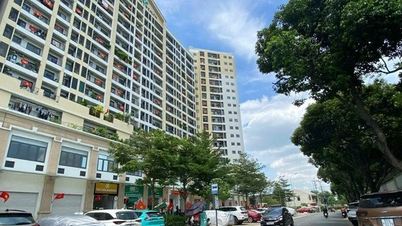
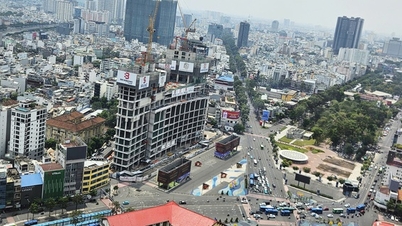
From March 1st, each real estate product will be assigned an electronic identification code. Photo: TAN THANH
The security measures must be appropriate.
Dr. Tran Xuan Luong, Deputy Director of the Vietnam Institute for Real Estate Market Research and Evaluation, believes that if implemented comprehensively, effectively, and promptly, real estate identification will be a significant breakthrough. This will help resolve one of the biggest bottlenecks in current state management of the real estate market: data, thus eliminating information ambiguity.
Analyzing further, Dr. Luong argued that for many years, the real estate market has lacked a unified, standardized, and interconnected data system. This situation has created significant difficulties for management and operation, while also increasing risks for individuals and businesses.
Therefore, electronic identification of each property – from individual houses and apartments to products within projects – is the core foundation for establishing a national real estate data center. When each property is assigned a unique identifier, all information related to legal status, transaction history, mortgage status, price fluctuations, and financial obligations will be updated throughout the property's lifecycle. This helps owners and buyers access accurate information, reduces legal risks, and enhances market discipline.
According to Dr. Tran Xuan Luong, accurate data, especially data on land and housing prices, is crucial for policy planning. In reality, land prices tend to increase over time, while housing prices are affected by depreciation. With reliable data, the government will have a scientific basis for determining land prices for tax purposes, developing appropriate land finance policies, thereby regulating the market, stabilizing the macroeconomy , and ensuring social equity.
Furthermore, electronic identification opens up the possibility of significant reforms to administrative procedures. Once property information is verified and digitized, registration, transfer, mortgage, and inspection processes will become simpler and faster. In the long term, this can simplify the role of intermediaries and reduce social costs. "Decree 357 is not just a technical solution regarding data, but a crucial foundation for restructuring the real estate market towards a modern, transparent, and sustainable development in the long term," Dr. Luong emphasized.
From a business perspective, Mr. Vo Hong Thang, Deputy General Director of DKRA Group, also supports the identification of real estate. However, he noted that in practical implementation, a pilot roadmap and clear evaluation of the effectiveness of each stage are needed. "In particular, adequate investment is needed in infrastructure and appropriate security mechanisms for the database to avoid unfortunate incidents related to information leaks and breaches like those currently occurring," he expressed.
Adding a basis for tax administration.
Referring to the electronic product identification code for real estate products stipulated in Government Decree 357, a leader of the Ho Chi Minh City Tax Department commented that this will help the tax sector exchange information with relevant ministries and agencies. Based on the data of these real estate identification codes, such as purchase and sale prices, transaction methods (buying, selling, leasing, receiving transfers, etc.), the tax authorities will have more information to accurately determine the value of real estate, and calculate taxes accurately and completely.
Source: https://nld.com.vn/bat-dong-san-het-thoi-map-mo-thong-tin-196260105214735326.htm


![[Photo] General Phan Van Giang welcomes Chinese Defense Minister Dong Jun.](https://vphoto.vietnam.vn/thumb/1200x675/vietnam/resource/IMAGE/2026/03/18/1773808281415_giao-luu-bien-gioi-vntq-lan-10-6829-5690-jpg.webp)

































































































Comment (0)