


According to Decree No. 357 issued by the Government regulating the construction and management of information systems and databases on housing and the real estate market, each house (apartment or detached) and real estate within a construction project will be assigned a unique electronic identification code.
The code is a string of alphanumeric characters, up to 40 characters long. The structure of the electronic identifier for real estate products includes the following information fields: project/construction information code; location identifier code (if any); and a sequence of natural characters.
The identification code is automatically generated on the information system and database on housing and the real estate market. Local Departments of Construction assign electronic identification codes to housing units in housing development projects within their areas, simultaneously with the issuance of a document notifying that the housing units are eligible for sale, for housing units under construction.
According to experts, assigning unique identification codes to real estate properties will help make the market more transparent and limit speculation and price manipulation.
Dr. Nguyen Van Dinh, Vice President of the Vietnam Real Estate Association, also assessed that the lack of transparency in information over the past period has led to consequences such as the widespread "artificial land price bubble," pushing real estate prices far beyond their true value; misallocation of capital, increasing risks for the financial system; and people and businesses facing legal risks, with the biggest losers often being homebuyers and small-scale investors.
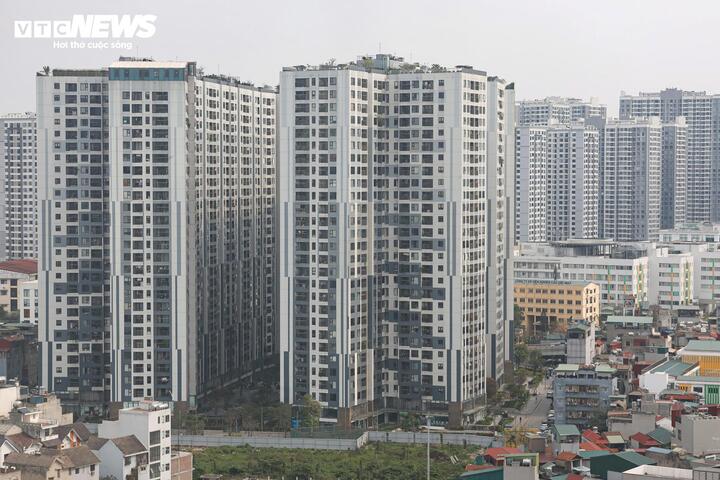
Real estate properties will soon have identification codes. (Photo: Minh Duc).
Therefore, the electronic property identifier is considered an important step in the digitalization roadmap for the housing sector and real estate market, in line with management requirements in the new context.
According to Dr. Dinh, the electronic identification code for real estate can be understood similarly to each person's citizen identification card. Each house, each plot of land, each product is a high-value commodity that has a serious impact on the economy , so consumers need to know information about these goods to protect their legitimate rights.
Identification is not limited to the product level, but is also integrated into a comprehensive real estate market data system. This transparency makes speculation much more difficult, as it exposes hoarding and the creation of artificial scarcity to drive up prices.
This policy also limits the practice of "fictitious sales, creating artificial supply and demand" where developers or secondary investors hold inventory but fail to complete the necessary procedures, making the market appear to be experiencing shortages.
According to Professor Dang Hung Vo, former Deputy Minister of Natural Resources and Environment , the real estate identification code itself does not change land prices; it is merely an identification tool. However, when the market becomes transparent thanks to identification data, the State will have the necessary conditions to apply policies on taxation, credit, or price regulation.
The greatest value of a property identifier lies in its ability to track the entire history of a property, including when it was acquired, how many times it has been transacted, how its price has fluctuated, and whether it has been subject to speculation. When data is fully and continuously recorded, the market will gradually shift from emotional trust to data-driven trust.
The core bottleneck in Vietnam's real estate market management lies in the fact that each property has never been recognized as an entity with its own unique identity. "The identification code is the identity of the property. It's like a person's citizen ID card. Each person has a unique code, from which their identity can be fully described. The same applies to real estate," Professor Dang Hung Vo analyzed.
Previously, information about a property was often fragmented, divided by stage and by different regulatory agencies. Planning, construction, certification, and transaction data were not continuously interconnected. This resulted in a lack of data for regulatory agencies to manage the market, while the market operated primarily based on herd mentality.
The lack of complete "background information" not only distorts the price formation mechanism but also makes it difficult for tax, credit, and planning policies to be effective. When the State does not know exactly how much real estate an individual owns or how frequently they have transacted, taxation or anti-speculation efforts remain merely directional.
Many obstacles need to be overcome.

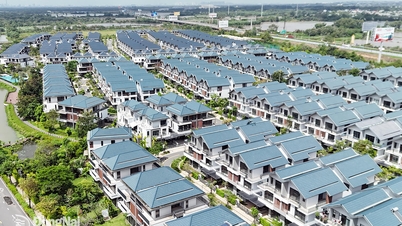
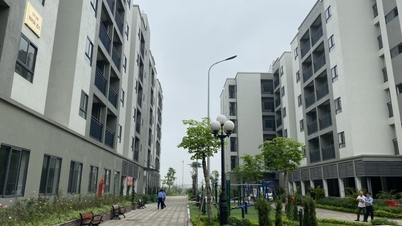
Attaching unique identification codes to real estate properties will help make the market more transparent. (Photo: Minh Duc).
From a business perspective, Mr. Pham Duc Toan, CEO of EZ Property, believes that digitizing and identifying each property, similar to how traffic is managed, is an inevitable direction.
"Identification helps to create a complete profile for each property, from location and area to transaction history and ownership history. This is an important basis for the State to monitor market fluctuations in the long term," Mr. Pham Duc Toan commented.
The CEO of EZ Property believes that, in the short term, this policy has not yet created a significant impact because it is still in the data collection and standardization phase. However, in the long term, when tax policies and market regulations are implemented based on this data system, the impact will become more apparent.
Currently, the real estate transfer tax for individuals is still calculated at 2% of the total declared transaction value.
However, experts believe that there are still many obstacles that need to be overcome in order to implement the assignment of real estate identification codes.
Mr. Pham Duc Toan cited the example that overlapping boundaries between adjacent land plots are not uncommon. Therefore, if the initial data is inaccurate, the risk of prolonged disputes is very high. In addition, the enforcement capacity at the local level is also a noteworthy issue, especially in rural and remote areas where technology is not yet advanced.
Therefore, he argued that real estate identification is a long-term process, so it should be implemented prioritizing easier products first, and careful planning is needed from the data entry stage to ensure the accuracy of the information system.
Similarly, Mr. Vo Huynh Tuan Kiet - Director of Residential Real Estate at CBRE Vietnam - believes that with the large volume of information, the interconnection between departments and between various information systems will be very complex. Therefore, linking all this information will require a significant amount of time.
Source: https://baolangson.vn/bat-dong-san-sap-het-thoi-thoi-gia-5079563.html

































































































Comment (0)