

 |
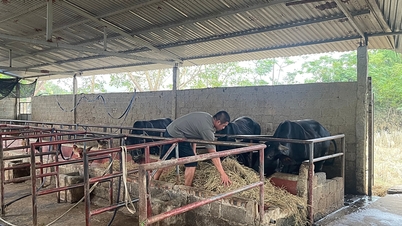
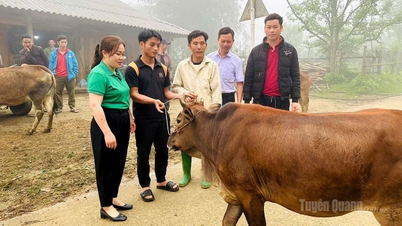
| H'Mông cattle are raised according to strict technical procedures at the Cát Lý Cooperative in Thuận Hòa commune to increase the percentage of intramuscular fat. |
Stable source of income
In the far north, where natural conditions and weather are harsh, there is a living entity that has become a symbol of strength and resilience: the Hmong yellow ox. This is a precious native breed, domesticated and raised by the Hmong people for generations, closely linked to the history, culture, and daily life of the highlanders. For them, the yellow ox is not just an ordinary animal but a "treasure," a close friend, a "foundation of livelihood," and a sustainable source of income.
This breed of cattle adapts very well to harsh natural conditions, is resistant to cold and harsh weather, has high resistance, and a large physique. Males weigh an average of 450-500 kg, with some individuals reaching 700-800 kg; females weigh 300-400 kg and yield high meat production. According to researchers, this is the only purebred native cattle breed in Vietnam capable of withstanding temperatures below 0°C and utilizing poor food sources such as corn and weeds to produce superior quality meat.
Mr. Vang Cha Thao, a long-time livestock farmer in Dong Van commune, shared: “Here, there are more rocks than soil, so machinery can't get to the fields. Only yellow oxen can plow on the rocky terrain. When needed, selling an ox provides money for the children's education or house repairs. It's a mobile treasure in this rocky forest.”
Currently, the province has 105,587 H'Mong cattle, with an annual output of over 3,960 tons of live weight meat. Not stopping at traditional farming, since 2021, a scientific breakthrough has reached every village with the application of artificial insemination to over 8,500 cows, resulting in nearly 7,000 calves, each fetching a higher price of 2-3 million VND more than those produced by direct breeding. The H'Mong cattle herd provides a stable source of income for people in the highlands. The Ha Giang Yellow Cattle product was granted Geographical Indication by the Intellectual Property Office in 2019.
 |
| The cattle are cared for according to strict technical procedures at the Cat Ly Cooperative. |
Decoding superior quality
Why is H'Mong beef considered the "Hanwoo of Vietnam"? The answer lies in the rigorous quantitative figures concluded by scientists at the Institute of Animal Husbandry ( Ministry of Agriculture and Environment ) after numerous studies and surveys on hundreds of cattle in Tuyen Quang. Analysis results show that H'Mong yellow beef has a 15% higher protein content than regular crossbred beef, while cholesterol levels are significantly lower. The average intramuscular fat percentage is 4.2% in bulls, 5.1% in castrated bulls, and 3.75% in cows; the intramuscular fat percentage reaches 3/9 according to the Hanwoo scale - South Korea; and the lean meat percentage is 35.6%.
Hmong cattle have excellent digestion of over 40 types of natural plants; the high protein content from plant leaves helps Hmong cattle maintain body temperature, continue to gain weight in winter, and create juicy meat. The meat quality of Hmong cattle is far superior to that of domestic cattle, meeting the stringent standards for high-end restaurants and geographical specialties. This is an important scientific basis for perfecting the breeding, slaughtering, and processing of Hmong beef, laying the groundwork for developing Hmong beef products as high-quality specialties capable of competing in the international market.
We visited the Cat Ly Cooperative in Thuan Hoa commune, a leading unit in the conservation chain of this precious cattle breed. Here, each cow has a "birth certificate," is assigned an identification code, undergoes ultrasound classification of intramuscular fat, and is strictly monitored for health. Mr. Thuong Thai Cat, Director of the Cat Ly Cooperative, said: "While regular beef costs 250,000 - 300,000 VND/kg, H'Mong cattle raised in a closed-loop process with standard intramuscular fat are sought after by high-end restaurants at prices of 1-2 million VND/kg. A purebred yellow cow of the right age can bring in 45-60 million VND for the farmers, double that of ordinary cattle. Currently, the cooperative is linked with over 1,300 households raising nearly 4,000 H'Mong cows, supplying over 77 tons of beef annually to stores and supermarkets nationwide."
 |
| The yellow cattle of the highlands are adapted to harsh weather conditions, have a large physique, and produce superior quality meat. |
Building a national brand.
Over the years, the province has consistently focused on developing cattle farming towards a commercial model, linked to value chains, brand building, and market expansion. From 2022 to the present, the province has supported 614 projects for the development of beef cattle production and farming, benefiting 16,150 households and creating an important foundation for the formation of production-processing-consumption chains. The province has 9 enterprises, cooperatives, and establishments involved in processing H'Mong beef, with 2 products – Yellow Beef Sausage and Dong Van Dried Beef – achieving OCOP 3-star status. Notably, the Cat Ly Cooperative is currently leading 5 value chains for Yellow Beef cattle farming with a scale of nearly 4,000 head, thereby improving economic efficiency, minimizing risks in farming, and creating a solid foundation for the sustainable development of the H'Mong cattle herd.
However, a worrying reality is emerging: the purebred yellow cattle population in some communes has fallen below 40%. The risk of losing this valuable genetic resource and the proliferation of counterfeit products bearing the name "highland cattle" directly threatens the brand, which has been granted Geographical Indication by the Intellectual Property Office. Furthermore, the small-scale and scattered nature of farming, with over 90% of households raising fewer than 5 cattle, makes it difficult to implement biosecurity practices and establish linkages. Extreme weather conditions and food shortages during winter also affect cattle growth.
To preserve and enhance the value of the "treasure" of the Stone Plateau, a synchronized roadmap from the central to local levels is being implemented. Specifically, the Department of Agriculture and Environment, in coordination with the Department of Animal Husbandry and Veterinary Medicine, the Vietnam Academy of Agriculture, and experts from Konkun University in South Korea, is carrying out research projects to develop the Tuyen Quang yellow cattle breed and build the H'Mong yellow cattle brand into a national brand. A systematic approach is being implemented to analyze the genetic sequencing of the Tuyen Quang H'Mong cattle breed and build a pedigree database. The formation of a "core herd" is crucial to ensuring a purebred breeding stock that is not crossbred, thereby maintaining its characteristic resilience and meat quality. This is coupled with the standardization of breeding processes and supply chain linkages. The emergence of "satellite farms" and a "cattle bank" model helps poor households access purebred cattle sustainably. Instead of small-scale, unstable grazing, the province is aiming to plan areas for growing green fodder and transfer fattening technology to individual households.
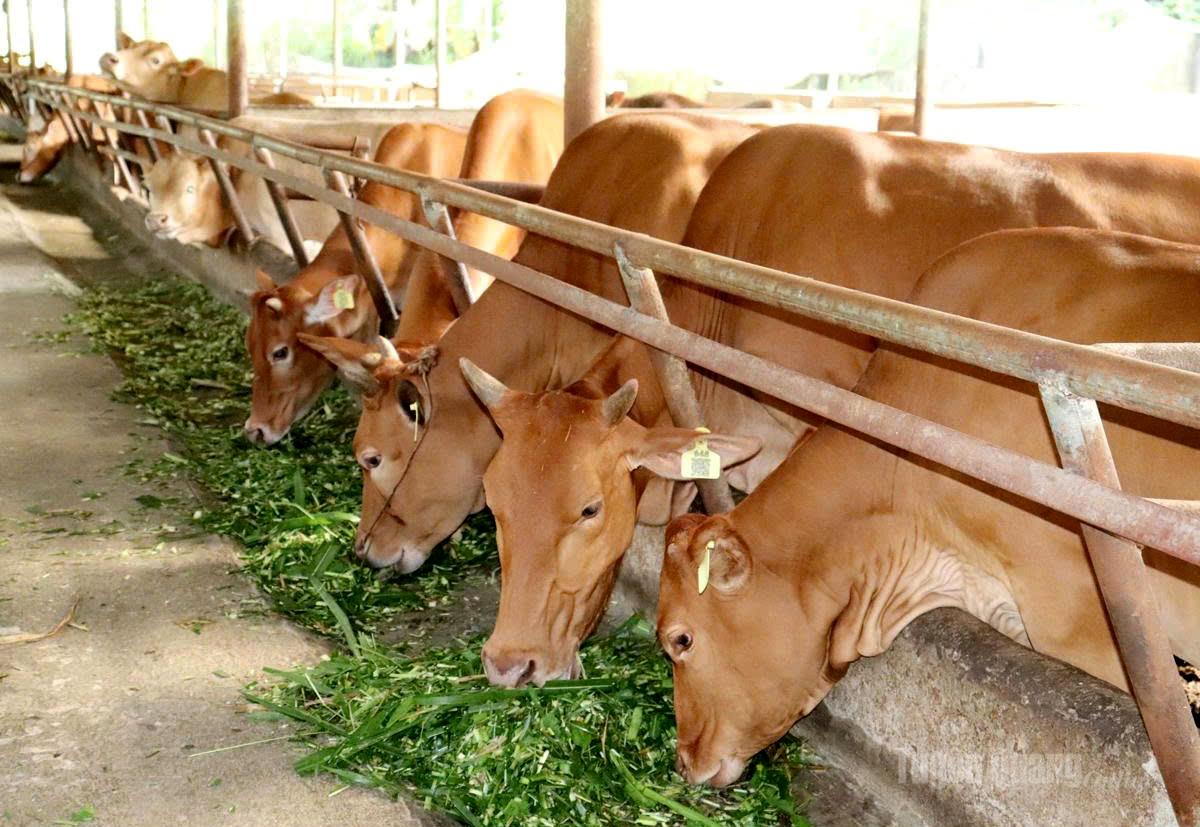 |
| H'Mông cattle are raised according to strict technical procedures at the Cát Lý Cooperative in Thuận Hòa commune to increase the percentage of intramuscular fat. |
Kim Soo-Ki, an expert from Konkuk University, South Korea, shared: “The Hmong yellow cattle have potential no less than the Hanwoo cattle of South Korea. We have surveyed, evaluated, and agreed to cooperate in brand building and efforts for the development of Hmong cattle.”
With the goal of having 30% of the total H'Mong cattle herd raised in closed-loop farms by 2030, positioning H'Mong beef as a high-end, national specialty, scientists propose that Tuyen Quang province should connect indigenous cattle farms with the Meo Vac and Lung Phin cattle market festivals, linking them to the ecological and culinary tourism chain of the Stone Plateau; and preserving the valuable genetic resources. They suggest applying feed technology with a high proportion of concentrated feed according to the Hanwoo cattle farming process from Korea and using ultrasound techniques to improve the intramuscular fat content of H'Mong cattle, enhancing their value and economic efficiency for farmers. Furthermore, they recommend continuing to promote artificial insemination, exploiting geographical indications, attracting investment in deep processing, promoting trade in major cities, and strengthening technical training for local people.
The door to making the H'Mông yellow ox a national brand has opened with close cooperation among the "four stakeholders": the State, scientists, businesses, and farmers. These yellow oxen are no longer just a symbol of resilience and strength on rocky slopes, but will truly become "gold bars," contributing to changing the economic landscape of the highlands.
Text and photos: Bien Luan
Superior quality, impossible to replicate.
 |
| Assoc. Prof. Dr. Ha Xuan Bo Deputy Head of the Department of Animal Husbandry, Vietnam Academy of Agriculture |
Hmong cattle are registered as a geographical indication and are included by the State in the list of livestock breeds permitted for production and business, as well as the list of livestock breeds prohibited from export. Hmong beef is famous for its fragrant, delicious, tender, and finely textured meat, which is impossible to replicate. The quality of Hmong beef is far superior to that of ordinary domestic beef; meeting the stringent standards for the high-end restaurant segment and geographical specialty.
Currently, the Vietnam Academy of Agriculture and the Cat Ly Cooperative in Tuyen Quang province are collaborating to develop sustainable livestock farming, combining technology, practical guidance, and the conservation of local resources. Assessments of the growth potential, meat quality, and intramuscular fat content of H'Mong cattle show that applying total mixed ration (TMR) technology with a high proportion of concentrate feed can increase muscle mass, thickness, loin area, and intramuscular fat content. Therefore, a breeding improvement program based on advanced selection methods, farming processes, product value chains, and research into the adaptability of H'Mong cattle in lowland areas is needed to enhance quality and build a Vietnamese cattle brand.
Completing the value chain
 |
| Comrade Trinh Van Binh Deputy Director of the Department of Agriculture and Environment |
Recognizing the yellow cattle as one of the key livestock species, the industry has advised the Provincial People's Committee to issue mechanisms and policies to conserve and sustainably develop this valuable genetic resource. The focus is on building a core breeding herd, rigorously selecting and breeding through artificial insemination, thereby gradually improving the quality and quantity of purebred cattle. Simultaneously, production is being reorganized towards concentration, encouraging the development of cooperatives and livestock farming groups, and applying unified technical procedures to control diseases and ensure traceability. This is a crucial condition for products to meet market standards. Furthermore, strengthening linkages between farmers and businesses, forming a stable supply chain, and gradually introducing products into high-end market segments are being prioritized. Management and protection of geographical indications are being enhanced to maintain brand reputation. In addition, focus on applying science and technology in livestock farming and deep processing to increase product value, creating a foundation for the development of yellow cattle into a competitive commodity and aiming for export.
Conservation goes hand in hand with economic development.
 |
| Comrade Nguyen Van Hien Deputy Director of the Department of Science and Technology |
The yellow cattle breed of the rocky plateau, also known as the H'Mong cattle, has been raised for generations and possesses good resistance to harsh climatic conditions and diseases. The distinctive value of yellow beef lies in its delicious taste and long-standing cultural significance, recognized by the Ministry of Agriculture and Environment, included in the conservation list, and granted a "geographical indication" certificate by the Intellectual Property Office. This provides a solid foundation for building a brand and gradually helping livestock farmers escape poverty sustainably. Preserving this rare genetic resource and developing the yellow cattle brand not only helps increase income and improve people's lives but also contributes to promoting tourism in Tuyen Quang province. This opens up a sustainable path, helping highland people rise out of poverty and become wealthy in their own homeland. The Provincial Department of Science and Technology continues to advise on enhancing the brand of yellow cattle through international cooperation programs to improve their size and meat quality, providing a scientific basis for future development.
Leveraging sustainable livelihood development
 |
| Comrade Nong Van Ngay Vice Chairman of the People's Committee of Khau Vai Commune |
Khau Vai commune currently has over 6,700 H'Mong cattle, identified as a key economic development direction linked to sustainable livelihoods for the people. Commercial livestock farming, fattening of specialty cattle, along with technical training courses, has helped people gradually change their practices, making good use of the advantages of the healthy, highly adaptable local cattle breed to meet market demands. In the future, the commune will strengthen linkages between livestock farmers, forming groups and cooperatives to share experiences, provide technical support, and gradually build a sustainable value chain. At the same time, it will proactively integrate and effectively mobilize resources from National Target Programs to help people expand their herd size, improve barns, and apply scientific and technical advancements.
We hope to receive financial and technical support for livestock farming.
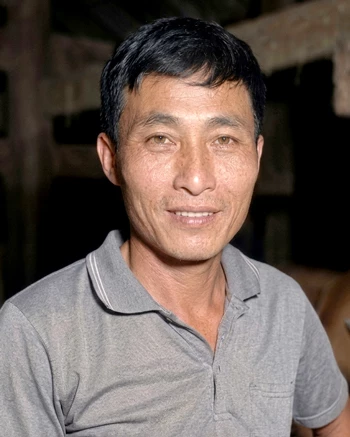 |
| Mr. Sung Chu Ly Duong Thuong Commune |
My family currently maintains a herd of 11 H'Mông cattle. Thanks to good care and careful breeding, my cattle have won two prizes in local cattle beauty contests with the titles "Best-looking Cattle" and "Golden Bull," affirming the superior value of this local breed.
However, the people in the highlands have traditionally raised cattle on a small scale, making it difficult to maintain purebred herds, and they are often subjected to price manipulation by traders. To develop a sustainable H'Mông cattle herd, we hope to receive support in the form of preferential loans and training in standardized cattle care techniques to meet the high-quality meat requirements of the market.
Source: https://baotuyenquang.com.vn/kinh-te/nong-lam-nghiep/202604/bau-vat-cua-mien-da-a7c298a/
![[Photo] National Assembly Chairman Tran Thanh Man attends the opening session of IPU-152](https://vphoto.vietnam.vn/thumb/1200x675/vietnam/resource/IMAGE/2026/04/16/1776277863731_ctqh5-jpg.webp)
![[Photo] Mrs. Ngo Phuong Ly meets and exchanges views with Mrs. Peng Li Yuan](https://vphoto.vietnam.vn/thumb/1200x675/vietnam/resource/IMAGE/2026/04/16/1776277858080_phu-nhan-1-jpg.webp)
![[Photo] My Son at night: A thousand-year-old heritage site amidst the Milky Way](https://vphoto.vietnam.vn/thumb/1200x675/vietnam/resource/IMAGE/2026/04/15/1776261039184_ndo_br_chon6-jpg.webp)
![[Photo] The General Secretary, President and his wife meet with Vietnamese-Chinese friendship leaders.](https://vphoto.vietnam.vn/thumb/1200x675/vietnam/resource/IMAGE/2026/04/15/1776264829725_vna-potal-tong-bi-thu-chu-tich-nuoc-to-lam-gap-mat-nhan-sy-huu-nghi-viet-nam-trung-quoc-8703641-3130-jpg.webp)






































































Comment (0)