

Since 1992, thousands of ethnic minority households from the northern provinces have traveled thousands of kilometers to the Central Highlands, hoping for a new, more prosperous and fulfilling life for their children. From their early days of scattered, spontaneous settlements, they now have stable homes, arable land, and faith in the future. In this land of significant change, Captain Va Viet Hai, currently working at the local task force of the Nam Na Border Guard Post, Lam Dong Provincial Border Guard Command, is proud to have worked alongside the Party committee, government, and other functional forces to help the people build a more prosperous and happy life.
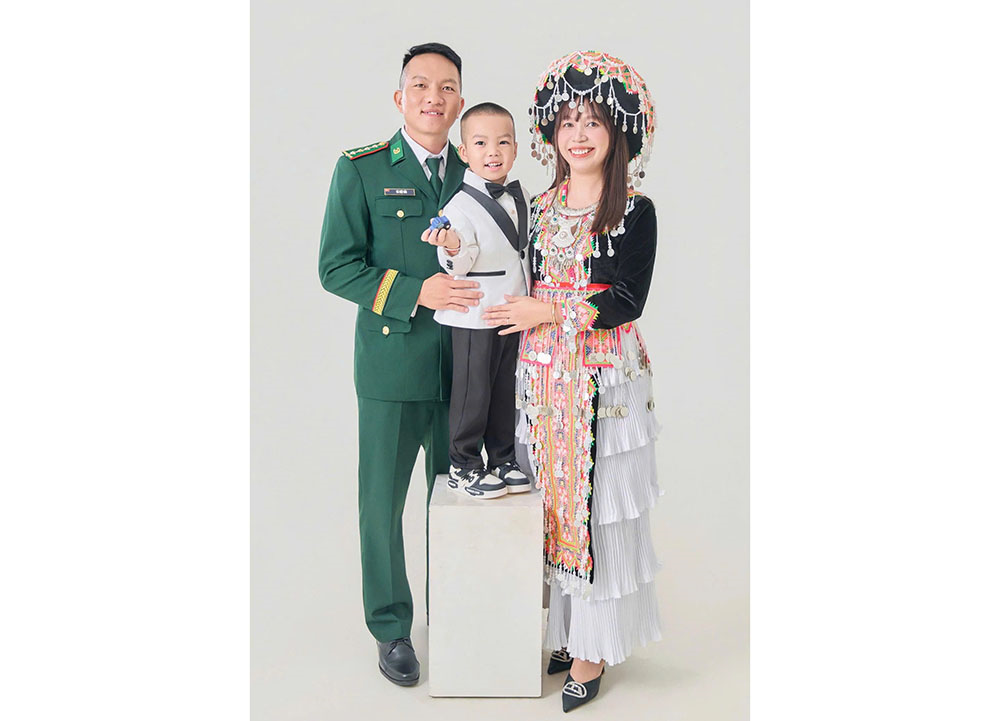 |
| The family home of Captain Va Viet Hai. Photo provided by the subject. |
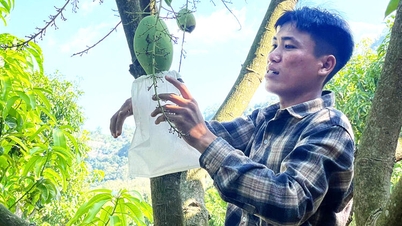
Having lived here for many years, Mr. Hai always pondered: To help his fellow villagers escape poverty sustainably, he himself must set an example by escaping poverty first. Thinking this through, he took advantage of his free time after work and utilized the available land to invest in developing a garden-based economy with his wife. Currently, on a total area of 5,000 square meters, the couple cultivates over 100 durian trees, 50 pepper plants, and 100 mango trees, providing a stable income and building an increasingly secure life.
Mr. Hai's wife is Ms. Hoang Thi Thuy, a Nung ethnic woman who grew up amidst the majestic mountains of the Central Highlands. She works at the Vietnam Fatherland Front Committee of Dak Wil commune. He first met her in 2019 at a year-end gathering of the commune's youth union. Amidst the bustling atmosphere of preparing for a field trip, his eyes were drawn to this gentle and charming woman. Over time, he realized she was a simple yet sincere woman, full of affection, and perfectly suited to build a lasting home with him.
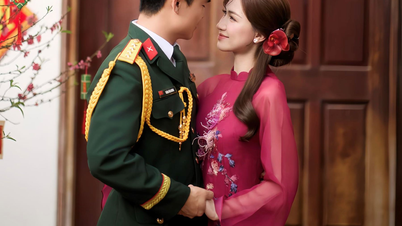
After two years of getting to know each other, Hai and Thuy got married. The early days of their married life were inevitably filled with difficulties and challenges. There were times when pressure piled up, but instead of creating distance, they always chose to sit down together, share their feelings, and resolve each problem. It was these simple things that helped them understand each other better, be united, and move forward on their journey to building a happy home.
Throughout her pregnancy, Ms. Thuy suffered greatly from morning sickness. Their first son was born right when the Covid-19 pandemic broke out. Mr. Hai was only able to be with his wife and child for a mere five days at the hospital before returning to his unit to participate in the fight against the pandemic. In the following months, the pandemic worsened, keeping him away from home for nearly half a year. Family ties were maintained through hurried phone calls. Upon his return, seeing his son sobbing because he didn't know his father, Mr. Hai felt a pang of sadness but also cherished the reunion even more, feeling even more responsible for his small family.
As a soldier, Hai had very little time for his family. Therefore, Thuy became his unwavering support system, silently shouldering all responsibilities, from preparing daily meals and caring for their children to managing affairs with both families. Every time he returned home, no matter how late, she would have a hot meal ready with a gentle smile. For Hai, his wife was not only his life partner but also a silent comrade, his greatest pillar of support in life and work.
Captain Va Viet Hai's small family is simple yet full of love. It is this strong support system that gives him the strength to stand firm on the front lines, contributing to maintaining peace and security for the people along the border. And for him, returning home after each mission is finding the most peaceful haven in his life.
Source: https://www.qdnd.vn/quoc-phong-an-ninh/xay-dung-quan-doi/ben-do-binh-yen-1015493
![[Image] A night of light, many layers of message](https://vphoto.vietnam.vn/thumb/1200x675/vietnam/resource/IMAGE/2026/03/10/1773158812907_hoa-nhac9-jpg.webp)



























































Comment (0)